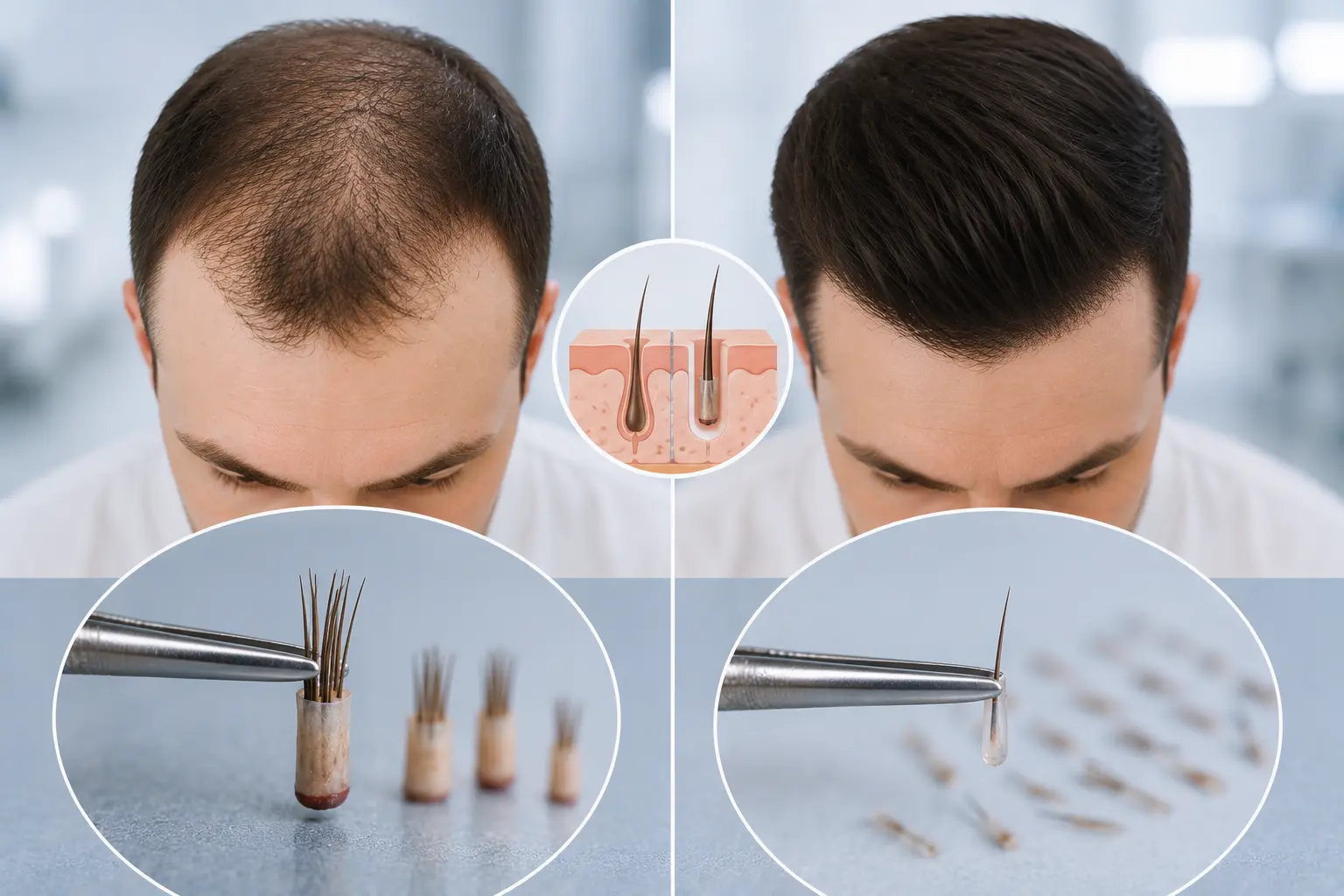
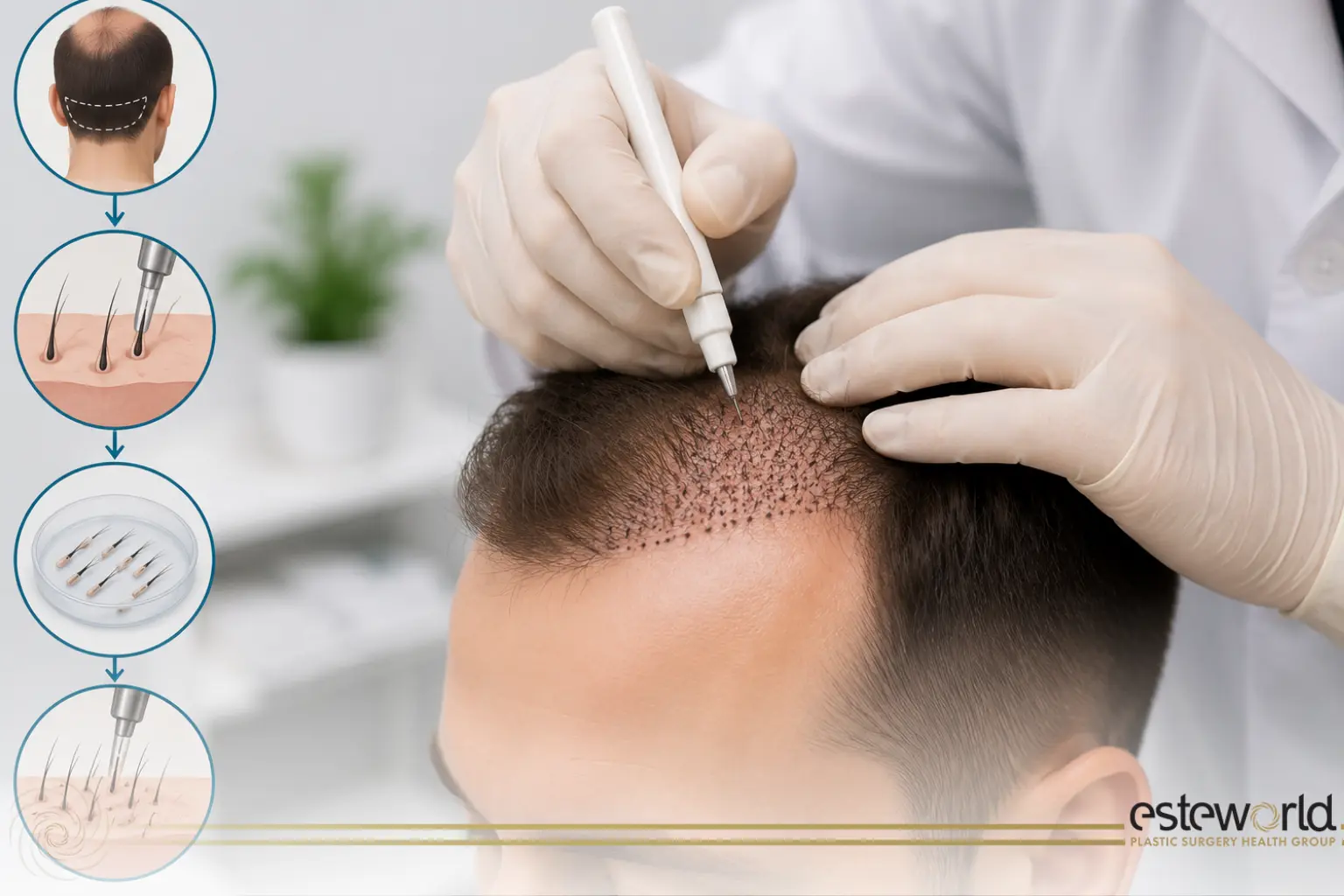
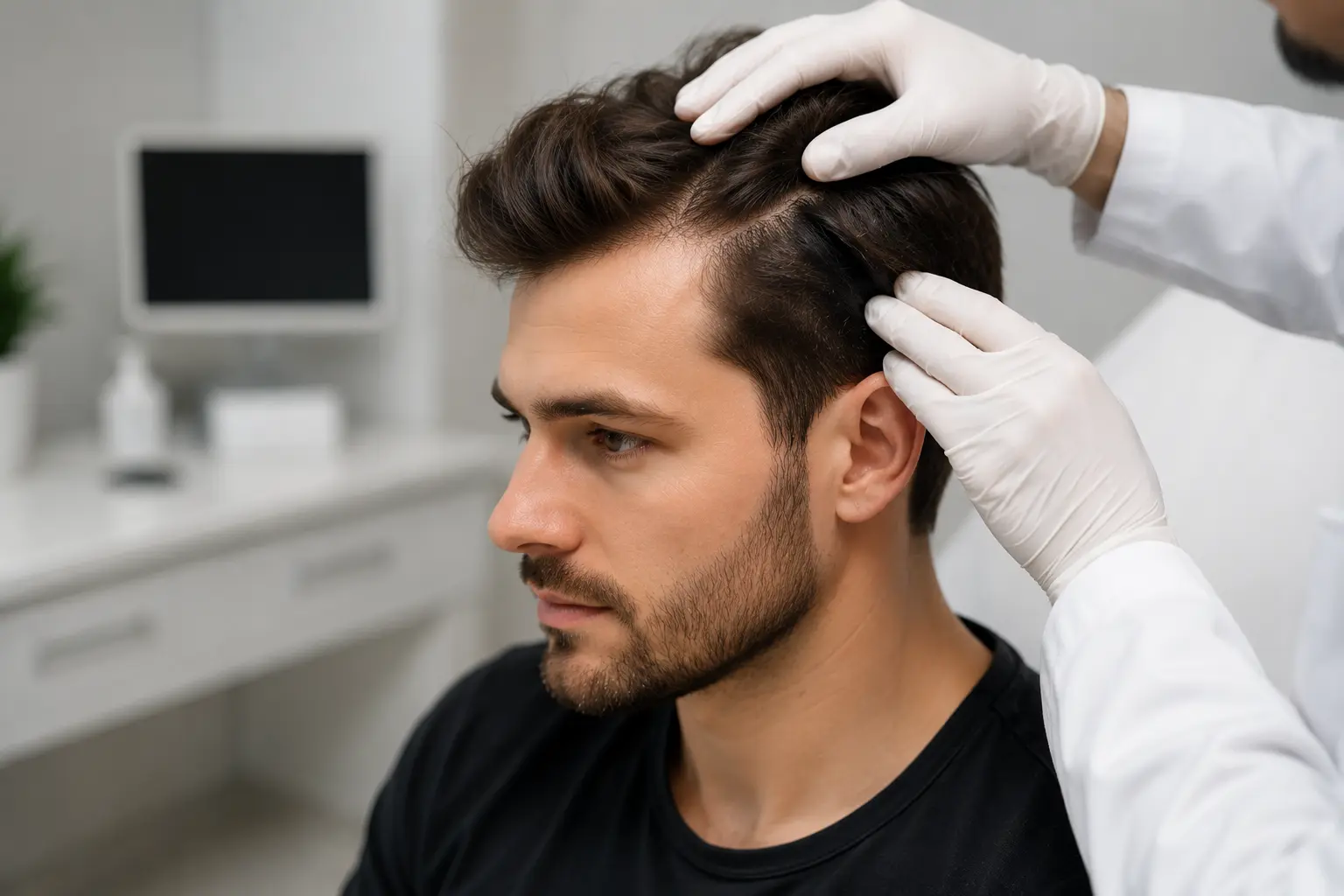
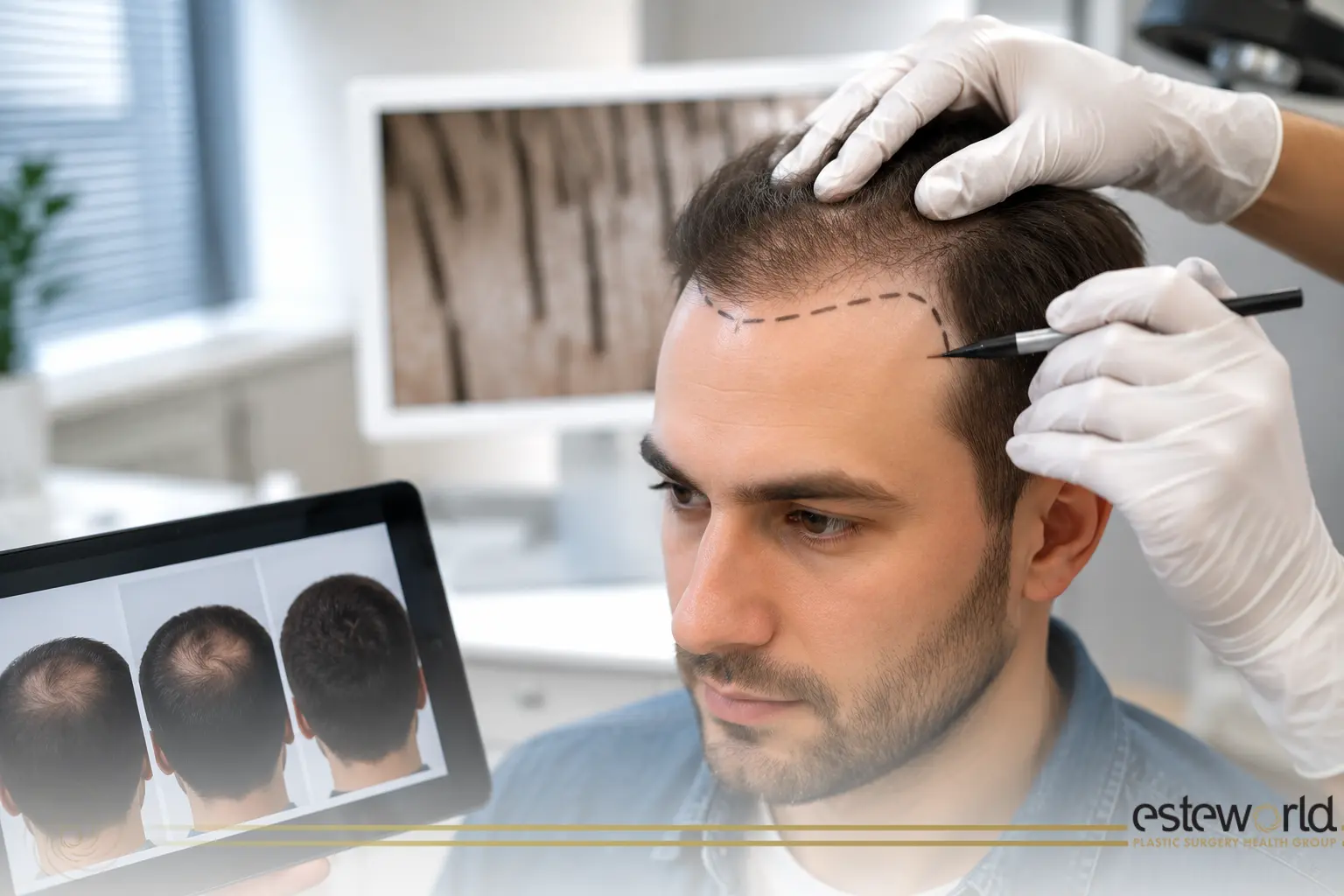
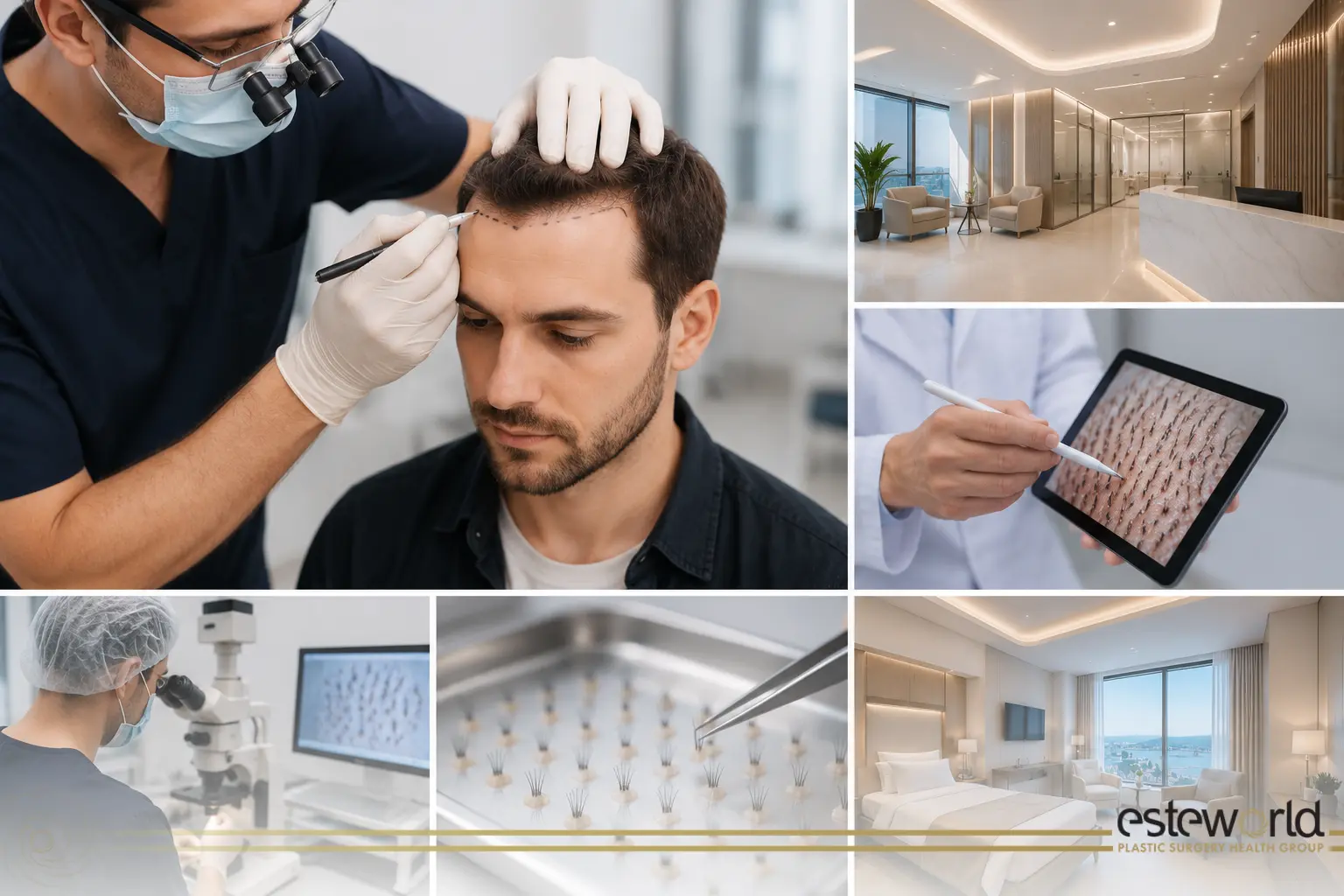
PRP (platelet-rich plasma) is made from your own blood and is sometimes injected during or after a hair transplant. A few small studies suggest it may support graft growth, but they use different methods and larger trials are still needed. PRP is an optional add-on, not a required part of surgery, and it does not replace a transplant.
This article is for general information and does not replace a medical consultation, diagnosis or treatment.
What Is PRP?
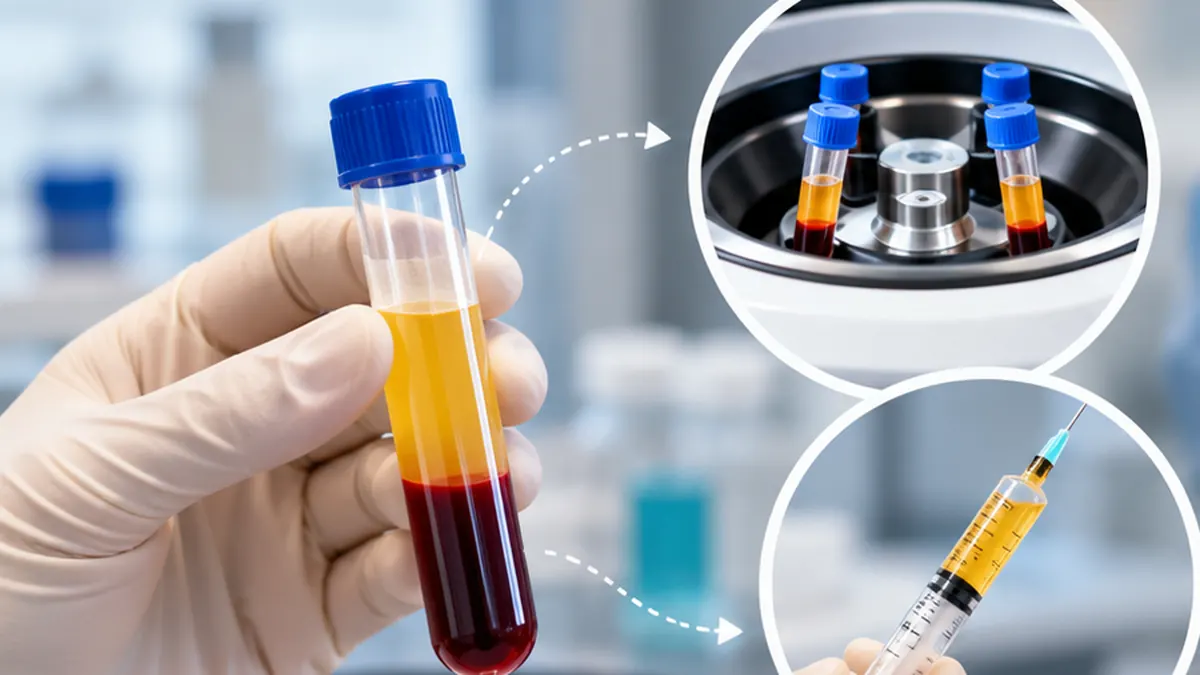
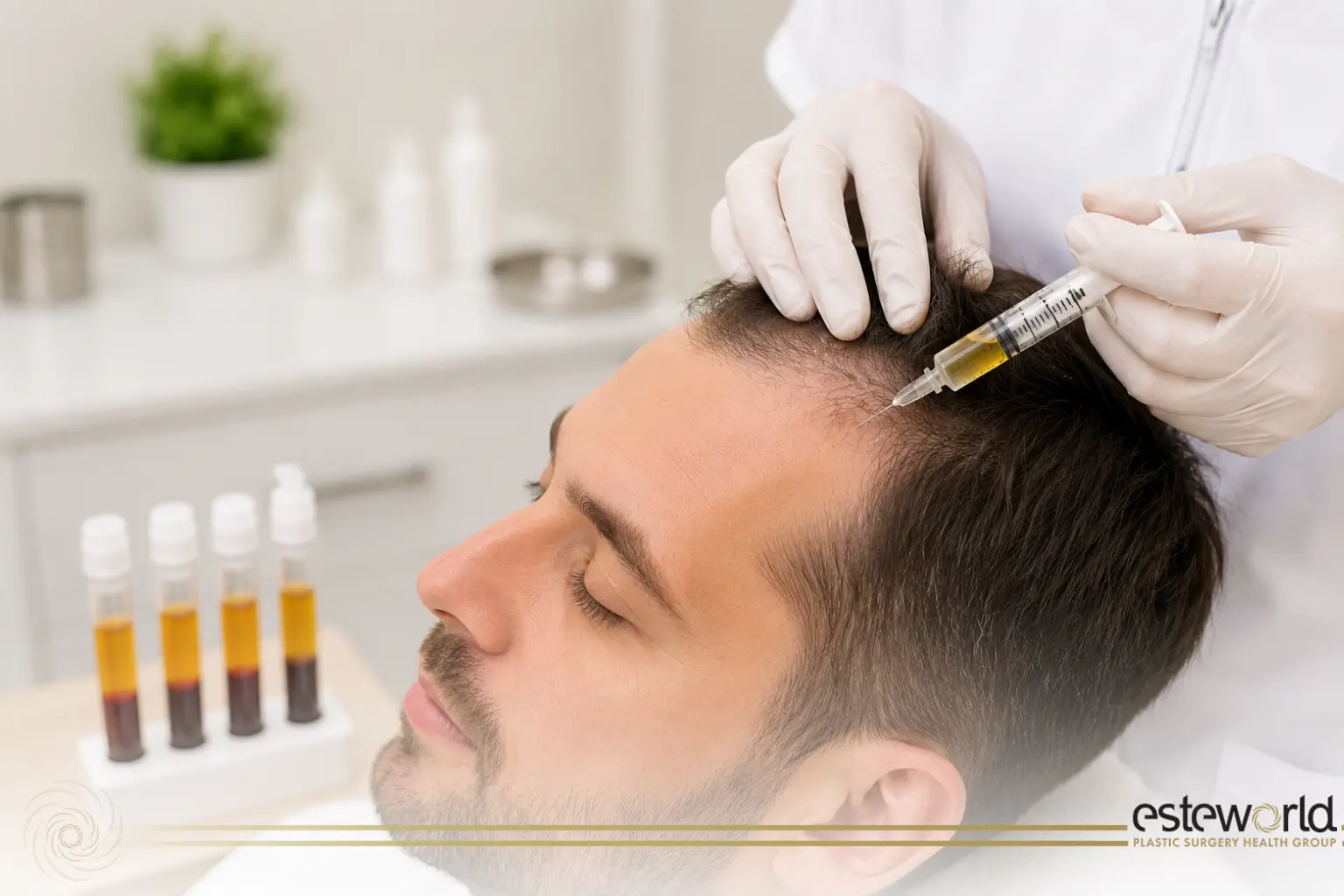
PRP is a concentrate made from a sample of your own blood. The blood is spun in a centrifuge, which separates its parts and concentrates the platelets. The concentrate is then injected into the scalp.
Platelets contain growth factors that are thought to support healing and tissue repair. How far this translates into visible results is still being studied. For PRP used on its own, including what a session involves, see our PRP hair treatment guide.
Why Is PRP Combined with a Hair Transplant?
The idea is that growth factors could help transplanted grafts settle and grow, and help the scalp heal. Studies of PRP with a transplant have looked at outcomes such as:
- Survival of transplanted follicles
- Earlier or denser growth
- How quickly redness settles after surgery
What Does the Research Show?
PRP as an Add-On to Transplant Surgery
A 2025 systematic review searched for controlled studies of PRP used alongside hair transplantation. It found only three: two randomised trials and one non-randomised study, with 217 participants in total. All three reported better results in the PRP group, such as higher follicle survival, earlier growth or better density.
The review is clear about the limits. The studies were small, PRP was prepared in different ways, follow-up was short, and none used standard assessment scales. The authors call the evidence “emerging” and say high-quality randomised trials with longer follow-up are needed.
One of those studies included 40 patients having FUE. It is described as randomised, but patients were allocated to PRP or saline alternately, one after another. It reported faster density and earlier growth in the PRP group. The study was small and run by one author, so the results may not apply to everyone.
PRP on Its Own for Pattern Hair Loss: Mixed Results
Studies of PRP used on its own for pattern hair loss point in different directions:
- A 2023 meta-analysis of nine randomised trials (238 patients) found PRP improved hair density compared with placebo at three and six months. It found no significant difference in hair count or hair thickness.
- A half-head trial in 25 patients gave PRP to one side of the scalp and a placebo to the other. It reported higher hair density on the PRP side, and the authors described PRP as a possible add-on treatment.
- Two dermatologists took the opposite view in the Journal of the American Academy of Dermatology. They argued that PRP has not been shown to give a clinically meaningful benefit in pattern hair loss.
- The American Academy of Dermatology says studies show PRP can be a safe and effective hair loss treatment. Cleveland Clinic describes the research as being at a relatively early stage, with mixed results.
The Evidence at a Glance
| Study | Type | Participants | What it found | Main limitation |
|---|---|---|---|---|
| Sindhusen et al., 2025 | Systematic review, PRP with transplant | 3 studies, 217 people | All studies favoured PRP (survival, growth, density) | Small studies, different methods, short follow-up |
| Garg, 2016 | Controlled trial, PRP during FUE (alternate allocation) | 40 | Faster density and earlier growth with PRP | Single author, small sample, not truly random allocation |
| Zhang et al., 2023 | Meta-analysis, PRP alone | 9 trials, 238 people | Better density than placebo; no difference in hair count or thickness | Pattern hair loss only, not transplant |
| Bigby and Grimalt, 2021 | Short article (no abstract) | Not applicable | Evidence of clinically meaningful benefit judged insufficient | Argues from existing studies; no new data |
Does PRP Prevent Shock Loss?
Shock loss is temporary shedding of existing hair after surgery. You may read that PRP prevents it, but the 2025 review does not discuss shock loss. Its three studies measured other outcomes, such as follicle survival, density and a hair pull test. So this claim is not established. Read more about shock loss after a hair transplant.
When Is PRP Given: During or After a Hair Transplant?
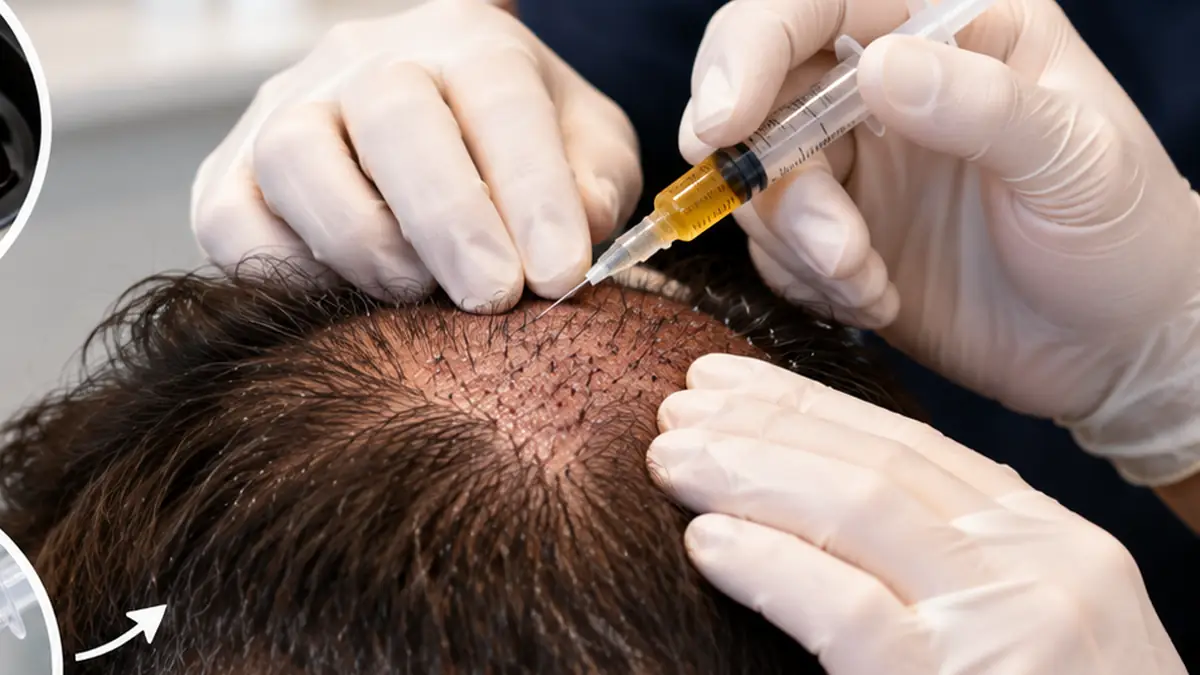
Studies have given PRP during the operation, before it, or in the first months afterwards. In one trial in the 2025 review, PRP was given before surgery and again one and two months later. There is no agreed standard for timing, preparation or number of sessions, and protocols vary widely. Some people have more than one session. If PRP is offered to you, ask why that timing is recommended for you.
At Esteworld, PRP is given during the transplant and again at 1, 4 and 7 months, four sessions in total. Your doctor can explain whether it suits you.
Who May Not Be Suitable for PRP?
People with certain blood conditions may not be good candidates. Your doctor will review your health history and medicines before deciding.
Medicines, Including Blood Thinners
Do not stop any prescribed medicine on your own, especially a blood thinner. Your PRP provider may ask you to pause certain medicines, such as blood thinners or anti-inflammatory painkillers, before an injection. That decision should be made with the doctor who prescribed the medicine.
Side Effects and Safety
Cleveland Clinic describes PRP injections as having very few risks. Common, short-term effects include:
- Some swelling and pain at the injection sites, usually for a day or two
- More discomfort than expected during the injections
There is a remote chance of contamination if the blood is not kept sterile while the PRP is prepared.
Is PRP Necessary After a Hair Transplant?
No. A hair transplant does not depend on PRP, and many patients have surgery without it. On current evidence, PRP is an optional extra that may help some people, not a step that guarantees a better result. Whether or not you have PRP, following your aftercare instructions still matters.
Hair loss can also continue after a transplant, so your doctor may discuss medical treatment as well.
When to See a Doctor
- Before PRP: tell your doctor about any regular medicine, especially a blood thinner or an anti-inflammatory painkiller. Mention any blood or platelet disorder too.
- After PRP: get in touch with the clinic if pain, swelling or redness at the injection sites keeps getting worse after the first couple of days.
- After a transplant: severe pain, or any symptom you were not told to expect, is a reason to contact your clinic promptly.
PRP may help some people having a hair transplant, but it is an optional extra rather than a necessary step. It is reasonable to ask about it, and equally reasonable to decide against it. If PRP has been suggested to you, you can send our team your questions about the evidence and timing before you decide.