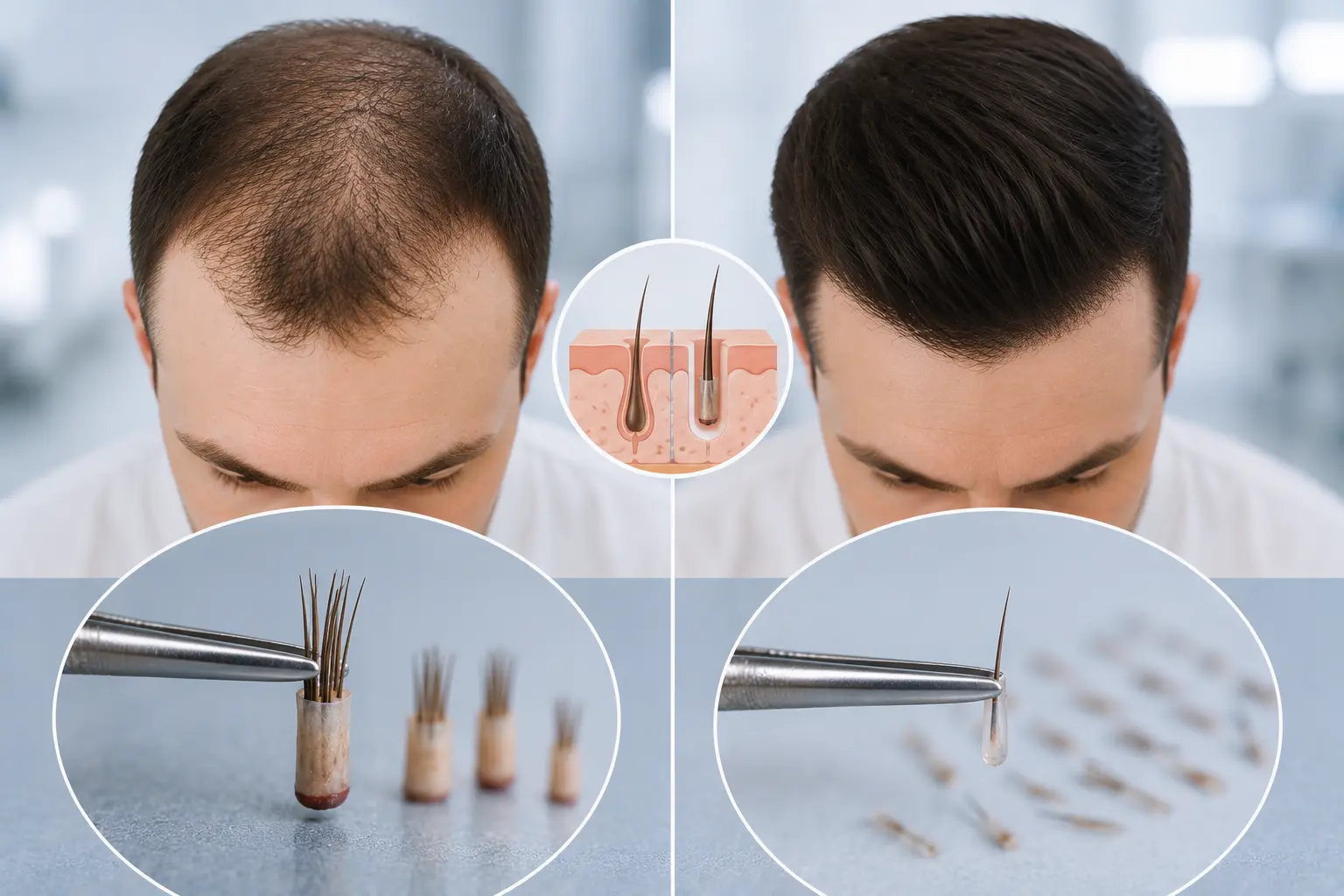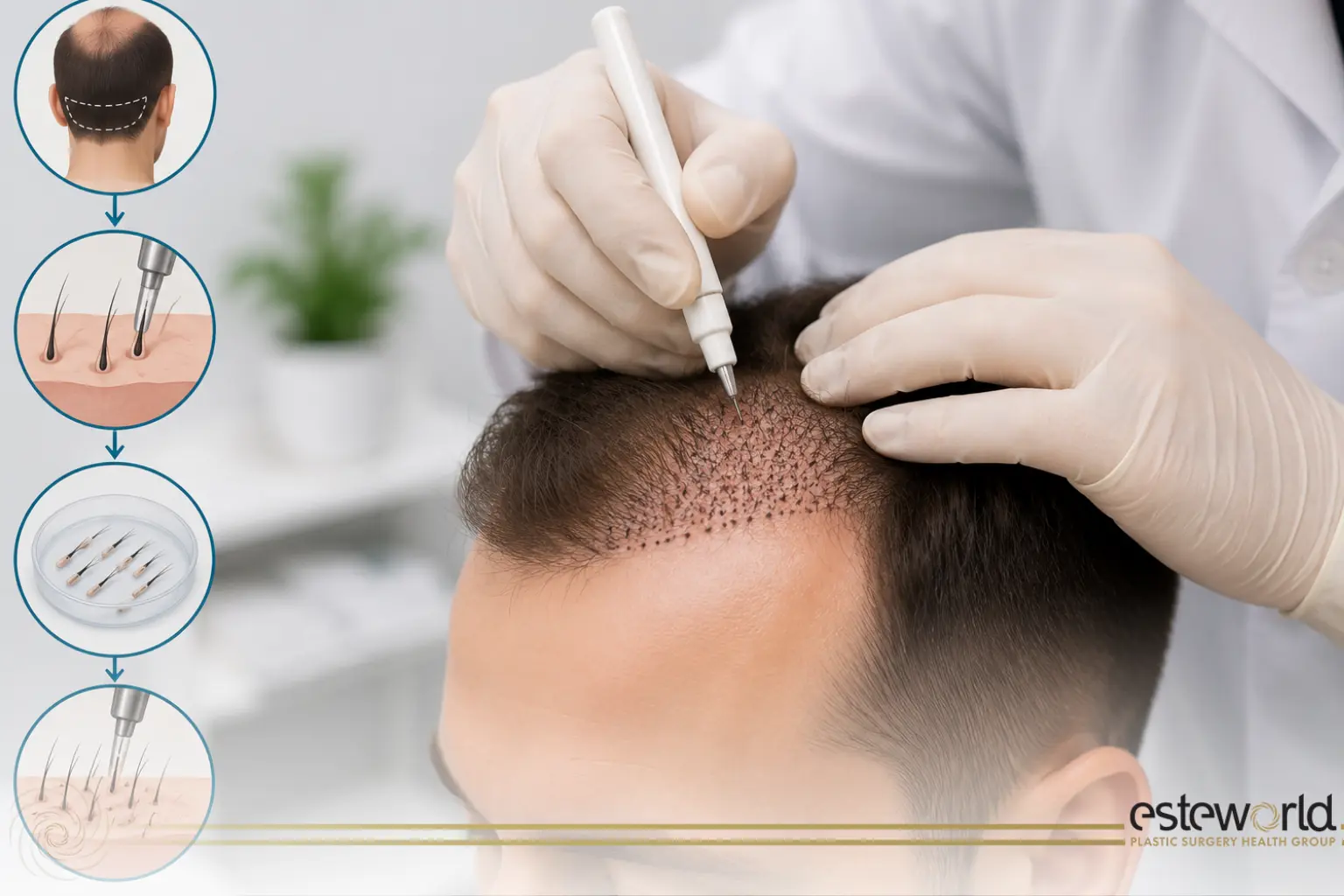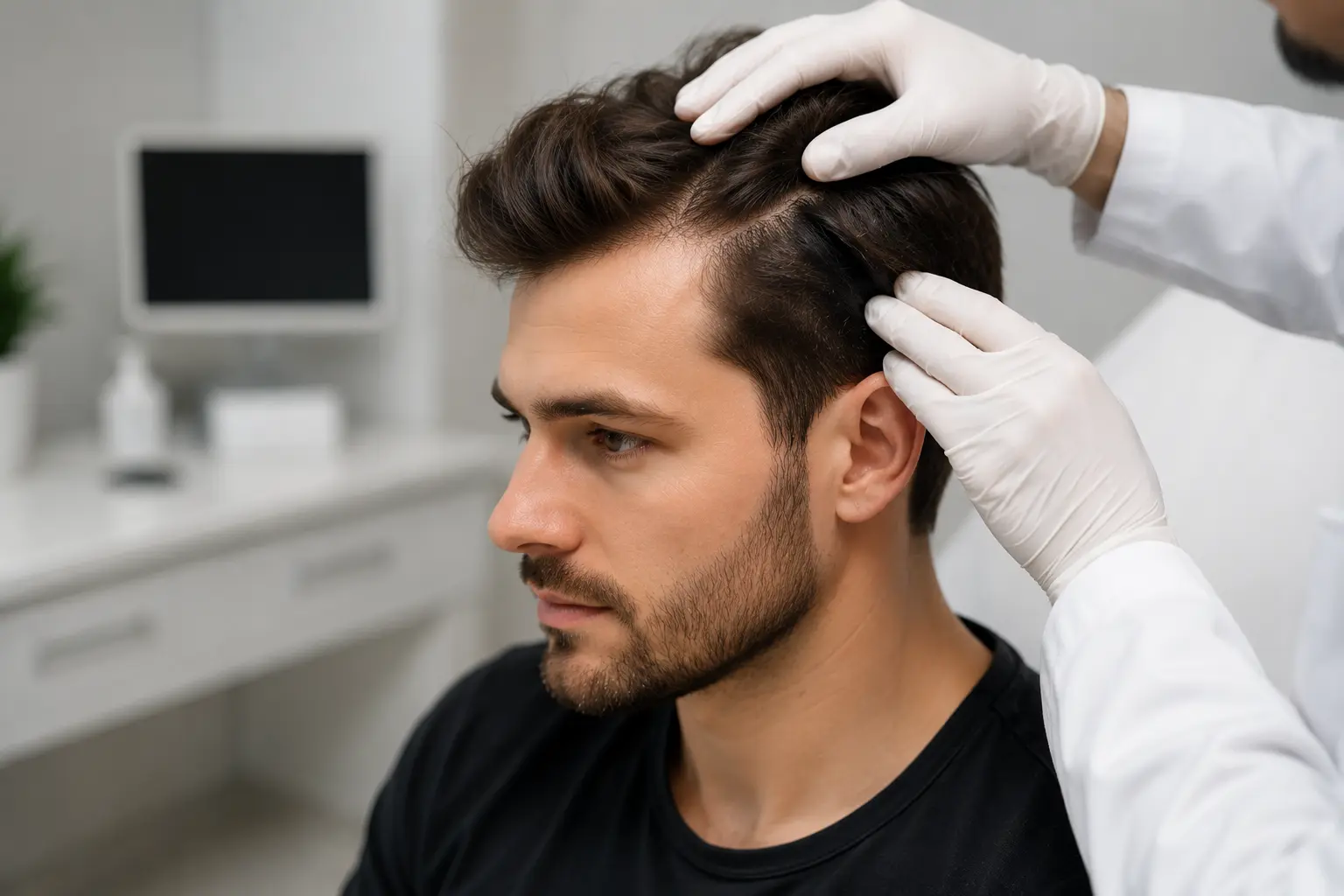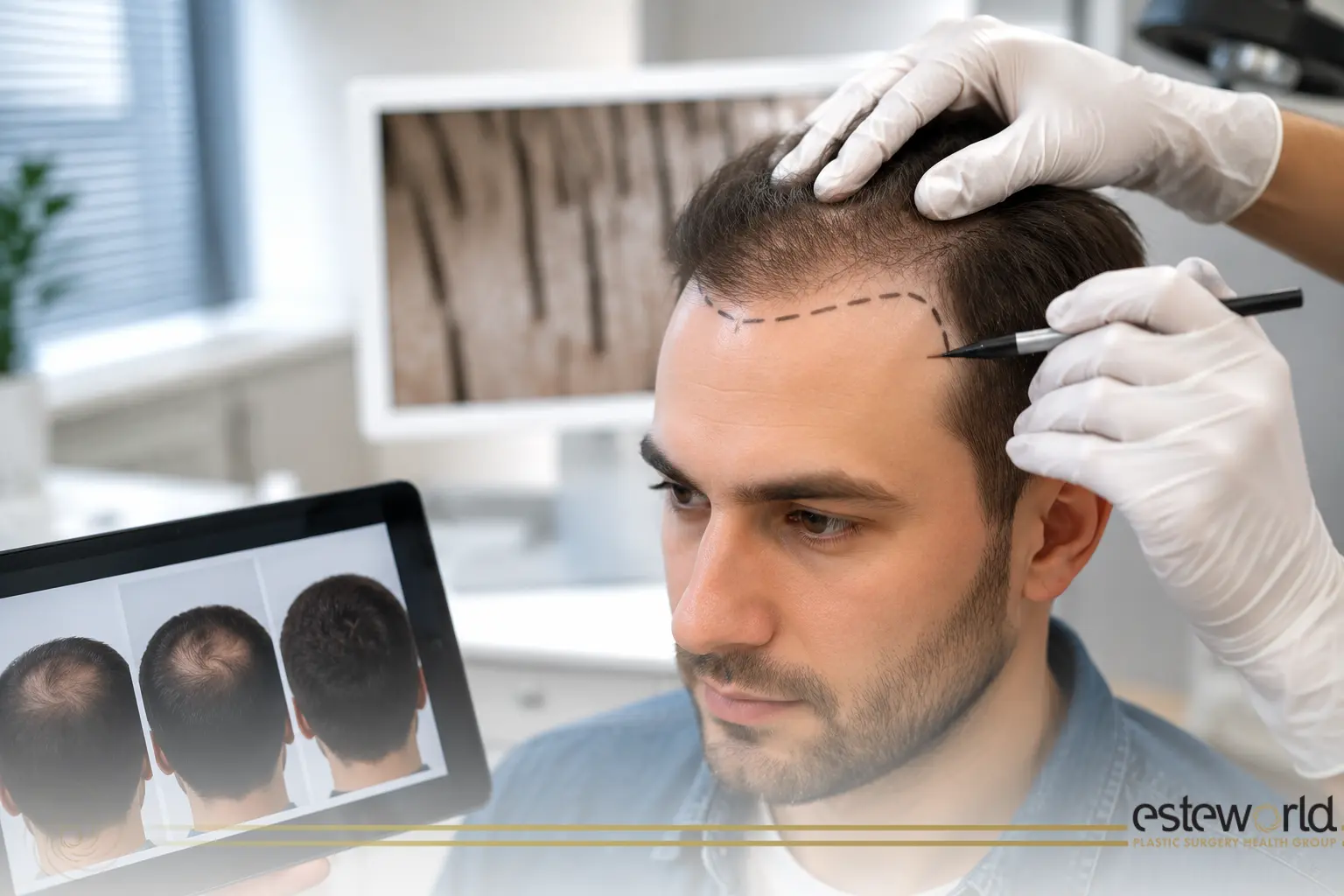
Shock loss after a hair transplant is a temporary shedding phase that can affect existing hairs around the transplanted area and, less commonly, the donor area after surgery. Transplanted hair shafts also commonly shed during the first weeks. These processes can look similar, but they are not exactly the same. In most cases, temporary post-transplant shedding is followed by gradual regrowth as the follicles return to their normal growth cycle.
Understanding the difference between normal transplanted hair shedding, shock loss of native hair and donor-area shedding can help patients interpret the recovery process more accurately and recognise when a medical review may be appropriate.
Why Does Shock Loss Occur After Hair Transplantation?
Shock loss can occur because hair transplant surgery temporarily disrupts the normal growth cycle of existing hair follicles. Surgical trauma, inflammation, temporary changes in local blood supply and stress on follicles may push susceptible hairs into a resting or shedding phase.
Hair naturally cycles through several stages:
- Anagen: active growth
- Catagen: transition
- Telogen: resting phase
- Exogen: shedding of the hair shaft
Hair transplant surgery can temporarily alter this cycle.
During transplantation, recipient sites are created around existing hairs and grafts are placed into the scalp. Existing follicles, particularly already miniaturised or weakened hairs, may respond to this temporary stress by entering a shedding phase.
Published literature describes postoperative recipient-area effluvium, often called shock loss, as temporary shedding of native hairs surrounding the transplanted area.
Possible contributing factors include:
- Surgical trauma around existing follicles
- Local inflammation
- Temporary vascular changes
- Existing miniaturised or weakened hair
- High-density recipient-site work
- Individual susceptibility
- General physiological stress associated with surgery
Shock loss does not automatically mean that transplanted follicles have failed.
However, the likelihood and recovery pattern can vary between patients, particularly when existing hairs in the recipient area were already significantly miniaturised before surgery.
Shock Loss vs Hair Shedding After Hair Transplant: What Is the Difference?
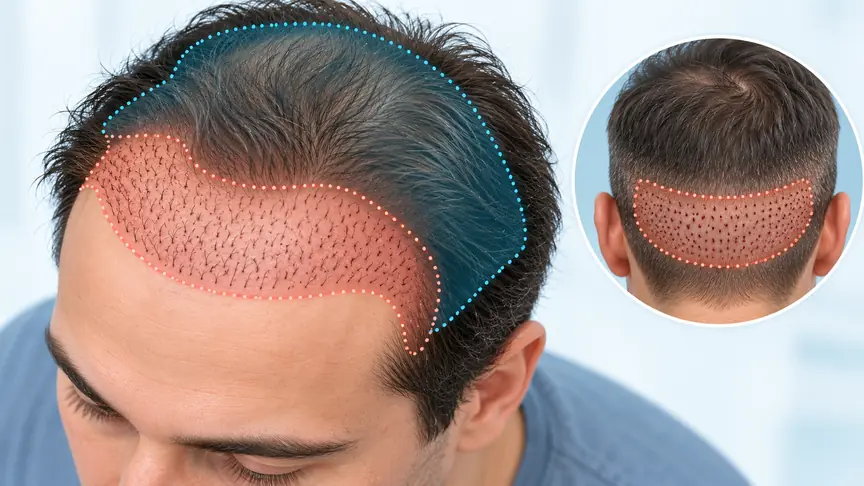
Post-transplant hair shedding and shock loss are closely related but should not always be treated as identical terms. Normal transplanted hair shedding refers primarily to the temporary loss of the visible hair shafts from implanted grafts, while shock loss commonly refers to temporary shedding of existing native hair around the surgical area.
This distinction matters because many patients see transplanted hairs fall out and assume that the entire graft has been lost.
| Feature | Transplanted Hair Shedding | Shock Loss |
|---|---|---|
| Hair affected | Mainly transplanted hair shafts | Usually existing/native hair near the recipient area |
| Why it happens | Transplanted follicles enter a temporary resting cycle after surgery | Existing follicles respond to surgical or physiological stress |
| Typical timing | Usually begins during the first few weeks | Commonly develops several weeks after surgery |
| Does the follicle remain? | Usually yes | Usually yes when loss is temporary |
| Expected outcome | New growth develops from the transplanted follicles | Native hair often regrows if follicles remain viable |
| Main patient concern | “Have my grafts fallen out?” | “Why is my existing hair becoming thinner?” |
Is Hair Loss Normal After Hair Transplantation?
Some shedding after hair transplantation is expected.
The second Esteworld article previously separated post-transplant loss into three categories:
- Loss of transplanted hair
- Loss of untransplanted or native hair
- Hair loss in the donor area
Keeping this distinction is useful because each pattern has a slightly different explanation.
1. Loss of Transplanted Hair
The visible hair shafts from transplanted grafts commonly shed during the first several weeks after transplantation.
This does not necessarily mean that the graft itself has been lost.
The follicle remains beneath the skin and can enter a resting phase before producing a new hair shaft later in the recovery process.
This phase is often what patients describe as:
- Hair transplant shedding
- Post-transplant shedding
- Shock shedding
- Transplanted hair falling out
The appearance can be alarming because the recipient area may temporarily look thinner again.
2. Loss of Existing or Untransplanted Hair
Existing hair between or around transplanted grafts may also shed temporarily.
This is more accurately associated with recipient-area shock loss or postoperative effluvium.
Existing hairs that are already miniaturised may be more vulnerable to surgical stress.
In many cases the affected follicles recover, but recovery depends on the health of the native follicles before surgery. Severely miniaturised hairs may have a less predictable prognosis.
3. Hair Loss in the Donor Area
Temporary donor-area shedding can also occur, although it is less common than recipient-area shedding.
This is sometimes called:
- Donor shock loss
- Donor-area effluvium
- Donor hair shedding
Potential contributors include inflammation, swelling, vascular stress or extensive extraction.
Temporary donor effluvium often improves as the area recovers, but patchy or progressive donor thinning should be evaluated because excessive extraction and other complications can create a different pattern from temporary shock loss.
When Does Shock Loss Occur and How Long Does It Last?
Shock loss commonly begins within the first several weeks after hair transplantation. The exact timing varies, but recipient-area shock loss is often reported approximately 2–8 weeks after surgery.
Transplanted hair shafts can also begin shedding during this early post-operative period.
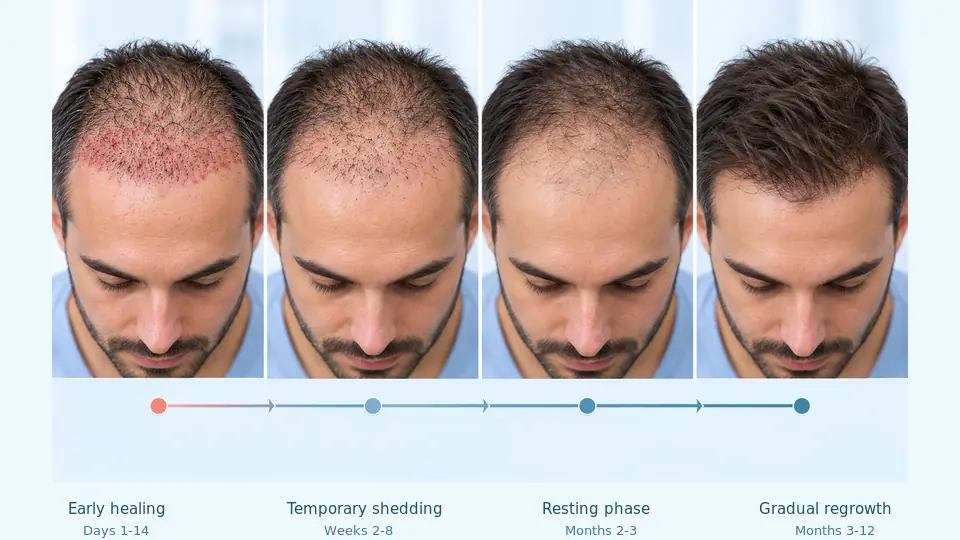
A general recovery timeline may look like this:
| Period After Hair Transplant | What May Happen |
|---|---|
| Days 1–10 | Early scalp healing, redness and crusting |
| Weeks 2–4 | Transplanted hairs may begin to shed |
| Weeks 2–8 | Shock loss of surrounding native hairs may become noticeable |
| Months 2–3 | Scalp may temporarily appear thinner; follicles may remain in a resting phase |
| Months 3–4 | Early regrowth can begin |
| Months 4–6 | Growth becomes increasingly noticeable |
| Months 6–12 | Density and hair calibre continue developing |
| Up to 12–18 months | Final maturation may continue depending on the treated area and individual growth cycle |
The current Esteworld shock-loss article states that shock shedding may last around 10–15 days once it begins, while the overall shedding and resting phase can extend over a longer recovery period. In practice, patients should focus on the broader hair-growth timeline rather than expecting every person to follow an exact number of days.
How Long Does Shock Loss After Hair Transplantation Last?
The visible shedding episode itself may be relatively short, but regrowth takes longer.
Existing native hairs affected by temporary postoperative effluvium may begin recovering over the following months.
Published clinical literature describes regrowth beginning around the third or fourth postoperative month in many temporary cases.
This is why a scalp that looks thinner at one or two months should not automatically be judged as the final transplant result.
What Happens After Shock Loss After Hair Transplantation?
After temporary shock loss, affected follicles usually remain beneath the skin while the hair cycle resets. Visible regrowth does not happen immediately because follicles may remain in a resting phase before entering active growth again.
This means patients may experience a period where:
- Transplanted hairs have shed
- Some native hairs appear thinner
- The recipient area resembles the pre-transplant appearance
- New growth is not yet obvious
This stage can occur even when the transplant is progressing normally.
When Will My Hair Grow After Transplantation?
New growth generally begins gradually rather than all at once.
Around the third or fourth month, early hairs may begin appearing. These new hairs can initially be:
- Fine
- Short
- Uneven
- Lighter in appearance
- Different in texture
They usually become more noticeable as the growth cycle continues.
Between months 6 and 12, density generally develops further, while final maturation can continue beyond one year.
For a detailed timeline, patients can also review Esteworld’s hair transplant recovery and month-by-month results content.
Will Transplanted Hair Grow Back After Shedding?
In normal post-transplant shedding, the visible shaft falls while the transplanted follicle remains beneath the scalp.
The follicle can therefore produce another hair as it returns to the active growth phase.
This is different from physical graft loss during the very early post-operative period.
A shed hair shaft does not by itself prove that the transplanted graft has been lost.
What Should I Pay Attention to During Shock Loss and Post-Transplant Shedding?
The main approach during shock loss is to follow the clinic’s normal aftercare instructions rather than trying to stop shedding aggressively. Temporary shedding is mainly related to the hair cycle, and patients should avoid unapproved treatments or manipulating the scalp.
Recommended precautions include:
- Follow the washing instructions provided by the clinic
- Avoid scratching or picking the recipient area
- Avoid unnecessary friction or trauma
- Follow activity and exercise restrictions during early recovery
- Maintain appropriate scalp hygiene
- Avoid smoking during recovery where advised
- Follow medication instructions exactly
- Attend scheduled post-operative follow-ups
- Avoid starting supplements or medications specifically for shedding without medical guidance
Patients do not need to panic simply because transplanted hair shafts begin falling out.
Can Shock Loss Be Prevented?
There is no method that guarantees complete prevention of shock loss.
Risk can be influenced by:
- Existing hair quality
- Degree of miniaturisation
- Recipient-site planning
- Surgical technique
- Implantation density
- Local tissue trauma
- Individual biological response
Careful planning may reduce avoidable trauma to native follicles, but some postoperative shedding can still occur.
Hair-loss medication may be considered in selected patients, but this requires individual medical assessment.
Patients should not start minoxidil, finasteride or other medication solely because they notice shedding without discussing it with their physician.
When Should Hair Shedding Be Evaluated by a Doctor?
Temporary shedding is common, but not every type of post-transplant hair loss should automatically be labelled shock loss.
Contact the medical team if hair loss is associated with:
- Increasing redness
- Significant pain
- Pus or discharge
- Persistent inflammation
- Fever
- Open wounds
- Skin discolouration
- Progressive patchy donor-area loss
- Unexpected scarring
- Shedding that continues well outside the expected recovery pattern
These signs may require assessment for conditions other than normal postoperative shedding.