Hair transplant aftercare is the set of instructions followed after surgery to protect newly transplanted grafts, support scalp healing and reduce avoidable complications. The first days are particularly important because the recipient area should be protected from friction, pressure, scratching and other unnecessary trauma while the scalp begins to heal.
Aftercare instructions can differ according to the transplant technique, number of grafts, donor area and individual recovery. For this reason, the patient’s own surgeon and clinic instructions should always take priority over general online recommendations.
What Is the Role of Aftercare in Hair Transplant Success?
Hair transplant aftercare helps protect transplanted grafts during early healing, supports recovery of the donor and recipient areas and helps patients avoid behaviours that may irritate or injure the scalp. It also provides a structured plan for washing, sleeping, exercise, sun exposure and follow-up.
Hair transplantation does not end when the surgical procedure is completed.
During the days and weeks after surgery, the scalp may develop:
- Redness
- Mild swelling
- Crusting
- Temporary tenderness
- Itching
- Temporary shedding
Many of these changes can occur as part of normal recovery.
The main purpose of aftercare is not to “force” transplanted hair to grow faster. Instead, it is to protect the healing area and reduce preventable problems during the period when the scalp is recovering.
Important parts of hair transplant aftercare include:
- Protecting transplanted grafts from rubbing and pressure
- Washing the scalp according to the clinic’s instructions
- Avoiding scratching and picking at crusts
- Using prescribed medication correctly
- Following temporary exercise restrictions
- Protecting the scalp from excessive sun exposure
- Attending follow-up appointments
- Monitoring for signs that may require medical assessment
What Should You Do During the First Days After a Hair Transplant?
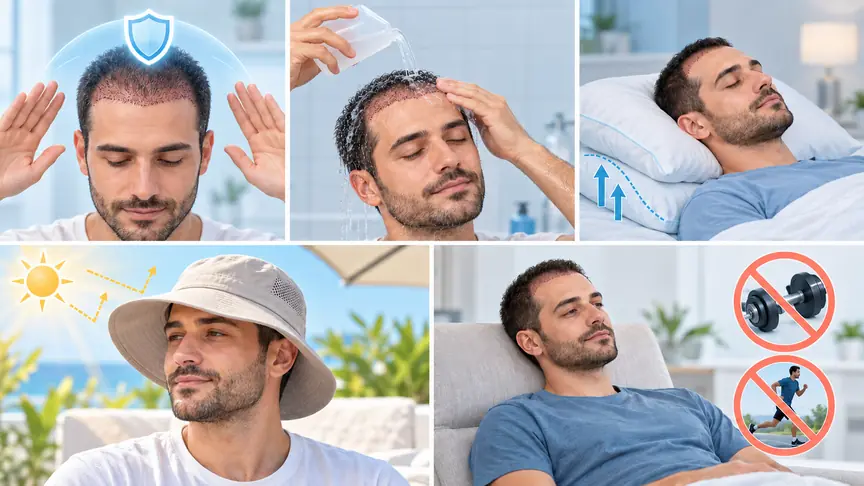
The first days after a hair transplant focus on protecting the recipient area, following medication instructions and avoiding unnecessary contact with the grafts. Patients should also follow the sleeping and washing schedule provided by their medical team.
A general recovery framework can help explain what patients may experience.
| Recovery Period | What You May Notice | Main Aftercare Focus |
|---|---|---|
| Day 0–2 | Mild swelling, redness, tenderness, small crusts | Protect grafts, avoid touching and follow sleeping instructions |
| Days 3–5 | Crusting may become more visible | Begin clinic-approved gentle washing if instructed |
| Days 6–10 | Crusts gradually soften | Continue washing without scratching or forcefully removing crusts |
| Weeks 2–4 | Transplanted hairs may begin shedding | Follow activity guidance and avoid unnecessary scalp irritation |
| Months 1–3 | Temporary shedding/resting phase may continue | Attend follow-up and follow prescribed treatment |
| Months 3–6 | Early new growth may become visible | Continue routine scalp care |
| Months 6–12+ | Density and hair calibre gradually develop | Monitor maturation during follow-up |
Individual timelines vary, so this table should not replace the clinic’s personalised post-operative instructions.
Immediate Aftercare: The First 48 Hours
The first 48 hours after hair transplantation require careful handling of the recipient area.
During this period, patients are commonly advised to:
- Avoid touching or rubbing the transplanted area
- Follow prescribed medication instructions
- Protect the scalp from accidental contact
- Avoid strenuous physical activity
- Follow the recommended sleeping position
- Avoid scratching even if mild itching develops
The scalp may appear red or slightly swollen during this period.
Patients should not try to remove crusts manually or test whether grafts are secure.
How Should You Sleep After a Hair Transplant?
Sleeping position is an important part of early hair transplant aftercare because unnecessary pressure or rubbing against the recipient area should be avoided.
Patients are commonly advised to sleep on their back with the head elevated during the early recovery period.
A neck or travel pillow may help reduce involuntary movement and contact with the transplanted area.
The exact number of nights depends on the clinic’s protocol and the treatment area.
The purpose of this position is primarily to:
- Reduce accidental friction
- Avoid pressure on grafts
- Help manage early swelling
- Prevent contact between the recipient area and pillow
Patients should follow the sleeping instructions given by their surgical team rather than choosing a fixed number of days from general online advice.
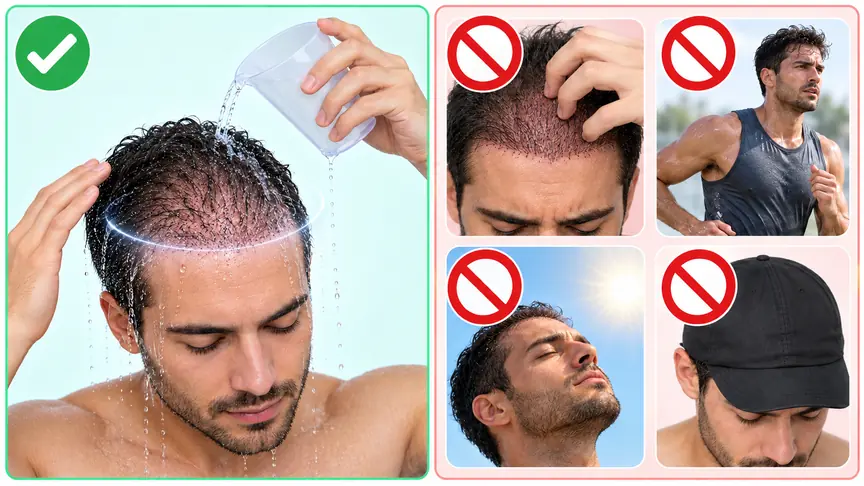
How Should You Wash Your Hair After a Hair Transplant?
Hair should be washed using the technique and timing recommended by the transplant clinic. During early recovery, washing should be gentle, with no forceful rubbing, scratching or strong water pressure on the recipient area.
The existing Esteworld article recommends waiting during the initial recovery period and then gradually beginning gentle washing. The exact first-wash timing should remain aligned with Esteworld’s own clinical protocol before publication.
General principles include:
- Use the products recommended by the clinic
- Use lukewarm rather than very hot water
- Avoid a powerful direct shower stream
- Do not scratch the recipient area
- Do not rub transplanted grafts with a towel
- Avoid forcefully pulling crusts away
- Follow the clinic’s instructions for donor-area washing
Post-Procedure Hair Washing and Scalp Care
Crusting around transplanted grafts is common during early healing.
These crusts should be allowed to soften and detach according to the washing protocol rather than being picked manually.
Aggressive washing can irritate the scalp, while avoiding cleaning for too long can also create unnecessary buildup.
The goal is therefore gentle and regular scalp care according to medical instructions, not either extreme.
Patients should also avoid experimenting with unapproved:
- Shampoos
- Oils
- Hair masks
- Styling products
- Topical treatments
- Herbal products
during the early recovery period.
What Should You Do If Your Scalp Itches After a Hair Transplant?
Mild itching can occur as the scalp heals.
The most important rule is not to scratch transplanted grafts.
If itching becomes uncomfortable, patients should contact their clinic for advice rather than applying an unknown product to the scalp.
Only products approved by the medical team should be used during early recovery.
What Should You Avoid After a Hair Transplant?
After hair transplantation, patients should temporarily avoid activities that create friction, pressure, excessive sweating or unnecessary irritation around the healing scalp. Restrictions generally become less strict as the grafts and skin heal.
Avoid Scratching and Picking Crusts
Scratching is one of the most avoidable problems during early recovery.
Even when itching develops, avoid:
- Fingernails
- Combs
- Brushes
- Forceful towel drying
- Picking crusts by hand
Contact the clinic if itching is severe or persistent.
Avoid Heavy Exercise During Early Recovery
Strenuous exercise may increase sweating, scalp irritation and the risk of accidental contact with the treated area.
Patients should return to exercise gradually according to their surgeon’s instructions.
Walking may be possible earlier than:
- Running
- Heavy weight training
- High-intensity exercise
- Contact sports
There is no single return-to-gym date that is appropriate for every patient.
For detailed information about returning to physical activity, patients can review Esteworld’s related sports after hair transplant content.
Avoid Direct Sun Exposure
The healing scalp can be more sensitive to sunlight.
Direct and prolonged sun exposure should therefore be limited during the recovery period according to the clinic’s instructions.
When head protection becomes appropriate, patients should use only headwear that does not create harmful friction or pressure on the recipient area.
Avoid Tight Hats and Helmets Too Early
Tight headwear can rub against or place pressure on a newly transplanted area.
The timing for wearing:
- Hats
- Caps
- Helmets
- Hard hats
depends on the healing stage and treatment area.
Patients whose work requires protective headgear should discuss return-to-work timing with their transplant team.
Smoking and Alcohol
Smoking can negatively affect normal wound healing and circulation, while alcohol may interact with medications and interfere with early recovery.
Patients should follow Esteworld’s specific pre- and post-operative restrictions regarding smoking and alcohol.
A universal number of days should not be stated unless it matches the clinic’s current written protocol.
Swimming, Sauna and Steam Rooms
Pools, the sea, saunas and steam rooms should be avoided during early recovery until the scalp has healed sufficiently and the medical team has approved the activity.
Esteworld’s existing postoperative protocol should determine the exact timing.
What Is Long-Term Aftercare After a Hair Transplant?
Long-term hair transplant aftercare focuses on normal scalp health, follow-up appointments and management of any continuing hair loss in non-transplanted hair. Transplanted grafts and existing native hair should be considered separately when evaluating long-term results.
Long-Term Aftercare: Ensuring Optimal Hair Growth
After the early healing period, patients can gradually return to normal daily care according to medical guidance.
Long-term follow-up may include:
- Monitoring hair growth
- Comparing progress photographs
- Evaluating donor-area recovery
- Assessing continuing native hair loss
- Reviewing scalp health
- Discussing prescribed hair-loss treatments where appropriate
Hair transplantation relocates selected follicles but does not stop androgenetic alopecia in surrounding native hair.
This distinction is important because long-term appearance can depend not only on transplanted hair growth but also on what happens to the patient’s original hair.
Is Shedding Normal After a Hair Transplant?
Yes. Temporary shedding of transplanted hair shafts during the first several weeks can occur as part of the post-transplant hair cycle.
Shedding does not automatically mean that the follicle or entire graft has been lost.
The visible hair shaft can shed while the transplanted follicle remains beneath the skin and later enters a new growth phase.
Patients can read Esteworld’s dedicated guide to shock loss and post-transplant shedding for a more detailed explanation.
How Long Does It Take for Transplanted Hair to Grow?
Hair transplant growth occurs gradually.
A typical progression may include:
- First weeks: Early healing and possible shedding
- Months 1–3: Resting phase
- Months 3–4: Early new hairs may begin to appear
- Months 4–6: Growth becomes increasingly noticeable
- Months 6–12: Density and hair calibre continue developing
- 12 months and beyond: Further maturation may continue
Individual timelines vary according to the treatment area, hair characteristics and biological response.
Patients should therefore avoid judging the final result during the first weeks or months.
What Are Common Hair Transplant Aftercare Mistakes?
Common aftercare mistakes include scratching the recipient area, ignoring washing instructions, returning to strenuous exercise too early, using unapproved scalp products and failing to contact the clinic when unusual symptoms develop.
Avoiding these problems helps make recovery more predictable.
Common Mistakes During the Aftercare Period
Examples include:
- Touching transplanted grafts unnecessarily
- Scratching itchy areas
- Forcefully removing crusts
- Using strong water pressure during washing
- Wearing tight headwear too early
- Returning to heavy exercise before clearance
- Exposing the scalp to prolonged direct sun
- Applying unapproved lotions or oils
- Changing prescribed medication without medical advice
- Missing follow-up appointments
- Comparing early healing with another patient’s final results
Another common mistake is interpreting every temporary change as a failed transplant.
Redness, crusting and shedding can all occur during normal recovery.
The more useful question is whether symptoms follow the expected healing pattern or are becoming progressively worse.
What Is Normal After a Hair Transplant?
Common temporary changes can include:
- Mild redness
- Mild swelling
- Tenderness
- Crusting
- Itching
- Temporary numbness
- Temporary hair shedding
The degree and duration differ between patients.
When Should You Contact Your Hair Transplant Clinic?
Patients should contact their medical team if they develop symptoms outside the expected recovery pattern.
These may include:
- Increasing rather than improving pain
- Significant or persistent bleeding
- Pus or unusual discharge
- Fever
- Increasing warmth or spreading redness
- Severe swelling
- Open wounds
- Unexpected skin discolouration
- Significant trauma to the graft area
- Persistent or unusual donor-area changes
Worsening pain, fever, discharge and spreading redness are commonly treated as warning signs rather than routine post-transplant healing in current aftercare guidance.