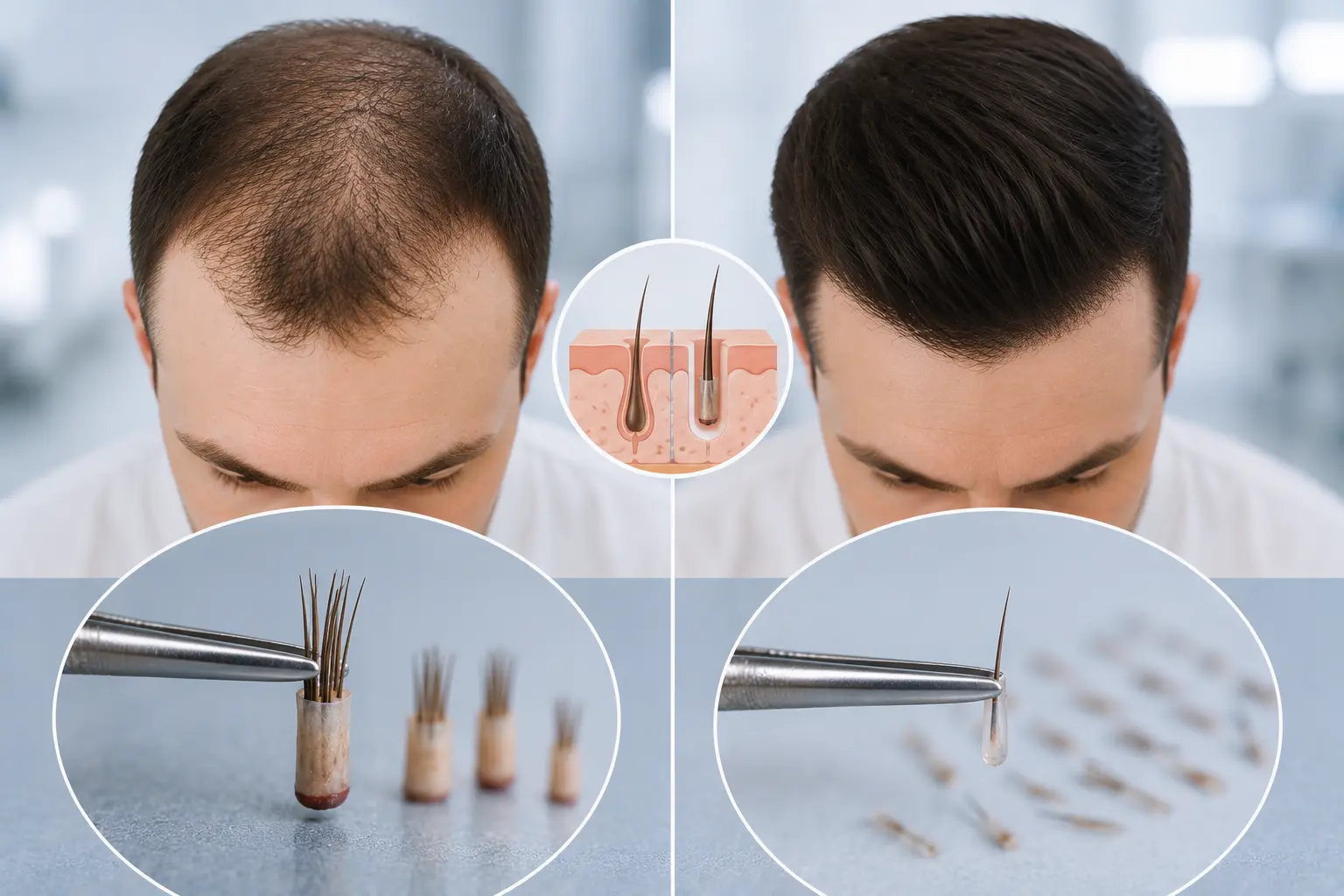
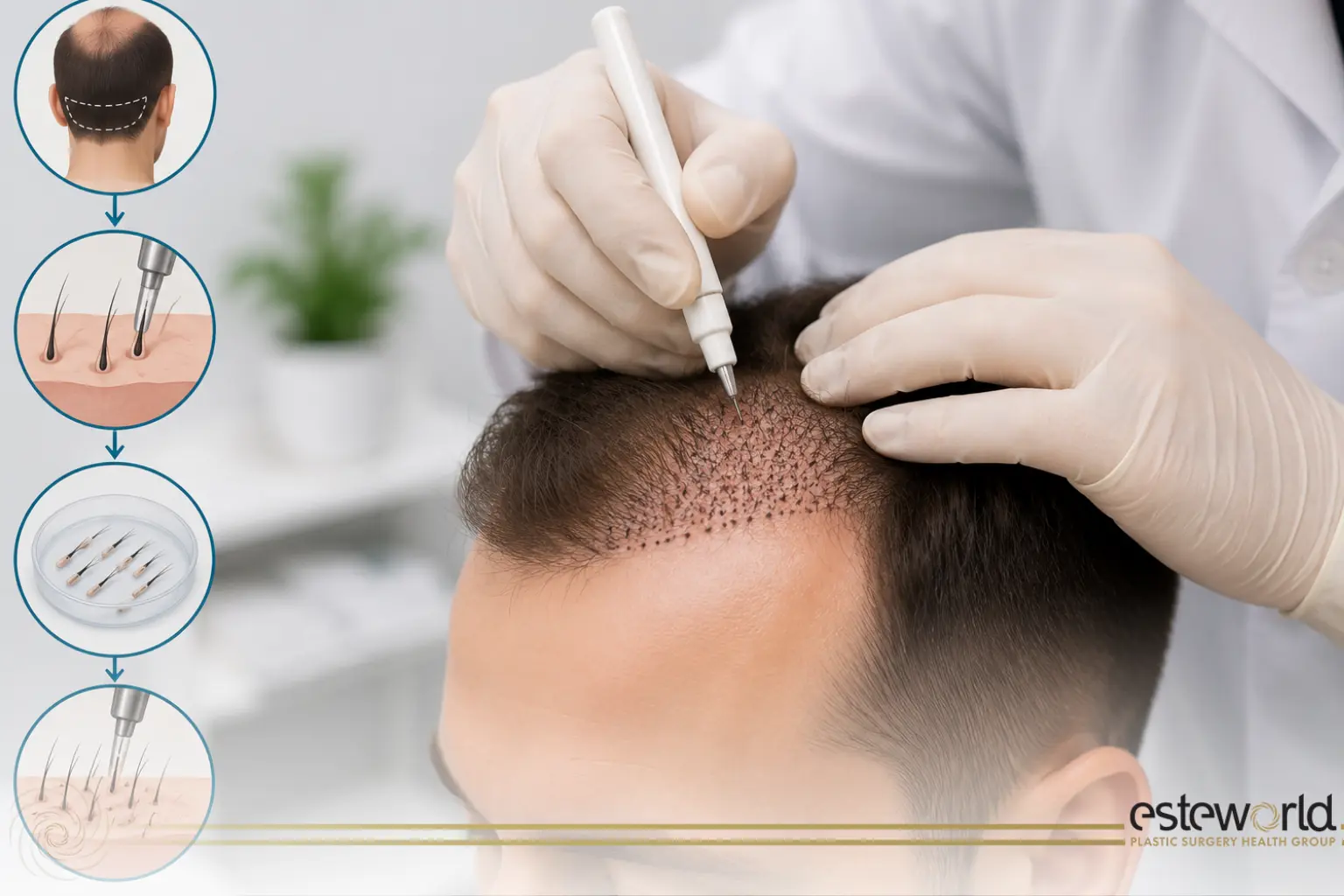
A hair transplant is usually not recommended for alopecia areata. It is an autoimmune condition with an unpredictable course. While it is active, surgery can trigger new patches and the transplanted hair can be affected too. Medical treatment comes first, and surgery has only been reported in rare, carefully selected cases.
This article is for general information and does not replace a medical consultation, diagnosis or treatment.
What Is Alopecia Areata?
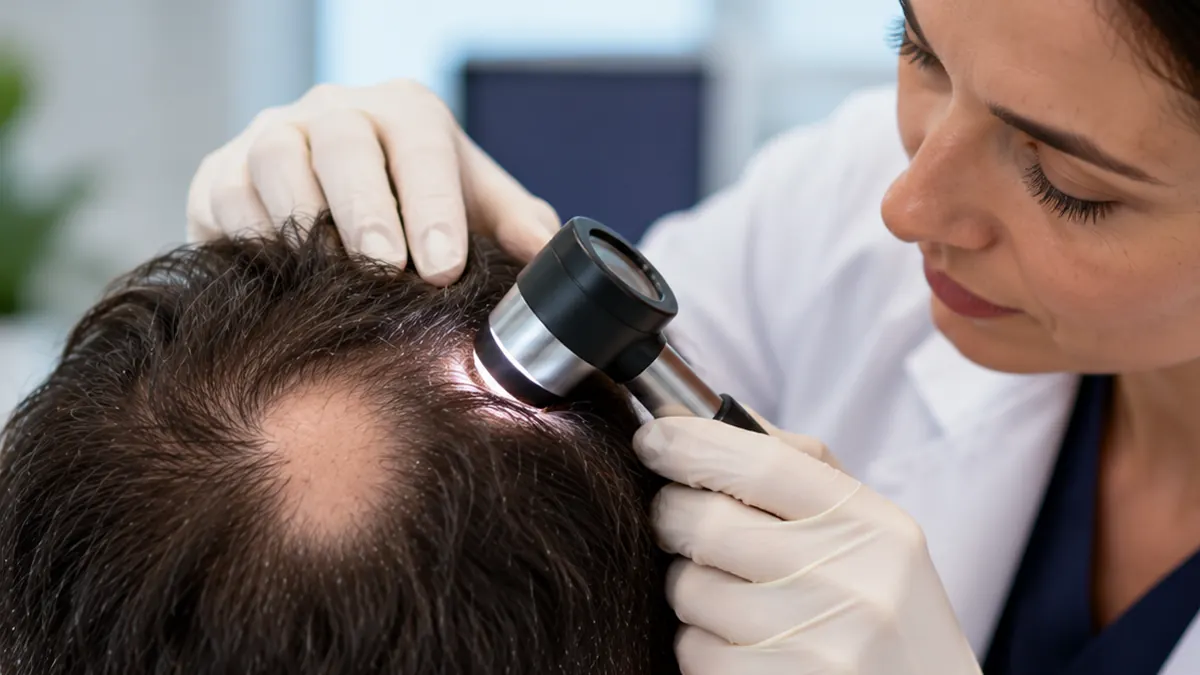
Alopecia areata is a condition in which the immune system attacks hair follicles and causes hair loss. It usually begins as round or oval bald patches on the scalp, but it can affect any hair-bearing area, including the beard, eyebrows and eyelashes. Some people also notice tiny dents in their nails, especially when hair loss is more extensive.
- It is not contagious and cannot spread from person to person.
- It can affect people of any skin tone or gender, and it usually begins in childhood or young adulthood.
- Its course is unpredictable: hair grows back fully in some people but not in others.
- Hair often regrows, but relapses are common, and most happen within five years.
- There is no cure at present, although treatments can help hair regrow.
When hair regrows, it may be white or fine at first. This is usually temporary.
Can You Have a Hair Transplant If You Have Alopecia Areata?
In most cases, no. The NHS notes that hair transplants are not usually suitable for types of hair loss other than inherited pattern baldness. It gives alopecia areata as an example. The International Society of Hair Restoration Surgery (ISHRS) also says a transplant is generally not recommended as a primary treatment for alopecia areata.
Why Transplants Often Do Not Work in Active Disease
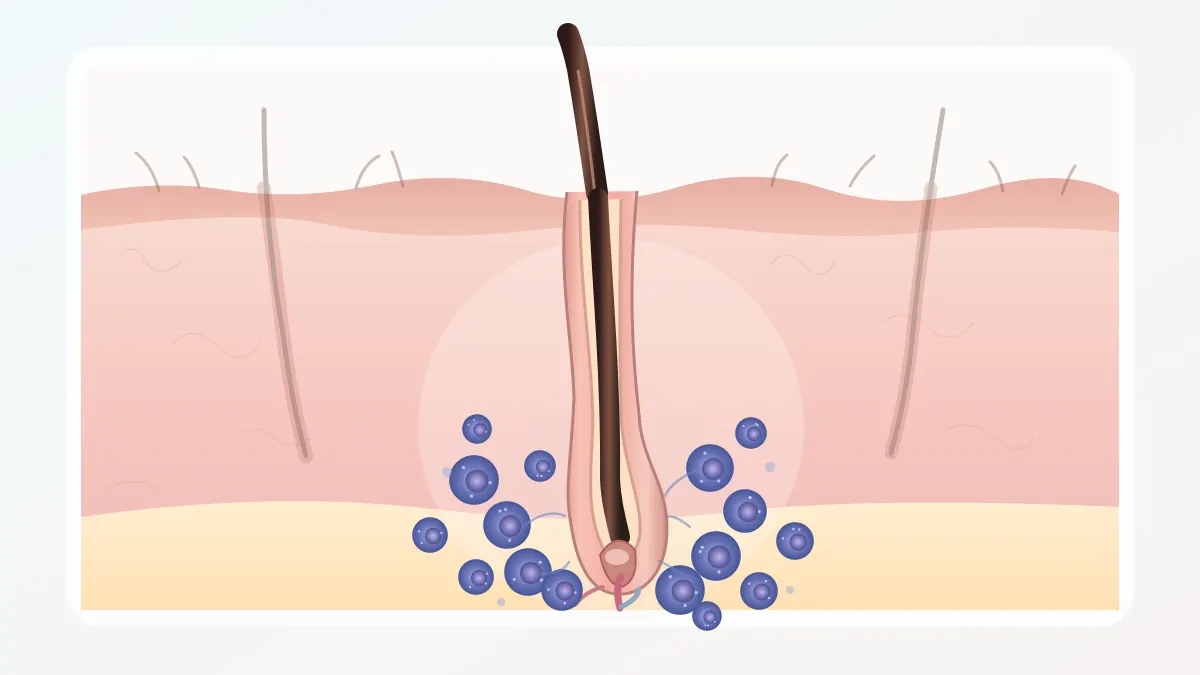
A transplant moves your own follicles from one part of the scalp to another. In alopecia areata, the problem is not a lack of follicles but the immune response against them. A review of how surgeons decide who is a suitable candidate states that a transplant is contraindicated while alopecia areata is active. Surgery itself can trigger a new episode, and the transplanted hair can also be attacked.
Why the Risk Never Fully Disappears
Relapses can happen throughout life, so a quiet period does not mean the condition has gone. The review on candidate selection notes that even after two years or more without activity, the risk is lower but not removed. This is a statement about risk, not a safe waiting period. Whether surgery could ever be considered is an individual decision for your dermatologist and surgeon together.
A Rare Reported Case
Surgery for alopecia areata is rarely reported. In one published case, a man’s eyebrow alopecia areata had not responded to several therapies. It had been stable for 18 months after his last medical treatment. Two years after FUE, the authors reported partial regrowth, and they still described surgery for alopecia areata as controversial. A single case cannot predict what will happen for anyone else. If alopecia areata affects your beard, our article on beard transplants and alopecia looks at the same question for facial hair.
Alopecia Areata Together with Pattern Hair Loss
Some people have both. If alopecia areata is active, a transplant is still contraindicated, even when pattern hair loss is also present. The donor area needs careful checking too, because conditions such as alopecia areata can affect hair density there. See who is not a good candidate for a hair transplant.
Alopecia Areata Treatment: Options Usually Tried First
Alopecia areata is usually managed by a dermatologist. The American Academy of Dermatology (AAD) notes that no single treatment works for everyone, and treatment is not always recommended. For many people with a few patches present for less than a year, hair regrows on its own. In children, hair may regrow without treatment.
When treatment is used, the options a dermatologist may discuss include:
- Prescription corticosteroids
- Minoxidil
- Contact immunotherapy, used for widespread alopecia areata
- JAK inhibitors, a newer type of medicine that calms the overactive immune system
Which option suits you, if any, depends on your age, how much hair is affected and how long you have had it.
Covering Hair Loss and Finding Support
Some people prefer to cover hair loss, either while waiting for treatment to work or instead of it. Options the NHS describes include wigs and permanent make-up (micropigmentation) to look like short hair or eyebrows. The AAD mentions hats, wigs, and artificial eyebrows or eyelashes, which also protect the scalp and eyes.
Hair loss can be upsetting. The NHS suggests that a GP may be able to arrange counselling and points to support groups run by Alopecia UK. In the United States, the AAD points to the National Alopecia Areata Foundation.
Hair Transplant vs Medical Treatment for Alopecia Areata
| Question | Hair transplant | Medical treatment |
|---|---|---|
| Does it address the cause? | No. It moves follicles but does not change the immune response | Some treatments act on the immune response, such as JAK inhibitors |
| Use in active disease | Contraindicated | Treatment may be offered, depending on age and how much hair is affected |
| Risk of new patches | Surgery can trigger a new episode | Relapses are common, even after hair has regrown |
| Effect on transplanted hair | Can also be affected by alopecia areata | Not applicable |
| Who is involved | Surgeon, with a dermatology referral where needed | Dermatologist |
Alopecia Areata vs Scalp Ringworm: A Common Mix-Up
Alopecia areata is sometimes wrongly called “ringworm”. They are different conditions:
| Alopecia areata | Scalp ringworm (tinea capitis) | |
|---|---|---|
| Cause | The immune system attacks hair follicles | A fungal infection, not caused by a worm |
| Contagious? | No | Yes, it can spread through contact |
| Typical look | Round or oval bald patches | Patchy hair loss, sometimes with a scaly, itchy rash |
| Treatment | Managed by a dermatologist; options include corticosteroids and JAK inhibitors | Antifungal medicine; on the scalp this usually means prescription tablets and shampoo |
If you have patchy hair loss and are not sure of the cause, get a diagnosis rather than guessing; different causes need very different treatment. Other patterns of hair loss have their own pages, such as scarring alopecia and traction alopecia.
When to See a Doctor
Make an appointment, preferably with a dermatologist, if:
- You notice new round or oval bald patches.
- Hair loss is spreading, or you lose hair from your eyebrows, eyelashes, beard or body.
- You notice tiny dents or other changes in your nails.
- Your scalp is scaly, itchy or inflamed, which may point to another cause such as a fungal infection.
- Hair loss is affecting your mood or daily life.
- You are considering a hair transplant and have ever been diagnosed with alopecia areata; speak first to the dermatologist who knows your history.
For most people with alopecia areata, a hair transplant is not the right first step, and in active disease it is not advised. Diagnosis and care from a dermatologist come first. If you have a history of alopecia areata and still have questions about surgery, you can contact our team and ask whether an assessment makes sense. For many people, the honest answer is that surgery is not suitable.