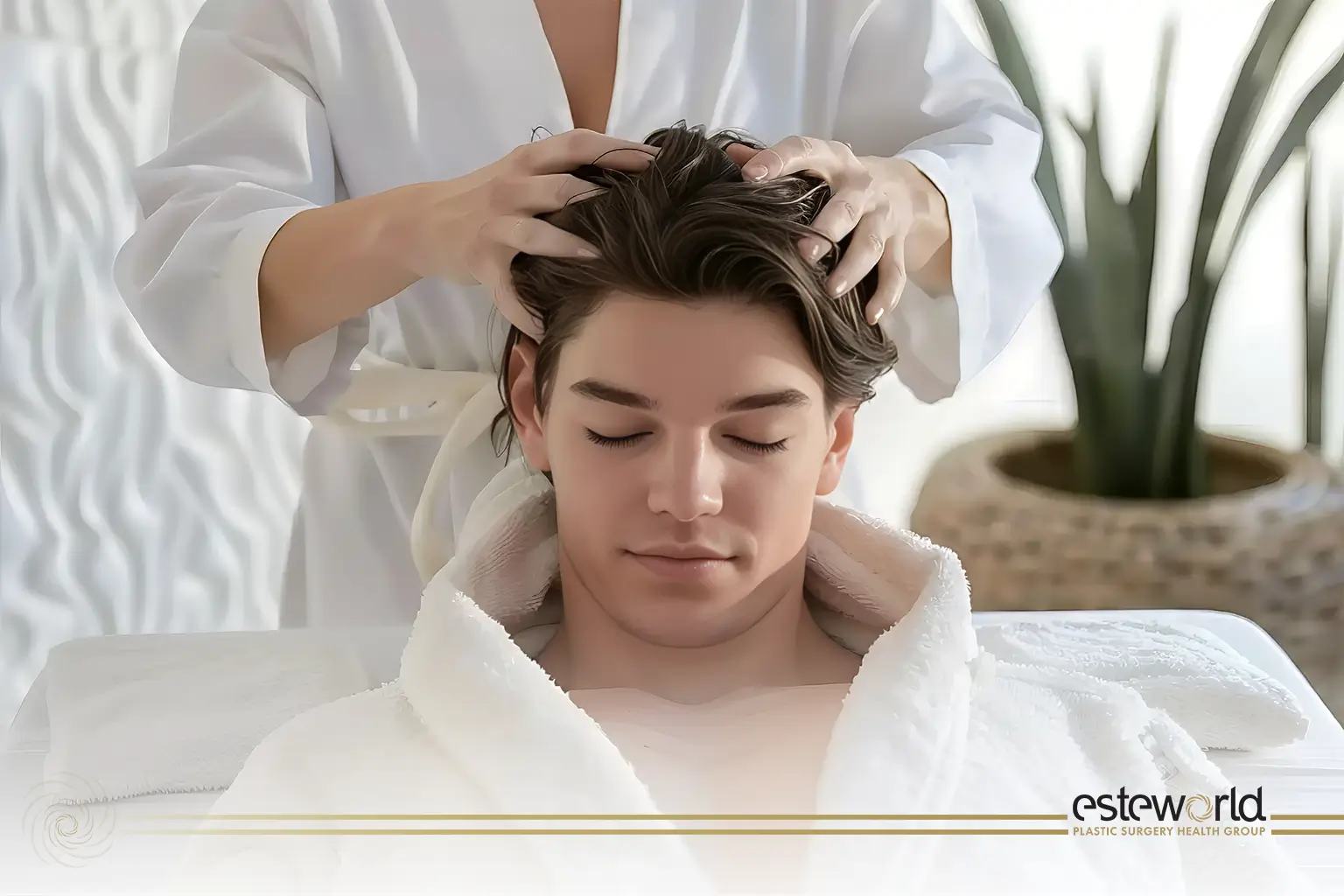
Do not massage, rub or scratch the treated area in the first weeks: the NHS says grafts are not secure for the first two weeks. Until then, the only touch should be the washing routine your clinic shows you. A light fingertip massage comes later, once your surgeon confirms the scalp has healed. Crusts usually clear by seven to ten days, but that alone does not mean massage is safe. We found no study showing that massage improves transplant results.
This article is for general information only and does not replace your clinic’s aftercare instructions.
When Can You Massage Your Scalp After a Hair Transplant?
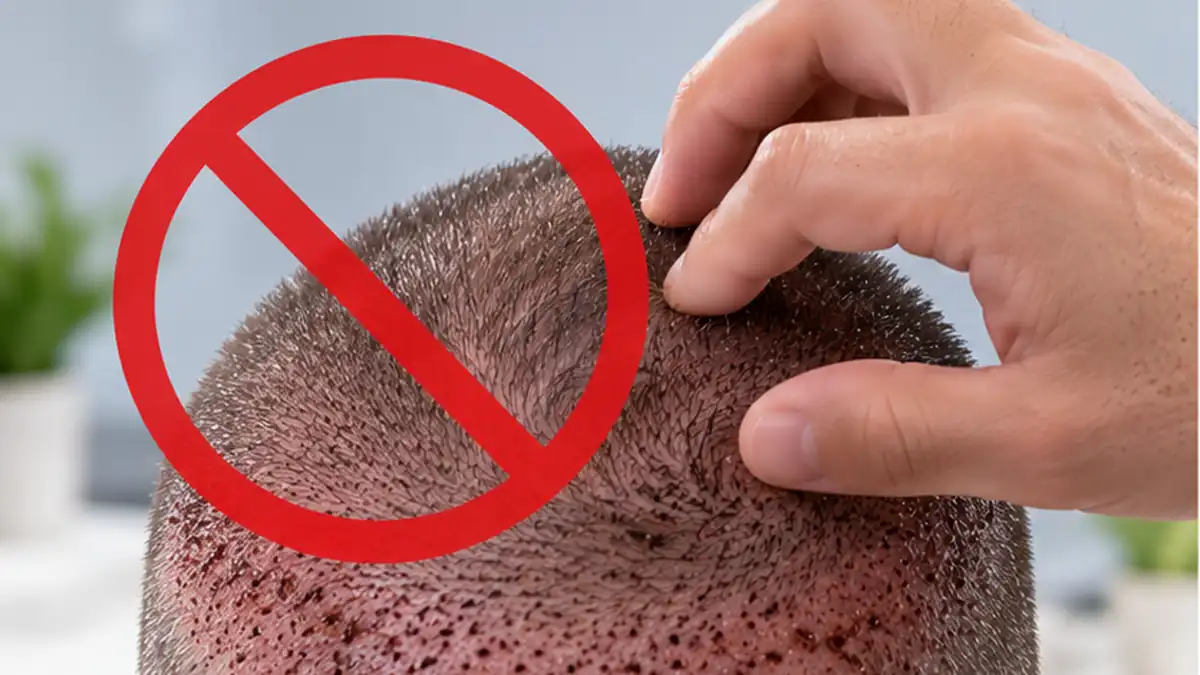
Medical sources do not give a start date, but they agree on the order:
- Transplanted hair needs a lot of care while the grafts are not yet secure.
- Even once any bandages come off, usually after two to five days, you should not touch the grafts.
- Washing technique and pressure are increased only gradually as the skin heals, according to a 2026 review of FUE complications.
At Esteworld, patients receive a written aftercare booklet. Follow your booklet, or your own clinic’s written instructions, rather than any general timeline, including this one.
Why the First Weeks Need Extra Care
Each graft sits in a tiny opening in the skin. Gentle scalp care and not scratching are essential to prevent grafts being dislodged, and rubbing or pressing too early carries the same risk.
Crusts are a normal part of healing. The review describes them typically appearing within two to three days and clearing by seven to ten days. It also notes that close follow-up helps make sure crusts come away properly. Let crusts come away during gentle washing; do not pick, scratch or rub them off.
A Stage-by-Stage Guide
| Stage | What may be allowed | What to avoid | Who decides |
|---|---|---|---|
| First days, bandage on or just removed | No touching of the grafts | Rubbing, scratching, pressing, massaging | Your surgeon |
| Until the grafts are secure | Only the gentle washing routine your clinic teaches you | Any massage of the treated area; fingernails; tools | Your surgeon |
| Crusts gone, skin healed | Light fingertip massage, if your surgeon agrees | Firm pressure; massagers or oils without approval | Your surgeon |
| Later recovery | Normal scalp care as advised | Anything that irritates the skin | You, with your clinic’s advice |
The table gives an order of steps, not exact days. Ask your clinic to write the dates for your own stages in your aftercare booklet.
Washing Versus Massaging: What Is the Difference?
The two are easy to confuse.
- Washing in the early weeks means light pressure with the fingertips, using the product and method your clinic gives you. Its aim is to keep the area clean and help crusts come away.
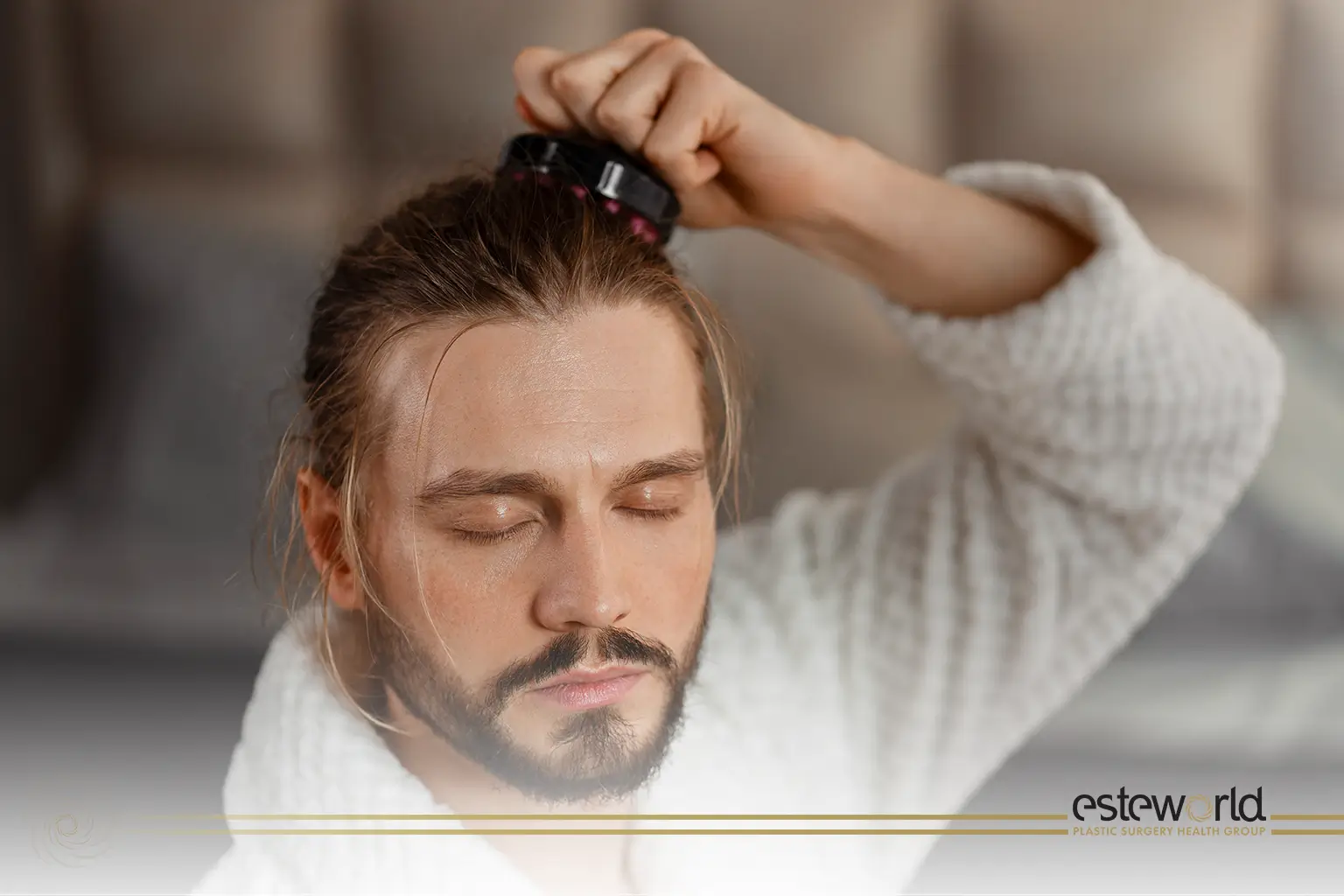
- Massage means deliberate kneading or circular movements to stimulate the scalp. It belongs to a later stage, once the skin has healed.
At Esteworld, the dressing on the donor area is removed at the clinic on day 1. The first wash is also done at the clinic, on day 10.
If you are unsure whether a movement counts as washing or massaging, treat it as massage and ask first. Our guide to aftercare and washing covers the washing routine in more detail.
Does Scalp Massage Help Hair Growth? What the Evidence Says
The evidence is limited, and none of it comes from hair transplant patients.
- A 2016 study followed 9 healthy men who massaged their scalp with a device for 4 minutes a day for 24 weeks. Hair thickness increased, but the rate of hair growth did not change. The group was very small, and the study was partly funded by a company.
- A 2019 online survey asked people with pattern hair loss about daily scalp massage. About two in three of those who tried it said their hair loss had stabilised or improved. The results were self-reported, and there was no comparison group.
Claims that massage helps grafts survive, speeds healing or reduces swelling are not supported by any study we found. Some people simply find massage relaxing, and that is a fair reason to enjoy it once you have healed.
How to Massage Safely Once Your Surgeon Allows It
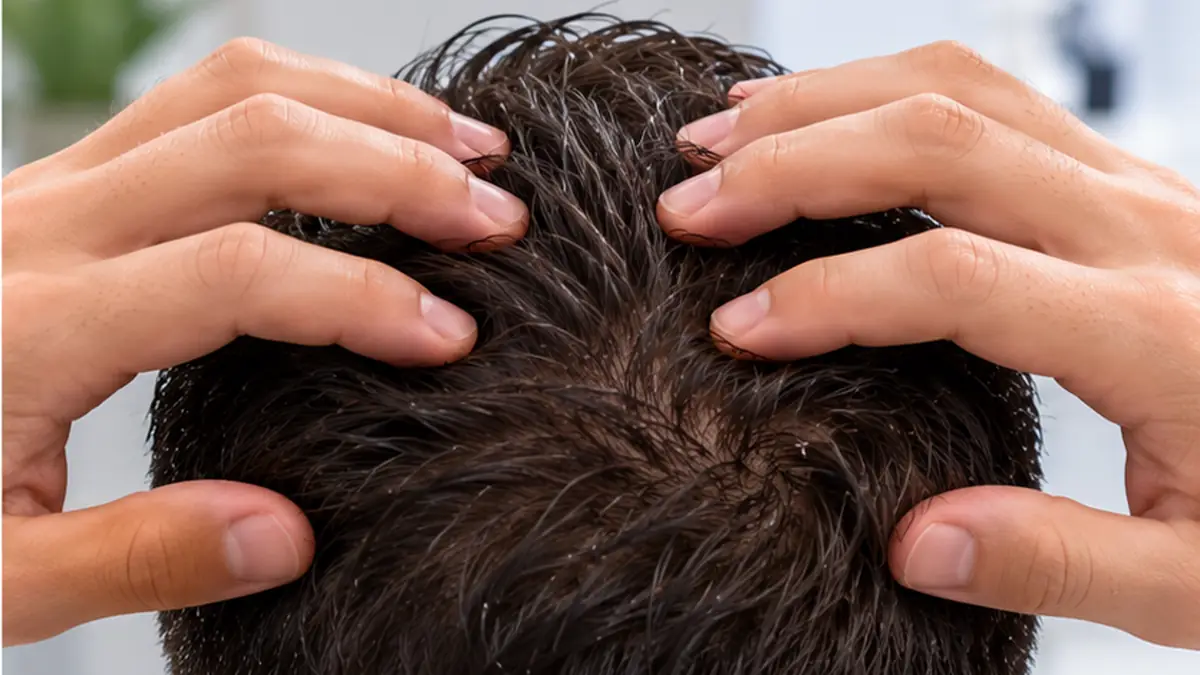
Technique
- Use the pads of your fingertips, never your nails.
- Keep the pressure light.
- Move the skin gently in small circles rather than rubbing across the surface.
- Stop if it hurts, stings or causes redness.
How often and for how long to massage is a question for your surgeon.
Oils, massagers and brushes: check first
- Oils. A study often quoted for peppermint oil and hair growth was done in mice, not people. Lavender products on the skin can cause allergic reactions in some people, and peppermint oil on the skin can cause rash and irritation. Do not put oils or other products on the treated area unless your surgeon approves.
- Massagers and brushes. Keep them for fully healed skin, and use them only with your surgeon’s agreement.
For products to use after surgery, see our guide to hair care products after a hair transplant.
The Donor Area
The donor area (the back and sides of the head) heals separately from the recipient area, so ask your surgeon whether the timing differs. With FUT (strip) surgery, there is a stitched line at the back of the head; ask before massaging near it. Read more about donor area recovery.
Itching: How to Resist Scratching
Itching is common as the scalp heals, and in a small number of people it lasts for several months. For itching that persists, the review lists oral antihistamines and mild steroid creams among the options a doctor may consider. Ask your clinic what to do rather than scratching.
Common Mistakes to Avoid
- Starting too early. Wait for your surgeon’s go-ahead.
- Scraping off crusts. Picking at them too early is linked to inflammation around the hair follicles.
- Using fingernails. Scratching can dislodge grafts; ask your clinic about itching instead.
- Putting products on the treated area. Oils can irritate the skin.
- Following someone else’s timeline. Online day counts come from different clinics and techniques. Your own surgeon’s plan comes first.
When to See a Doctor
Get in touch with your clinic promptly if you notice:
- Severe pain or any symptom you did not expect
- Pain that is extreme or long-lasting, or noticeable redness and swelling
- Bleeding from a graft site that continues despite gentle, steady pressure
- Pus or honey-coloured crusts, which can be signs of infection
- A rash or itching after using an oil or product
- Itching so strong you cannot stop scratching
Scalp massage is something to enjoy after you have healed, not a way to speed up a transplant. Protect the grafts first, then wash as shown, then massage lightly with your surgeon’s approval. Weighing up a procedure and wondering what the aftercare involves day to day? You can contact our team to arrange an assessment.