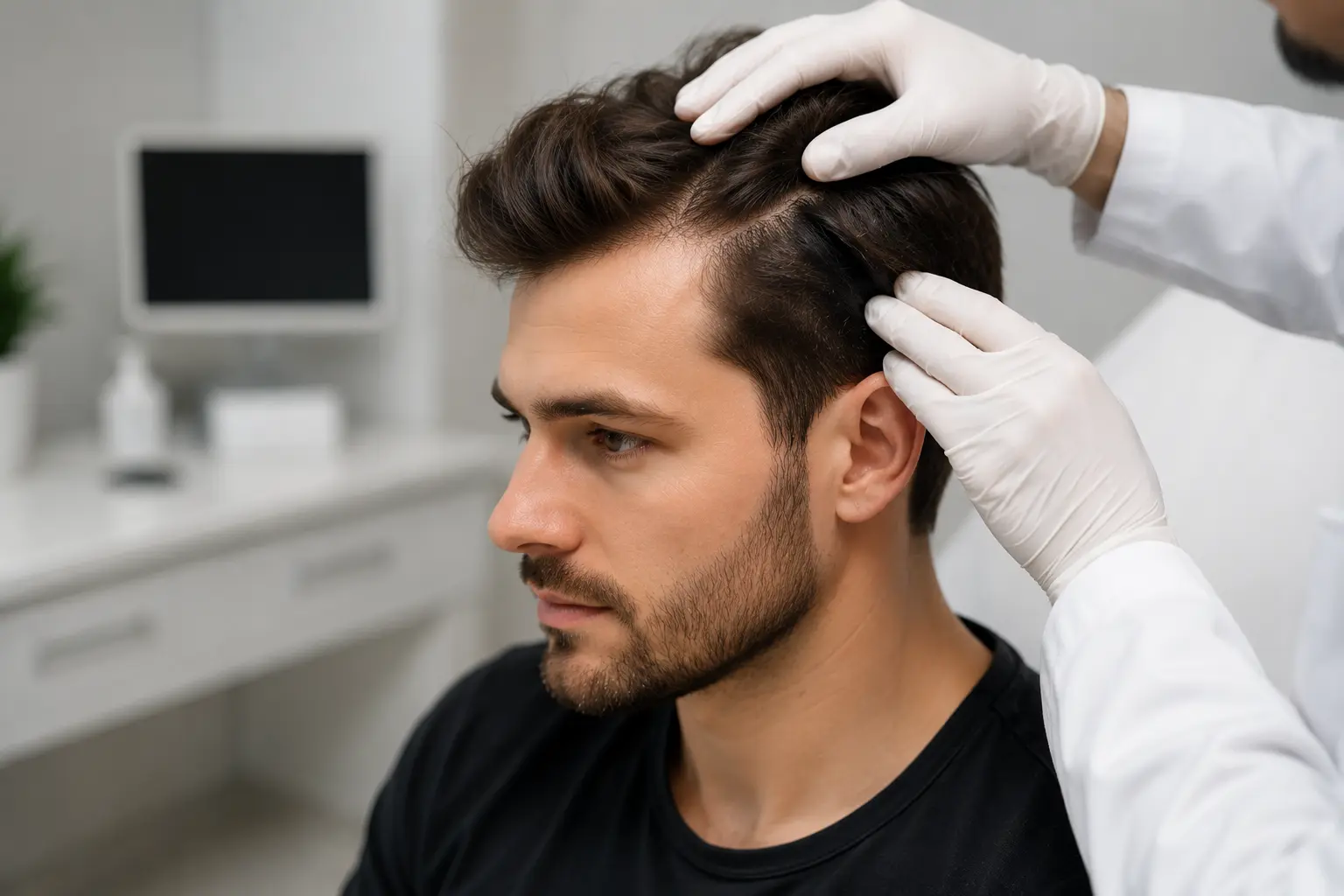
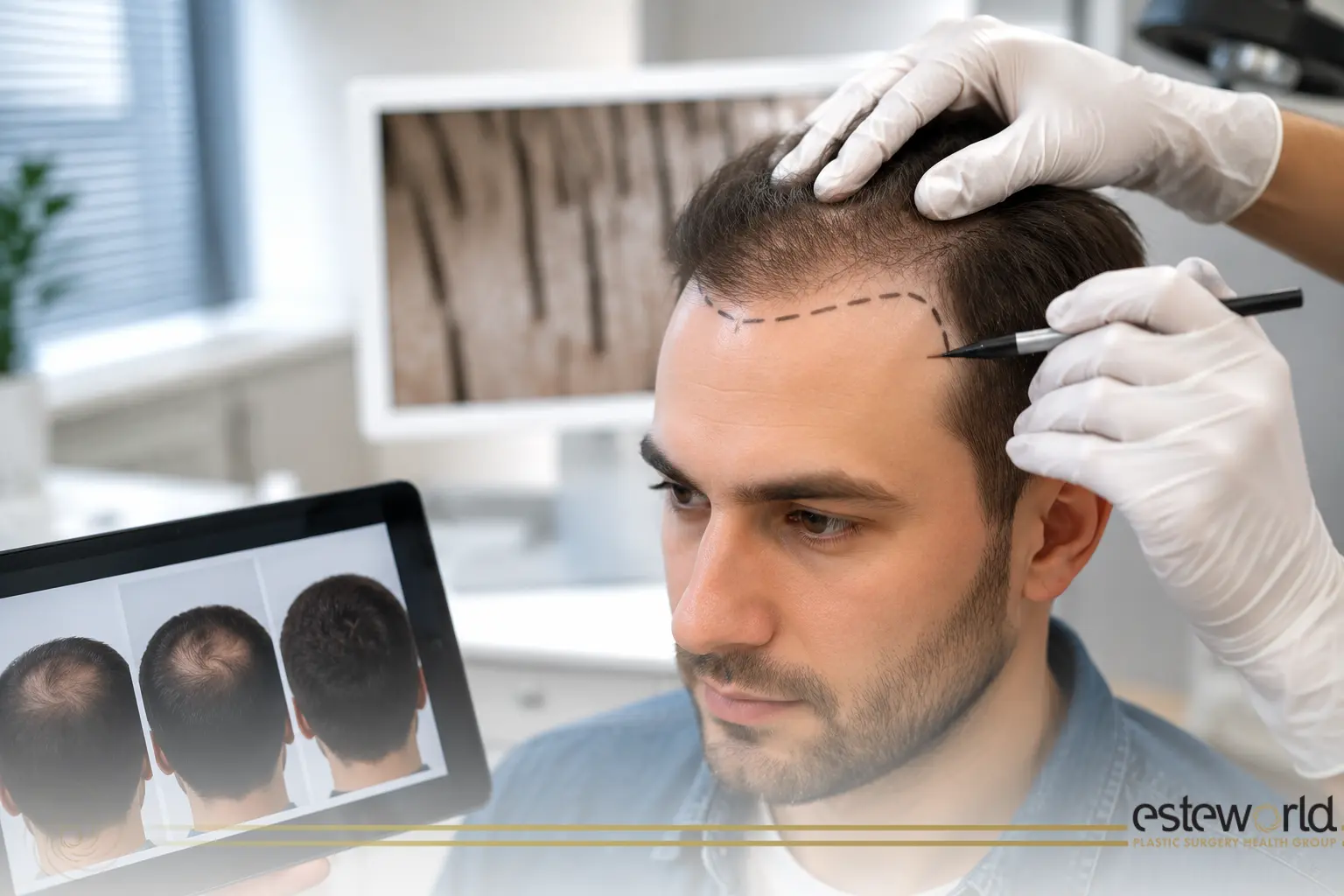
Trichology is the study of the hair and scalp. Trichologists can advise on hair and scalp problems, but they are not medically qualified. They refer patients to doctors for blood tests, biopsies and prescription medicines. Before a transplant, what you need is a doctor’s assessment of why you are losing hair and whether surgery suits you.
This article is for general information only. It does not replace a consultation, diagnosis or treatment by a doctor.
What Is Trichology?
The Institute of Trichologists describes trichology as the science of the structure, function and diseases of human hair. In a clinical sense, it is the diagnosis and treatment of hair and scalp disorders. Trichologists receive training of a clinical and medical nature specific to the hair and scalp.
In the UK, the institute has trained and certified trichologists since 1902. It notes that trichology is not currently recognised as an NHS service.
What Does a Trichologist Deal With?
According to the Institute of Trichologists, a trichologist may deal with:
- Hair loss or breakage, and sudden or long-term shedding
- Scalp problems, such as flaking or an excessively greasy scalp, and certain skin conditions
- Hair shaft defects that make hair break or hard to manage
- Hair loss linked to iron deficiency, injury, childbirth, fever or medicines
- Counselling for people who are considering a hair transplant or other hair replacement
Some conditions are outside a trichologist’s remit. Infections of the skin or hair, for example, need referral to a GP. That is where trichology meets hair transplantation: it can help you understand your hair and prepare questions, but the medical decision sits with doctors.

Trichologist, Dermatologist or Hair Transplant Surgeon: Who Does What?
| Trichologist | Dermatologist | Hair restoration surgeon | |
|---|---|---|---|
| Medical doctor? | No | Yes | Yes |
| Can prescribe medicines? | No; refers to a doctor | Yes | Yes |
| Blood tests or a scalp biopsy? | Refers to a doctor | Can arrange them | Yes |
| Performs surgery? | No | Many perform hair transplants | Yes |
| Typical focus | Hair and scalp problems, with non-prescription treatment and hair-care advice | Diagnosis and medical treatment of hair, scalp and skin disease; can assess transplant candidacy | Transplant planning and surgery |
In Türkiye, a Ministry of Health regulation sets out which certified doctors and certified healthcare staff may carry out each stage of a hair transplant. Only staff whose certificates are registered with the Ministry may work in a hair transplant unit. Whichever clinic you choose, ask who will assess you, who will make the diagnosis and which doctor is responsible for your surgery. At Esteworld, the cause of hair loss is assessed by medical aesthetics physicians (MD). Read more about the dermatologist’s role in hair transplants.
How a Hair and Scalp Assessment Fits Into Transplant Planning
Not everyone with hair loss is a good candidate for a transplant. A 2021 review describes eight situations in which a person is not a suitable candidate, identified through a detailed history and examination. A 2026 review notes that there are still few detailed guidelines for assessing transplant candidates. That makes a careful individual assessment all the more important.
Finding the cause of hair loss
The first question is why the hair is thinning. The NHS recommends seeing a GP to find out the likely cause before going to a commercial hair clinic. To find the cause, a dermatologist may order a blood test. Some patients also need a small scalp biopsy, which can be taken during the consultation. Pattern hair loss, temporary shedding and scalp disease can look alike at first, yet they need very different approaches.
Conditions that may make a transplant unsuitable
According to the 2021 review, these include:
- Diffuse thinning that also affects the donor area at the back of the head
- Scarring forms of hair loss
- Hair loss that is still unstable or progressing quickly
- Hair loss that is not yet extensive enough to need surgery
- Very young patients
- Unrealistic expectations
- Psychological conditions such as body dysmorphic disorder or hair pulling (trichotillomania)
- General health problems that make surgery unsafe
Where one of these applies, a doctor may suggest treatment, waiting or a different option first. See also who may not be a good candidate.
What a dermatologist checks, including trichoscopy
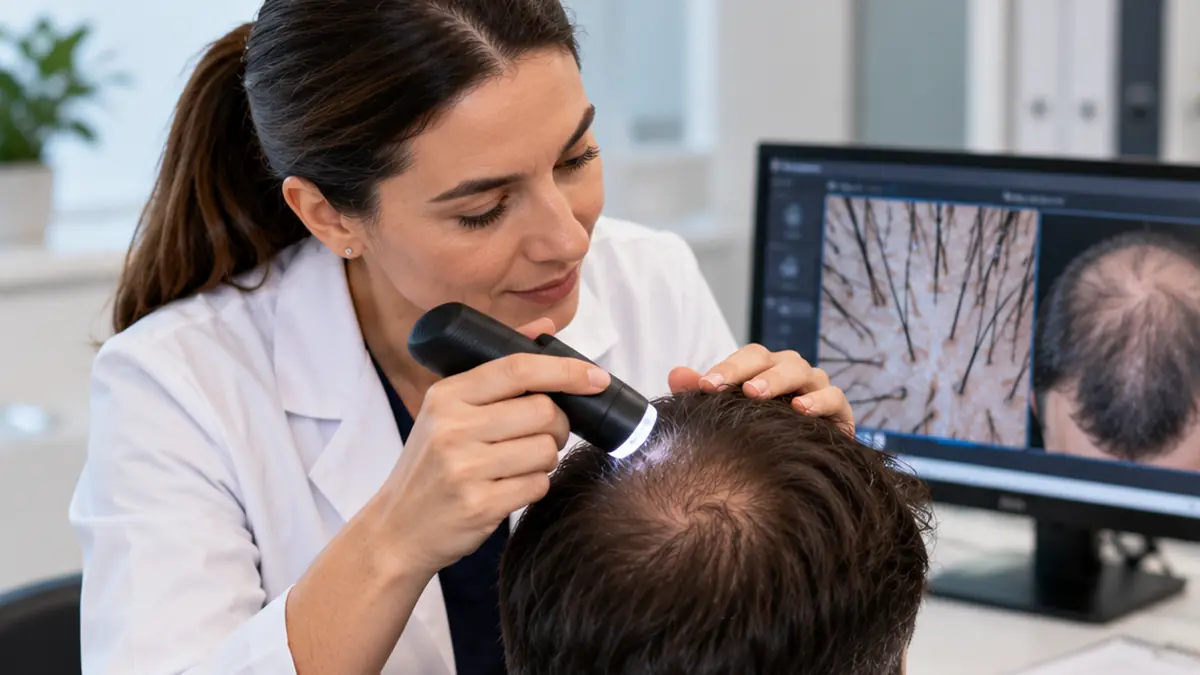
A dermatologist examines the scalp thoroughly. They can tell you whether you have enough healthy donor hair, and whether hair is likely to grow where it is needed.
Trichoscopy, a magnified examination of the hair and scalp, is increasingly used for this. It can help pick out conditions that mimic pattern hair loss and change whether someone is a suitable candidate. Examples are alopecia areata incognita and fibrosing alopecia in a patterned distribution. It can also be used to assess hair density in the donor area. For background on scalp conditions, see scalp health before and after a transplant.
Temporary Shedding Versus Progressive Hair Loss
Seeing more scalp does not always mean permanent baldness. After a stressful event such as illness, surgery or major life stress, many people shed far more hair than usual. The American Academy of Dermatology (AAD) says this usually becomes noticeable a few months after the event. Hair often returns to its normal fullness within 6 to 9 months.
That is one reason a proper diagnosis matters. A transplant does not treat temporary shedding, and planning surgery during a shedding phase can lead to the wrong decision.
After the Transplant: Follow-Up and Ongoing Hair Loss
A transplant moves hair; it does not stop the underlying pattern of hair loss. The AAD notes that medicine can prevent or slow down new hair loss and thinning. A dermatologist may recommend it to help keep your results. Whether medication suits you is a decision for your doctor.
Follow-up appointments are also when changes to the scalp, such as redness, itching, flaking or new patches of loss, can be checked. A trichologist can advise on everyday scalp care in this period, but any new symptom should be reviewed by a doctor.
How to Check a Trichologist’s Qualifications
- Ask which professional body they belong to. Trichologists registered with the Institute of Trichologists use the letters AIT, RIT or FIT after their names.
- Check the register. The institute says it cannot regulate practitioners who are not on its register.
- Ask whether they work with, or refer to, a doctor for tests and prescriptions.
- Be cautious if anyone without medical training offers to prescribe medicine or carry out surgery.
When to See a Doctor
See a doctor, rather than only a trichologist, if:
- Your hair loss is sudden or appears as round, bald patches.
- Your scalp is painful, burning, red, scaly or has pustules or shiny scarred areas.
- Hair loss comes with other symptoms, such as tiredness, weight change or irregular periods.
- Shedding has lasted longer than about 6 to 9 months.
- You are thinking about a hair transplant and do not yet have a confirmed diagnosis,
Three questions matter most before a transplant: why you are losing hair, whether the loss is stable and whether your donor area can support your goals. Trichology can help with hair care, but a transplant decision needs a doctor’s diagnosis. Our team can go through those three questions with you at a hair loss assessment: book a consultation..