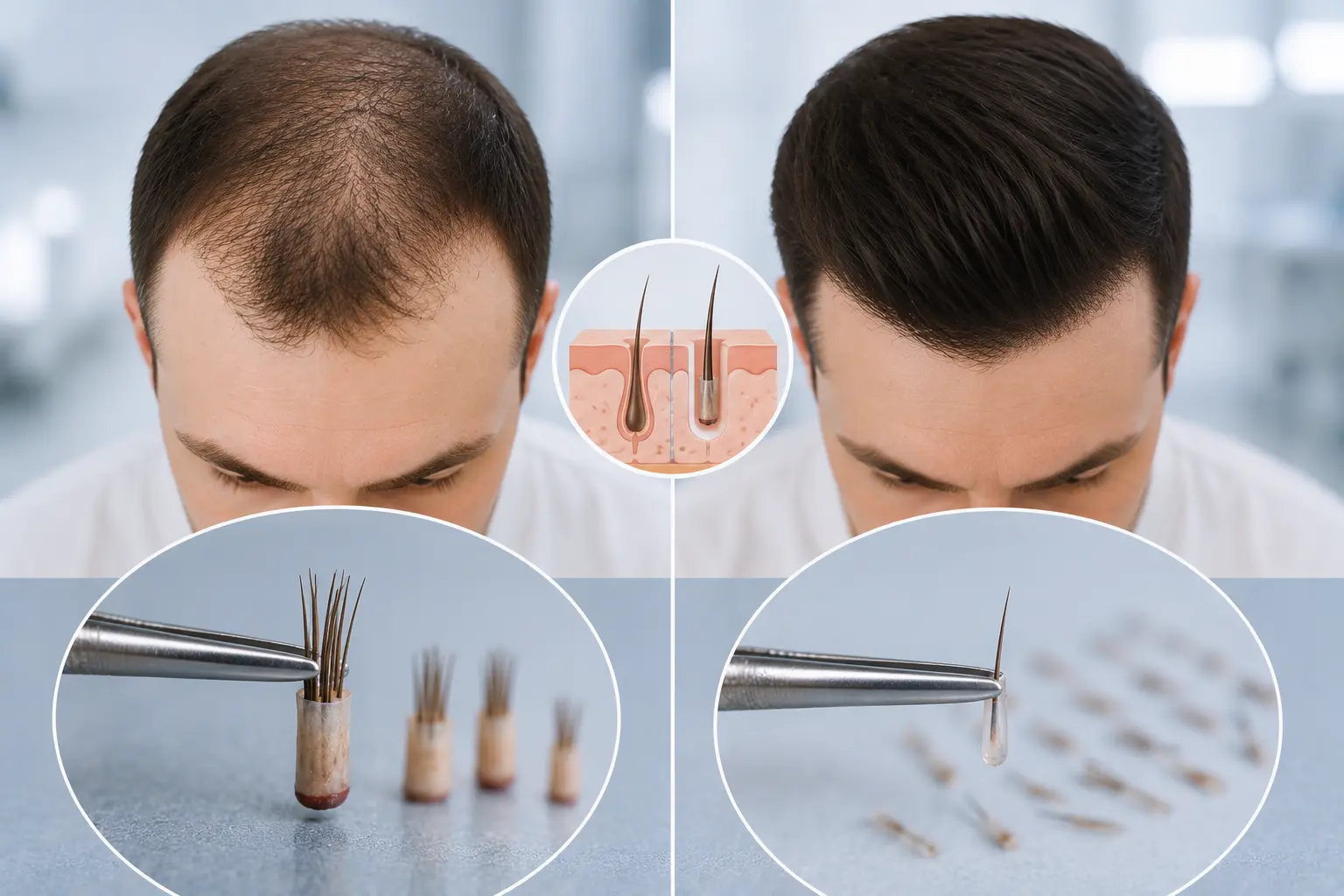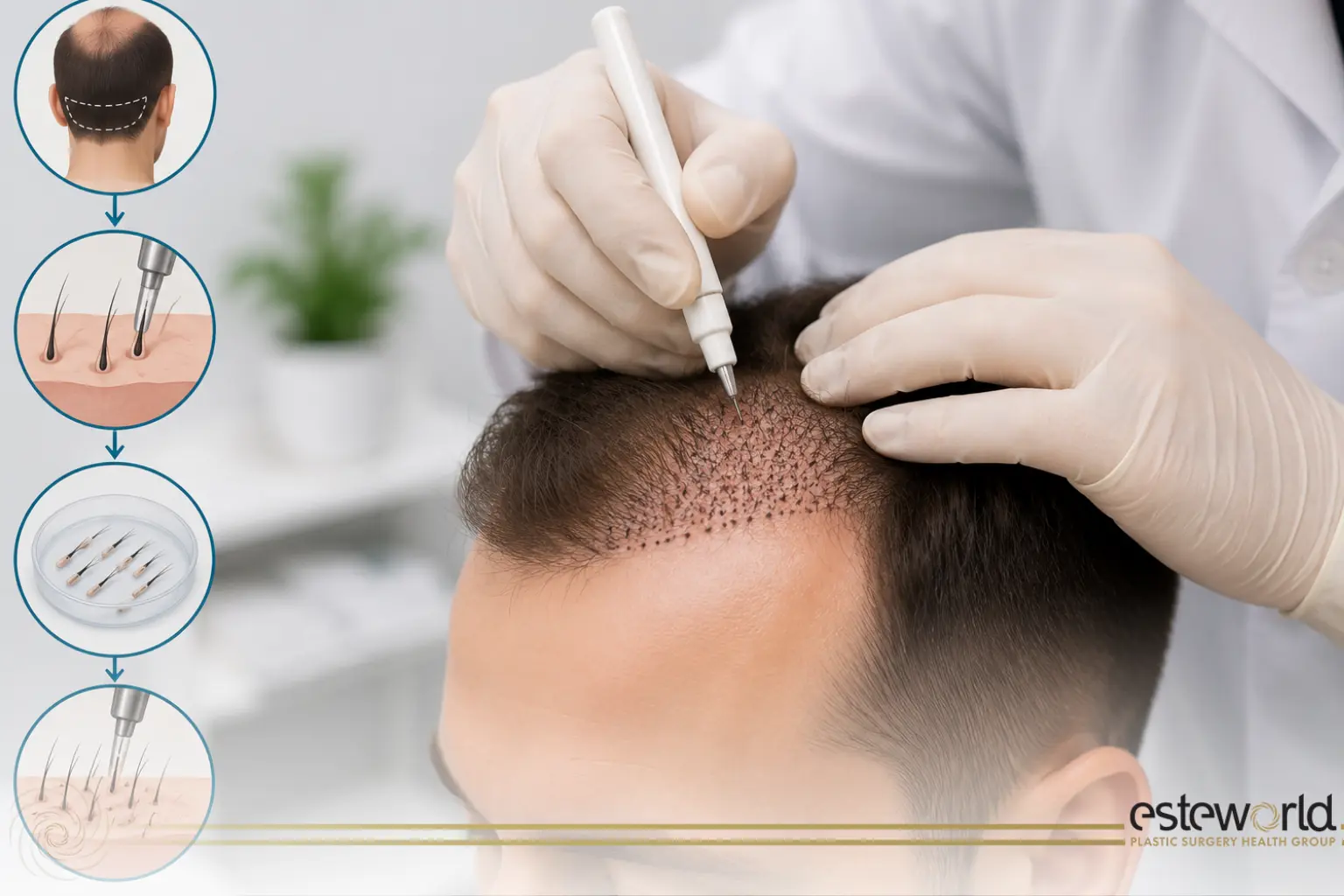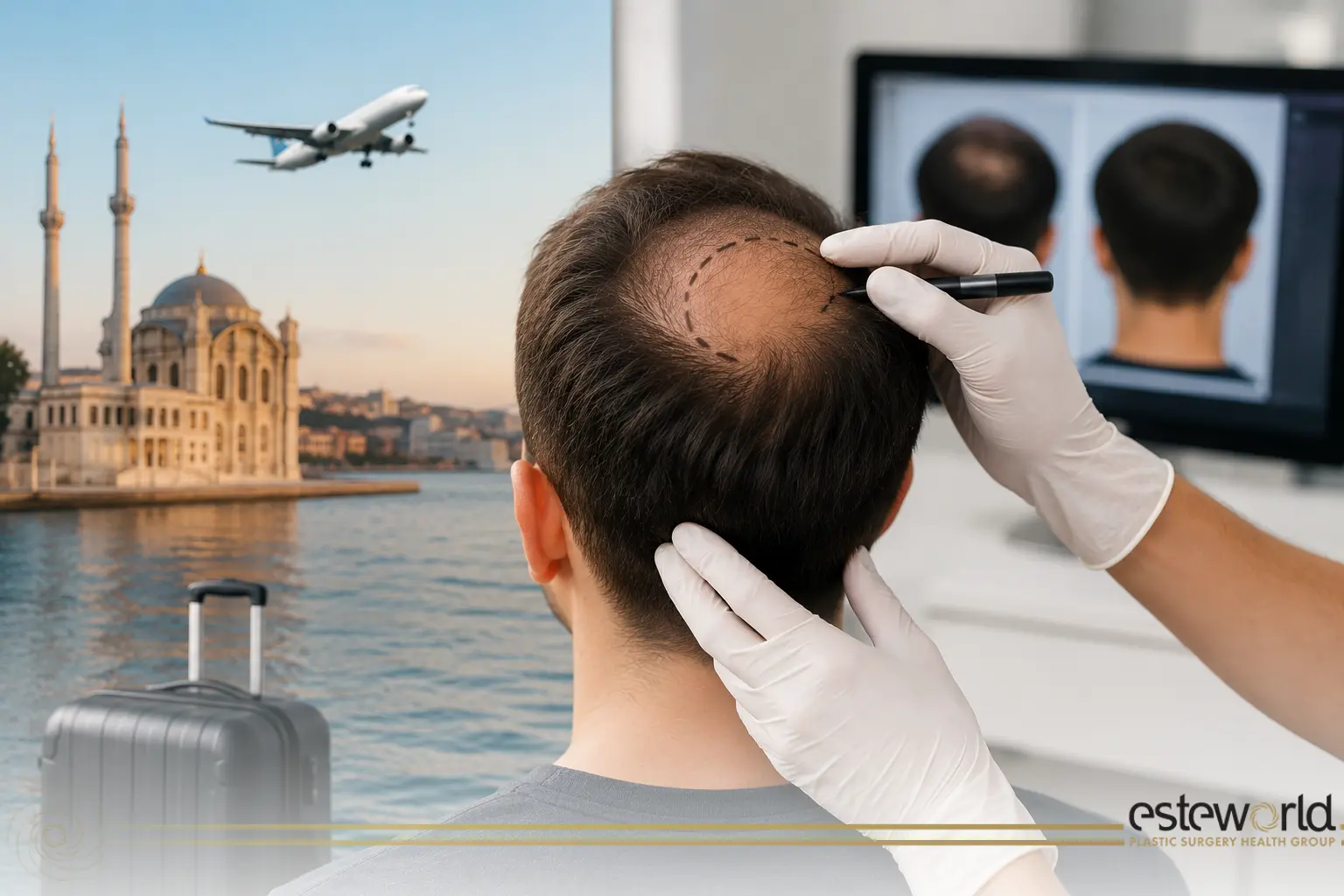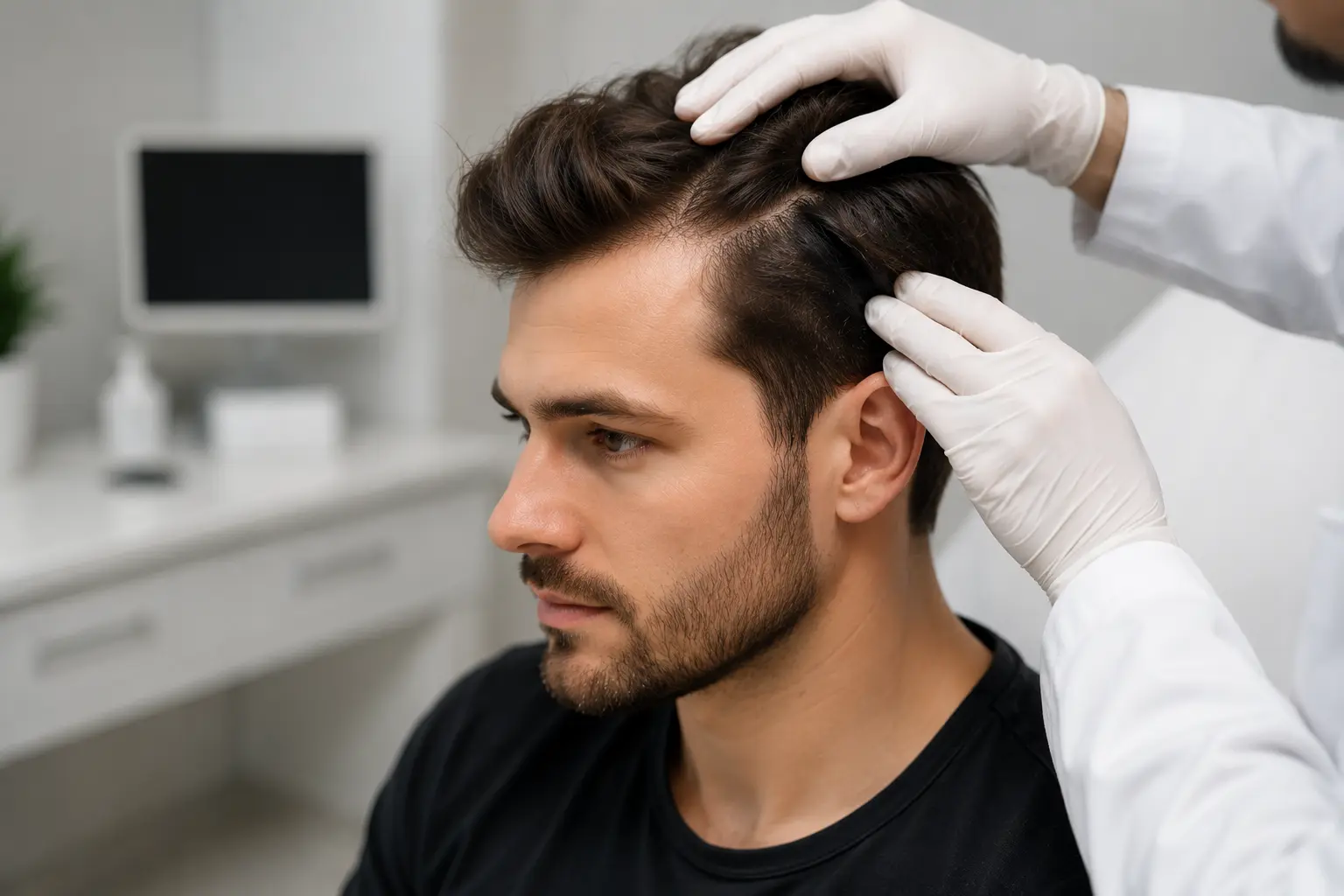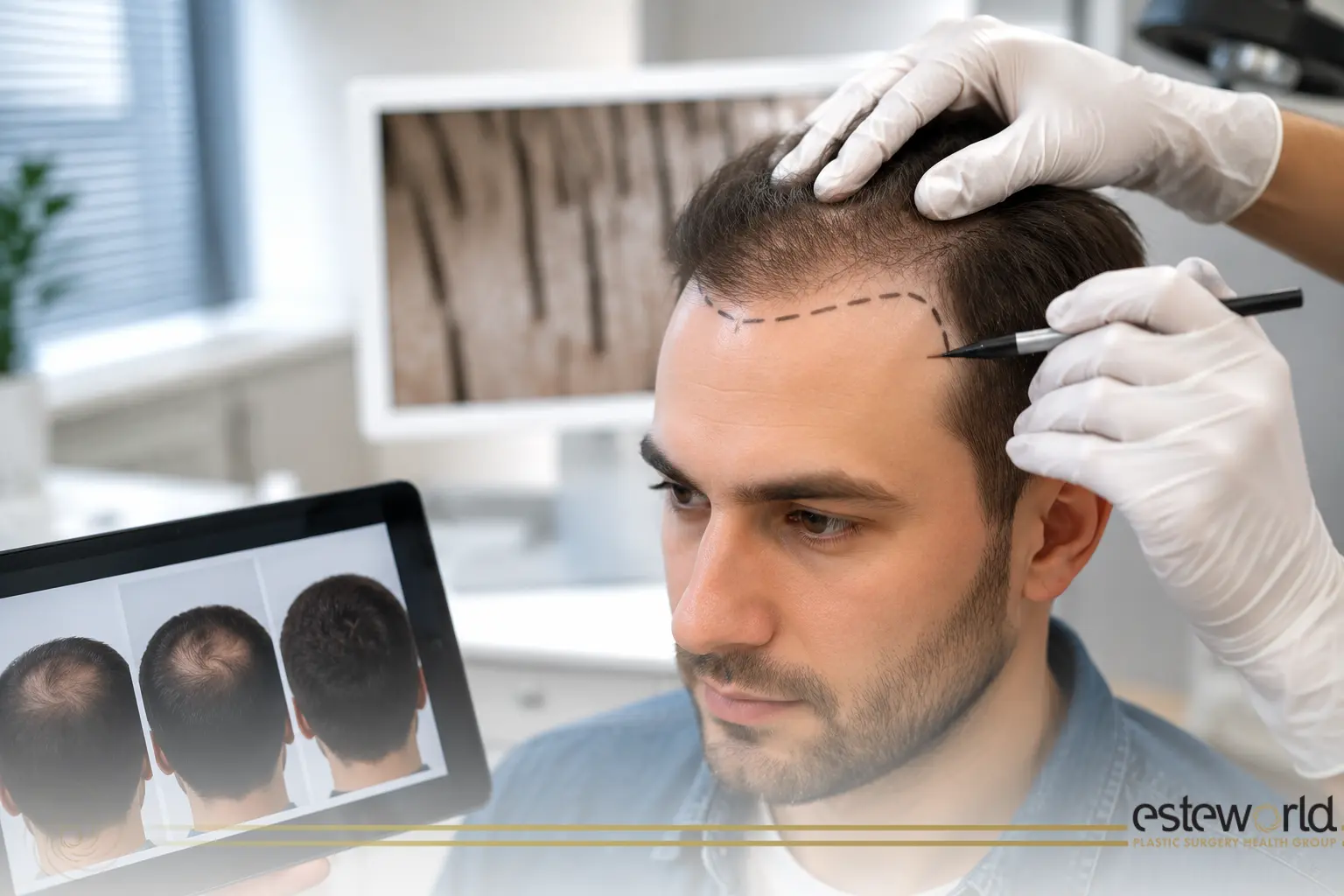
A hair transplant consultation should confirm why you are losing hair, whether you are a suitable candidate, who will perform each surgical stage and what result is realistic for your donor supply. These 10 questions help you compare clinics, understand risks, clarify costs and leave the consultation with a written treatment and aftercare plan.
What Should You Ask Before a Hair Transplant?
Before agreeing to a hair transplant, ask questions that test the quality of the medical assessment, not only the sales offer. A useful consultation should cover your diagnosis, donor capacity, long-term hair-loss pattern, proposed technique, graft estimate, clinical team, risks, recovery, results, total cost and follow-up arrangements.
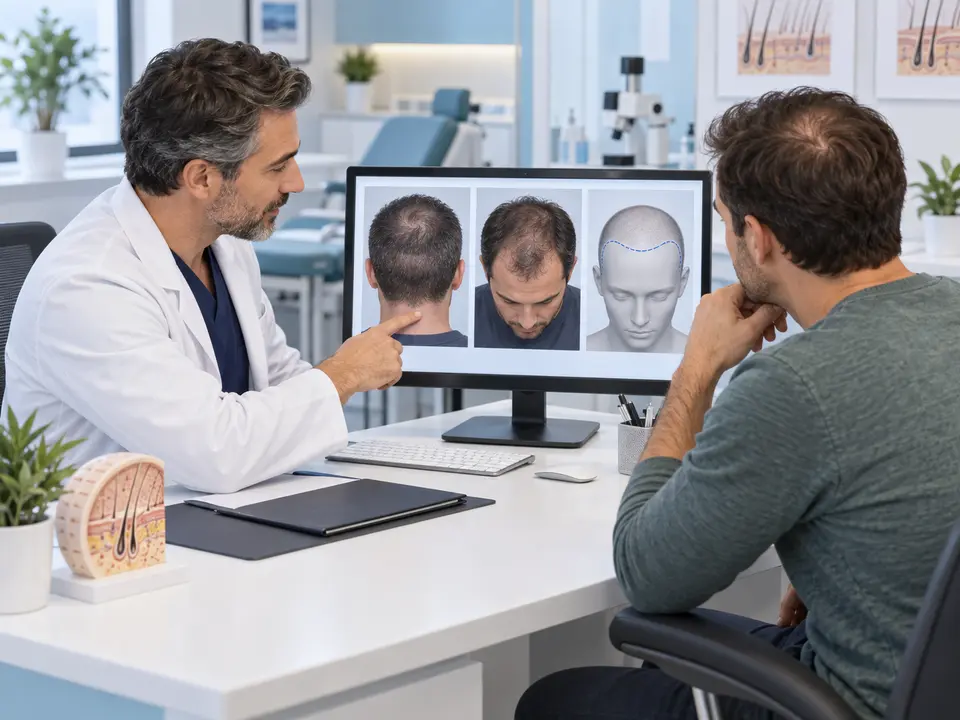
A hair transplant is a medical and surgical decision. The consultation should therefore include a review of your medical history, medicines, supplements, allergies, previous procedures and expectations, as well as an examination of the scalp, donor area and recipient area.
Use the following checklist during the appointment:
| Question | What a clear answer should cover |
|---|---|
| 1. What is your experience with hair transplantation? | Relevant training, licences, years of practice and experience with cases similar to yours |
| 2. Who will perform each part of the procedure? | The named doctor and team members responsible for assessment, extraction, recipient-site creation and implantation |
| 3. Am I a suitable candidate? | Diagnosis, stability of loss, medical suitability, donor density and realistic limitations |
| 4. What is my donor capacity and how many grafts do I need? | Measured donor findings, estimated graft range, coverage priorities and protection against overharvesting |
| 5. Which technique do you recommend and why? | Why the proposed method fits your scalp, hair characteristics, goals and future plan |
| 6. How will you design an age-appropriate long-term hairline? | Facial proportions, existing loss, likely progression and conservation of donor hair |
| 7. What results can I realistically expect? | Comparable cases, limitations, growth timeline and whether further procedures may be needed |
| 8. What are the risks and how are complications handled? | Common and serious risks, prevention, emergency contact and responsibility for treatment |
| 9. What should I expect during recovery and aftercare? | Washing, sleeping, work, exercise, warning signs and follow-up schedule |
| 10. What is the total cost and what is included? | Procedure, tests, medicines, aftercare, follow-up and revision or cancellation terms |
Questions About the Surgeon and Surgical Team
The consultation should identify the qualified professional responsible for your diagnosis and treatment plan and explain who will perform every surgical stage. A clinic name, device brand or coordinator conversation does not replace knowing the credentials, role and accountability of the people carrying out the procedure.
1. What Is Your Experience With Hair Transplants?
Ask how long the doctor has performed hair-restoration procedures, what relevant training and professional licences they hold and how frequently they treat patients with a hair-loss pattern and hair type similar to yours.
The number of procedures alone does not prove quality. Ask how outcomes are audited, how complications are recorded and how the doctor approaches donor preservation and long-term planning. Statements such as “100% success,” “guaranteed density” or “scar-free surgery” should be treated cautiously.
You can also ask:
- How often do you perform hair-transplant surgery?
- Which hair-loss patterns and hair types do you treat most frequently?
- Do you have experience with previous surgery, scarring or repair cases?
- How do you monitor complications and patient outcomes?
- Can I verify your professional registration and clinical role?
2. Who Will Perform Each Part of My Procedure?
Ask for the name, qualifications and specific role of every person involved. The clinic should explain who evaluates your hair loss, designs the hairline, administers anaesthesia, extracts grafts, creates recipient sites, places grafts and supervises postoperative care.
Do not assume that the doctor named in advertising will perform or directly supervise every stage. Local laws and professional scope-of-practice rules differ, so the clinic should clearly state which tasks are performed by a licensed physician and which may be delegated to appropriately trained staff.
A vague answer such as “our medical team handles it” is not enough. You should know who is accountable if a medical issue or complication develops.
Questions About Candidacy, Donor Hair and Technique
A good consultation should explain whether surgery is appropriate before discussing a package or booking date. It should identify the cause and likely progression of hair loss, measure the donor area and show why the proposed technique and graft plan are suitable for your individual case.
3. Am I a Suitable Candidate for a Hair Transplant?
Not everyone with hair loss is an appropriate candidate. Suitability depends on the diagnosis, pattern and stability of loss, donor availability, scalp condition, medical history and expectations.
Ask the doctor to explain what type of hair loss you appear to have and whether further assessment is needed. Sudden, patchy, inflammatory or scarring hair loss may require dermatological investigation before surgery is considered. Very early or rapidly progressing loss may also require monitoring or a longer-term preservation plan.
The answer should address:
- the likely diagnosis and pattern of loss;
- whether the loss appears stable or progressive;
- the condition and density of the donor area;
- scalp inflammation, scarring or previous procedures;
- medicines, health conditions and smoking history;
- realistic coverage based on available donor hair;
- whether non-surgical management or observation should be considered first.
4. What Is My Donor Capacity and How Many Grafts Do I Need?
The graft estimate should be based on an examination or documented measurements, not only photographs and a sales target. Ask how the donor area was assessed, which areas need priority and how much donor hair should be conserved for possible future loss.
Donor hair is finite. Removing too many follicular units or taking them unevenly can create visible thinning, patchiness or scarring in the donor area. A higher graft number is therefore not automatically a better plan.
Ask for a realistic graft range rather than a guaranteed exact number before the clinical assessment is complete. The plan should explain the relationship between the available donor supply, the size of the recipient area, hair calibre, curl, colour contrast and achievable visual density.
5. Which Hair-Transplant Technique Do You Recommend and Why?
The clinic should explain why a proposed method fits your diagnosis, donor area, hair characteristics, recipient area and recovery needs. Technique names should not be used as a substitute for an individual surgical plan.
Patients comparing methods can review FUE hair transplantation and DHI hair transplantation. Ask what the practical difference will be in your case, who will perform each stage and whether another approach would offer a similar or better result.
Both follicular unit excision and strip-based harvesting create scars. The location and appearance differ, but no surgical technique should be described as completely scarless.
6. How Will You Design a Natural Hairline That Ages Well?
A hairline should be planned for your facial proportions, current age, existing hair-loss pattern, donor capacity and likely future progression. Ask the doctor to draw and explain the proposed design before surgery and to show why its height, shape and density are appropriate.
An excessively low, straight or dense hairline may consume donor grafts and become difficult to maintain if native hair continues thinning. Long-term planning should consider not only the frontal line but also the temples, mid-scalp, crown and the possibility of future procedures.
Ask whether you will have time to review the design, request reasonable adjustments and give informed approval before the procedure begins.
Questions About Results, Risks and Recovery
The clinic should describe the result as a realistic range rather than a guarantee. It should also explain the normal growth timeline, possible complications, recovery restrictions and what happens if healing or growth does not follow the expected course.
7. What Results Can I Realistically Expect?
Ask to see consistent before-and-after photographs of patients with similar hair loss, donor characteristics, hair calibre, curl and skin-to-hair colour contrast. The images should use comparable angles, lighting, hair length and styling and should identify the time after surgery.
Do not evaluate a result only from an immediate post-procedure photograph. Ask to see mature outcomes and donor-area views. The doctor should explain the difference between graft survival, visual density and full restoration, because a transplant cannot always replace every hair that has been lost.
Also ask:
- When should early growth and the more mature result become visible?
- Is temporary shedding expected?
- Could native hair continue to thin around the transplant?
- Might I need another procedure in the future?
- What result would the clinic consider realistic for my donor supply?
8. What Are the Risks and How Are Complications Handled?
Hair transplantation can involve bleeding, infection, scarring, swelling, altered sensation, folliculitis, poor growth, an unnatural design or visible donor thinning. The exact risk profile varies according to the procedure, medical history and clinical plan.
Ask how the clinic works to reduce these risks and who will assess you if a complication develops. Confirm whether you will receive written warning signs, a clinical contact number and clear instructions for urgent or out-of-hours concerns.
The consultation should also cover what happens if the result is uneven, growth is lower than expected or a corrective procedure is considered. A responsible answer will discuss limitations and assessment rather than promise that complications never occur.
9. What Should I Expect During Recovery and Aftercare?
Ask for a written recovery plan covering the first wash, sleeping position, graft protection, medicines, exercise, work, travel, sun exposure, headwear and the expected stages of shedding and growth. Instructions should be personalised when your medical history or procedure requires it.
Clarify:
- when and how the first wash will be performed;
- how long the grafts need protection from pressure and friction;
- when you can return to work, exercise and normal hair care;
- which symptoms are expected and which require medical advice;
- how postoperative photographs or reviews will be arranged;
- who will answer questions after you return home.
For a broader explanation, read the guide to the role of aftercare in hair-transplant success.
Questions About Cost, Follow-Up and Red Flags
The final price should be transparent and connected to a documented medical plan. Ask what is included, what may create an additional charge and who remains responsible for your care after payment and travel. Pressure to book immediately should not replace time to review the plan and give informed consent.
10. What Is the Total Cost and What Does It Include?
Ask for a written quotation that identifies the procedure, estimated graft range and every included or excluded service. Depending on the clinic, the price may or may not include consultation, blood tests, medicines, postoperative products, follow-up appointments, accommodation or transfers.
Confirm:
- Whether the price is fixed or may change after examination;
- Which medical tests, medicines and postoperative products are included;
- How many follow-up reviews are provided and for how long;
- Whether travel, accommodation or transfers are included;
- What happens if the procedure is postponed or cancelled;
- How complications, revisions or additional sessions are assessed;
- Whether any follow-up treatment creates a separate charge.
Cost should be evaluated together with medical suitability, the named clinical team, donor safety and aftercare. A low quote is not useful if essential medical assessment or follow-up is unclear.
Consultation Red Flags
Consider seeking another opinion if:
- No qualified clinician assesses the cause of your hair loss;
- The clinic will not identify who performs each surgical stage;
- A graft number is promised without evaluating the donor area;
- The plan guarantees density, growth or a completely scarless result;
- Every patient is offered the same technique or hairline;
- Risks and limitations are dismissed;
- Only immediate post-procedure photographs are shown;
- There is pressure to pay or travel immediately;
- Aftercare, emergency contact and complication management are unclear.
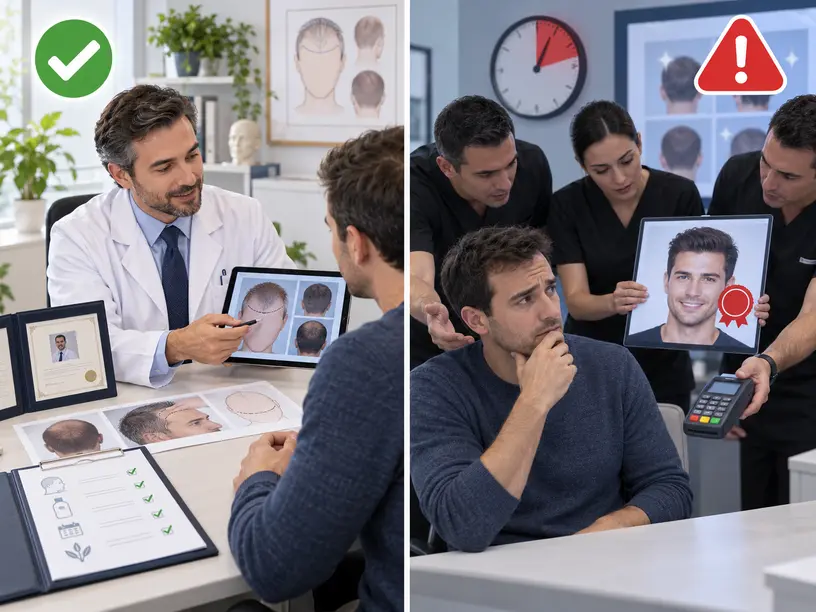
Bring this checklist to your consultation and request written answers for the proposed technique, graft range, clinical team, recovery plan, total cost and follow-up arrangements.