Telogen effluvium is heavy hair shedding from all over the scalp. It often starts about 3 months after a trigger such as illness, childbirth or stress. In most people it is temporary. The shedding phase lasts 3 to 6 months, and hair grows back without treatment once the cause has passed.
This article is for general information only. It does not replace a consultation, diagnosis or treatment by a doctor.
What Is Telogen Effluvium?
Telogen effluvium is a condition where more hair than usual falls out from your scalp. The British Association of Dermatologists (BAD) explains that it happens when illness, stress or major changes in the body disrupt the normal hair cycle.
Losing some hair every day is normal. The NHS says we can lose between 50 and 100 hairs a day, often without noticing. The BAD gives a wider range of 30 to 150, and new hairs grow to replace them.
How the Hair Cycle Changes
Each hair follicle goes through a growing phase (anagen) and a resting phase (telogen). According to the BAD, about 85% of scalp follicles are growing at any time and about 15% are resting. A resting hair stays in place for 2 to 4 months. Then a new hair starts to grow and pushes the old one out.
In telogen effluvium, a shock to the body moves many growing hairs into the resting phase at once. The BAD says the share of resting hairs rises from about 15% to 30% or more. These hairs fall out a few months later, as new hairs push them out. DermNet notes that, for this reason, the hair fall is actually a sign of regrowth.
What Causes Telogen Effluvium?
The BAD lists these common triggers:
- Childbirth
- Severe trauma or illness, especially with a high fever
- Stressful or major life events
- Surgical procedures
- Marked weight loss and extreme dieting
- Severe skin problems affecting the scalp
- Starting new medicines
- Stopping a hormone treatment, such as coming off the contraceptive pill
Alopecia UK adds iron deficiency and thyroid disorders to the list. It also mentions rapid weight loss caused by weight loss drugs. Our articles on hormonal imbalances and hair and on exercise and hair loss look at some of these triggers in more detail.
For 1 in 3 people with telogen effluvium, no cause can be found. The BAD notes that it affects all ages and both sexes equally, and it does not run in families.
Symptoms of Telogen Effluvium
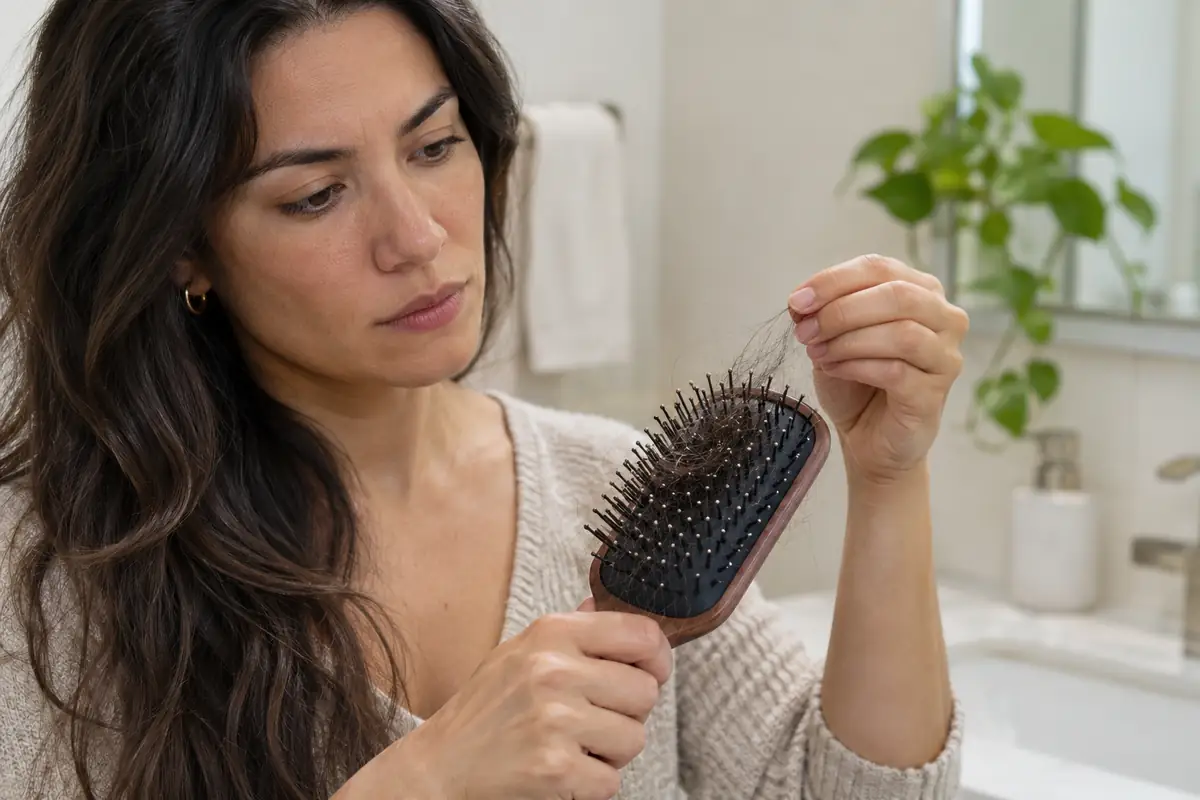
Most people notice the problem when they see more hair than usual after washing or brushing. The BAD says you may find more hair in the shower drain, on your brush or on your pillow in the morning. The shedding typically starts suddenly and without warning.
Hair comes out from all over the scalp. You may notice that your hair feels thinner and has less volume, rather than bald patches. Patches suggest a different cause, such as alopecia areata.
Usually there are no other symptoms. Some people feel tenderness or unusual sensations in the scalp, which doctors call trichodynia.
How Long Does Telogen Effluvium Last?
The timeline depends on the trigger and on whether the cause is still present. The table brings together figures from the BAD, DermNet and the American Academy of Dermatology (AAD).
| Stage | Typical timing |
| Shedding starts | About 2 to 4 months after the trigger (often around 3 months) |
| Shedding phase | Usually 3 to 6 months, then new hair starts to grow |
| Hair fall settles | Gradually tapers back to normal over 6 to 9 months in most cases |
| Fullness returns | Often within 6 to 9 months, although for some people it takes longer |
| Chronic telogen effluvium | Shedding that lasts more than 6 months |
New short hairs are a good sign. DermNet describes a fine fringe of new hair that often appears along the front hairline.
Some people have chronic telogen effluvium, with heavier shedding that continues or comes and goes for long periods, sometimes for years. DermNet notes that it often affects otherwise healthy women aged 30 to 60, and its mechanism is not well understood.
Telogen Effluvium vs Androgenetic Alopecia
Androgenetic alopecia, also called male or female pattern hair loss, is the most common type of hair loss, Alopecia UK says. The two conditions can look similar, and the BAD notes that sometimes both appear around the same time.
| Feature | Telogen effluvium | Androgenetic alopecia |
| How it starts | Suddenly, a few months after a trigger | Gradually, over months or years |
| Where it shows | All over the scalp | Temples and crown in men; the top of the head and the parting in women |
| The hairs | Hairs keep their normal thickness | Hairs become thinner and shorter over time |
| Family history | Does not run in families | Often runs in the family |
| Outlook | Usually gets better without treatment | Does not go away on its own; treatment helps some people |
The BAD explains that telogen effluvium can sometimes lead to an early diagnosis of pattern hair loss. DermNet adds that repeated episodes can sometimes develop into female pattern hair loss. Our article on androgenetic alopecia explains how it develops and how it is treated.
How Is Telogen Effluvium Diagnosed?
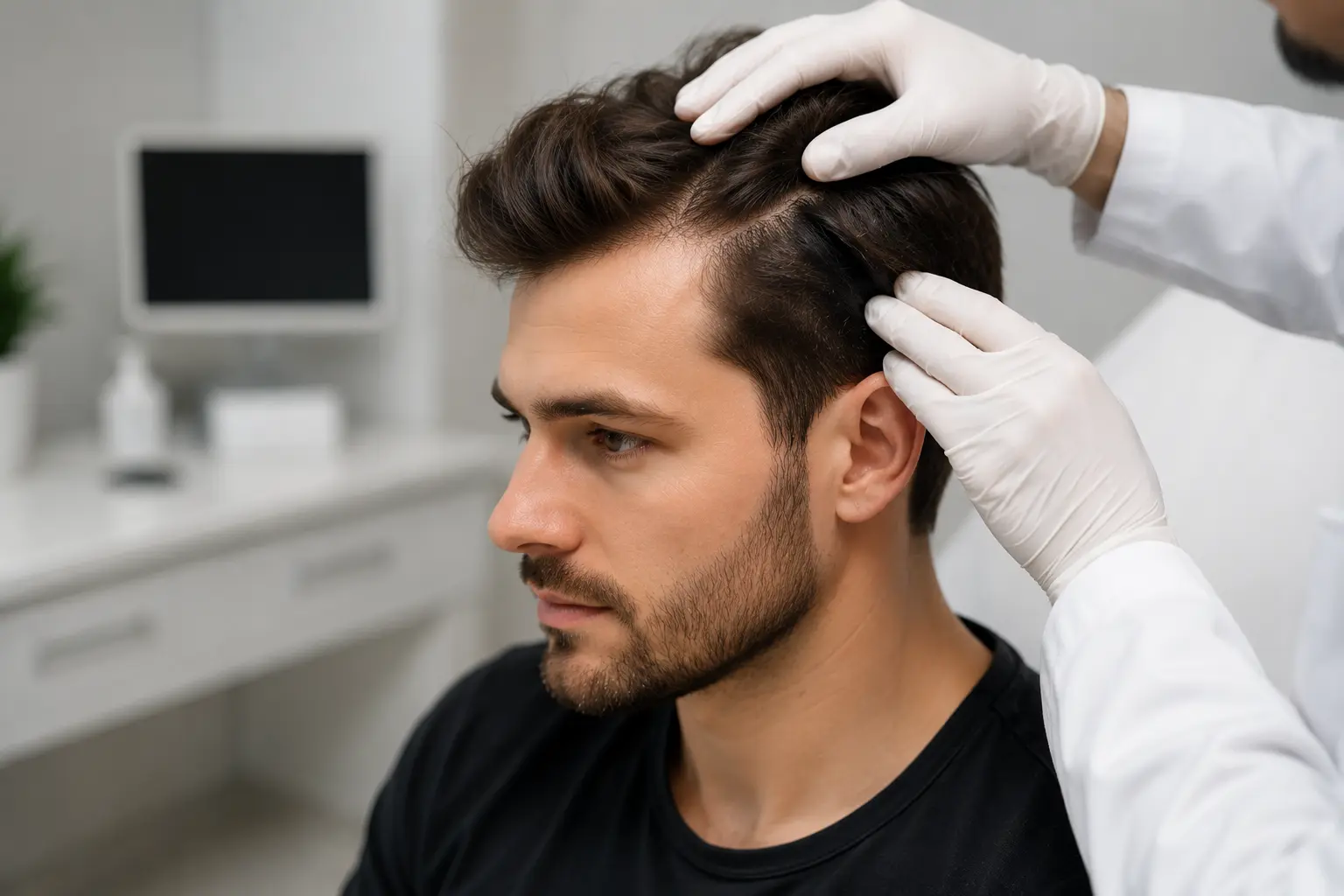
The NHS says a doctor may be able to tell what is causing your hair loss just by looking at your hair. According to the BAD, a diagnosis is usually made by examining the scalp and asking about your medical history. A doctor will ask about illness, stress, diet and medicines in the months before the shedding began.
Other tests may include:
- Hair pull test: The doctor gently pulls a small bunch of hair to see if more comes out than usual. The BAD notes that the result may be falsely normal if you washed your hair in the previous 48 hours.
- Hairs under a microscope: A few hairs can be examined to see whether they are resting hairs.
- Blood tests: These help rule out other causes, such as thyroid conditions and iron deficiency.
- Scalp biopsy: A small skin sample is needed only very rarely, when the diagnosis is uncertain.
Your nails can sometimes help date the trigger. DermNet explains that a shock to the body can leave a groove across the fingernails, called a Beau line. A fingernail takes about 5 months to grow out, so the groove’s position shows roughly when the shock happened.
Treatment for Telogen Effluvium
Treating the Cause
Telogen effluvium usually gets completely better without any treatment, the BAD says. The main step is to find and deal with the trigger.
DermNet recommends correcting any problem with thyroid function or with levels of iron, vitamin B12 or folic acid. If a medicine may be the cause, talk to your doctor first. The AAD warns that stopping some treatments suddenly can cause serious side effects.
Does Medication Help?
According to the BAD, taking medication does not speed up hair regrowth in telogen effluvium. An expert consensus from India on managing the condition, published in 2019, said that minoxidil is not recommended while shedding is active. The same panel saw a possible role for minoxidil in chronic telogen effluvium.
Alopecia UK says a doctor may suggest topical minoxidil in some cases where regrowth is incomplete. Minoxidil can itself cause extra shedding when you start using it, the consensus notes. Our article on minoxidil covers its use and side effects, and our hair loss treatments page has more information.
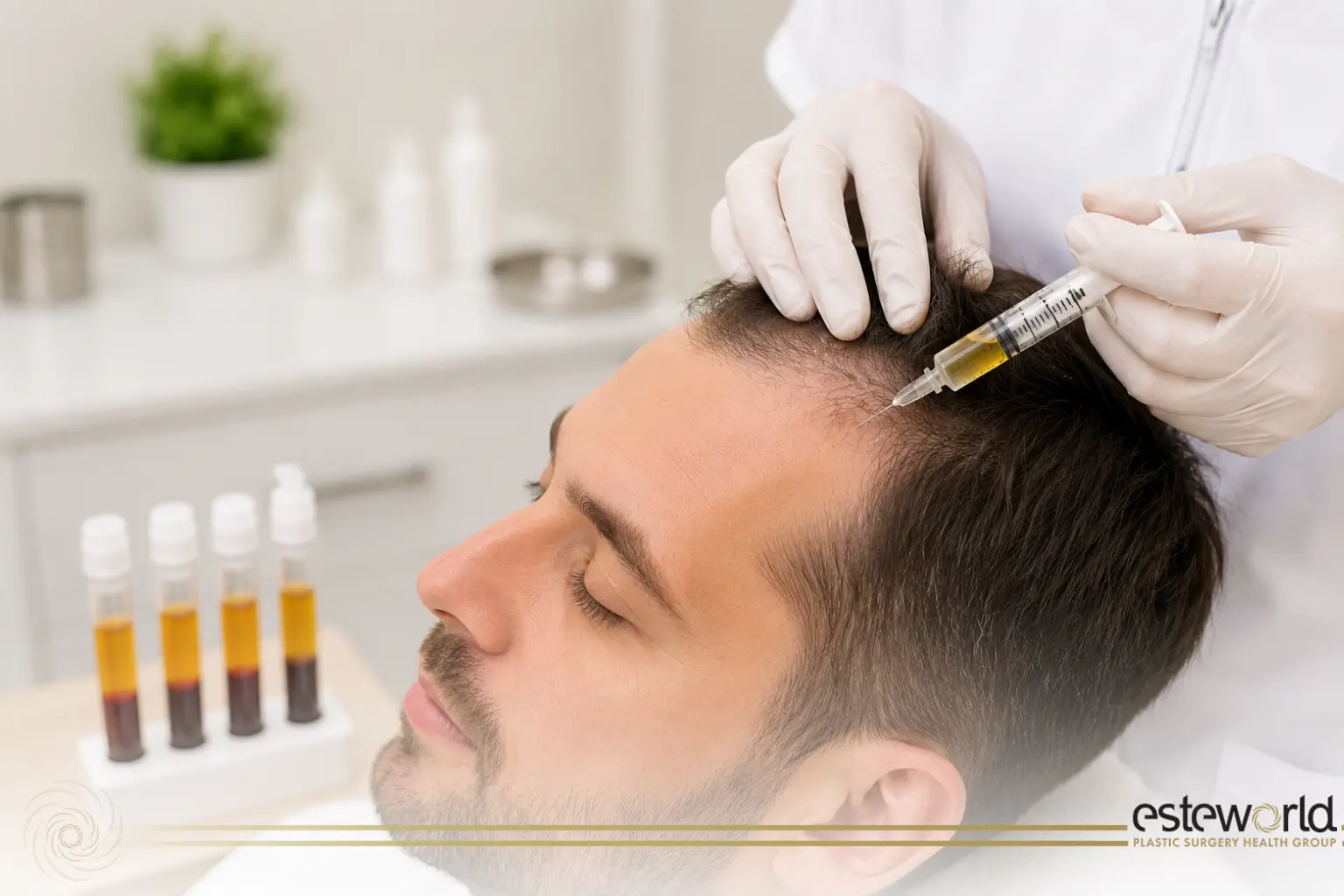
The same consensus stated that PRP (platelet-rich plasma) has no place in acute telogen effluvium. It may be of some use in chronic cases, but the panel noted that results vary.
Diet and Supplements
The BAD suggests a balanced diet with food rich in iron and protein, plus fresh fruit and vegetables. It adds that supplements may be worth considering if your diet is restricted, for example if you are vegan or vegetarian.
The 2019 expert consensus said there is no evidence that high doses of biotin help hair loss unless you lack biotin. Ask a doctor to check your levels before taking supplements for your hair.

Caring for Your Hair in the Meantime
The BAD’s self-care advice includes:
- Avoid harsh brushing or combing.
- Limit heated tools such as hairdryers, straighteners and curlers.
- Avoid bleaching, relaxing or other treatments with harsh chemicals.
- Limit tight hairstyles.
- Consider stopping smoking, as cigarette smoke can worsen hair loss.
If your scalp starts to show, the BAD mentions hair fibre powders or sprays and volumising shampoos to make hair look thicker. It is very unusual for telogen effluvium to need a wig.
Is a Hair Transplant an Option?
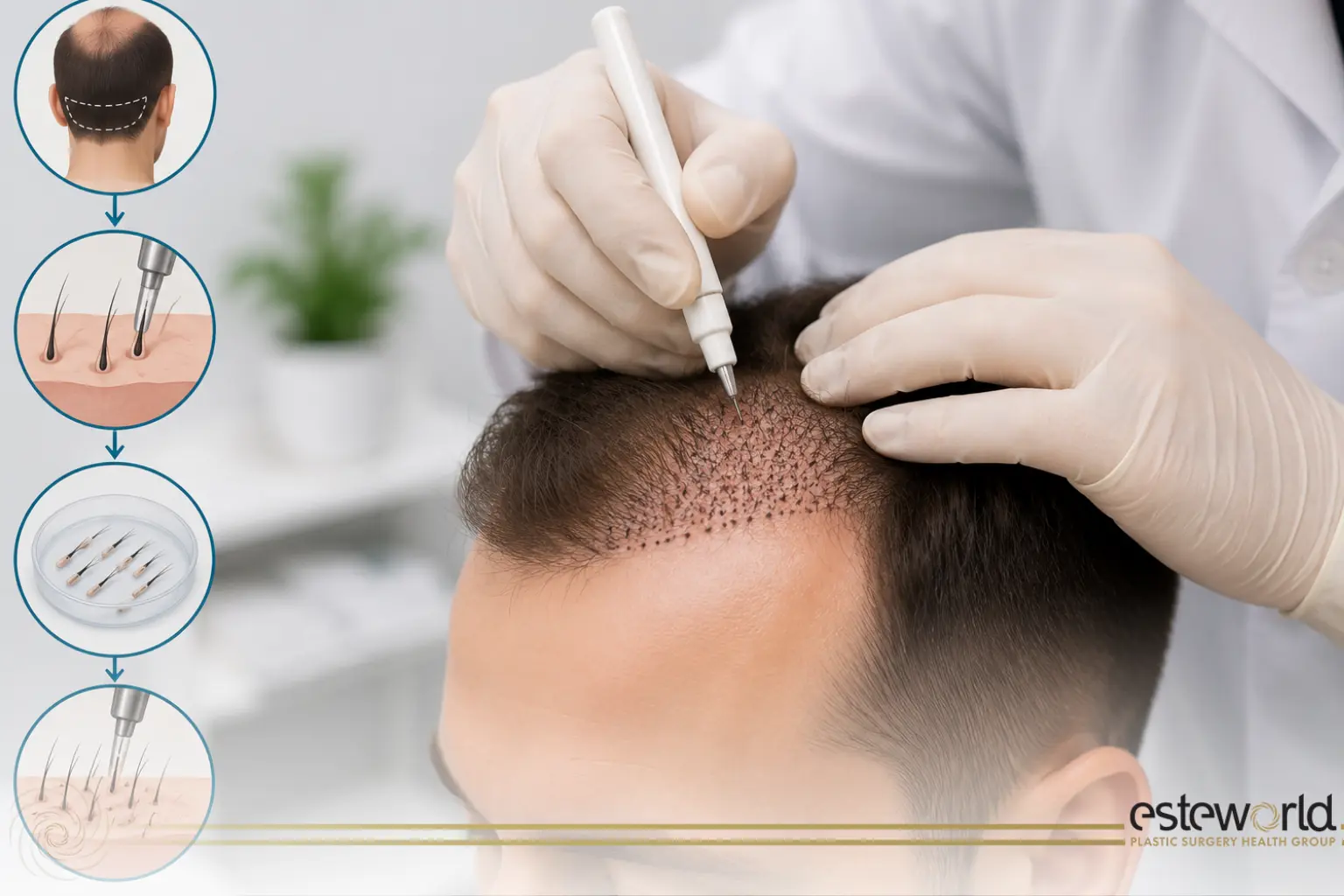
Telogen effluvium does not need a hair transplant. In this condition new hair continues to grow, DermNet explains, and the BAD says the hair will naturally start to grow back.
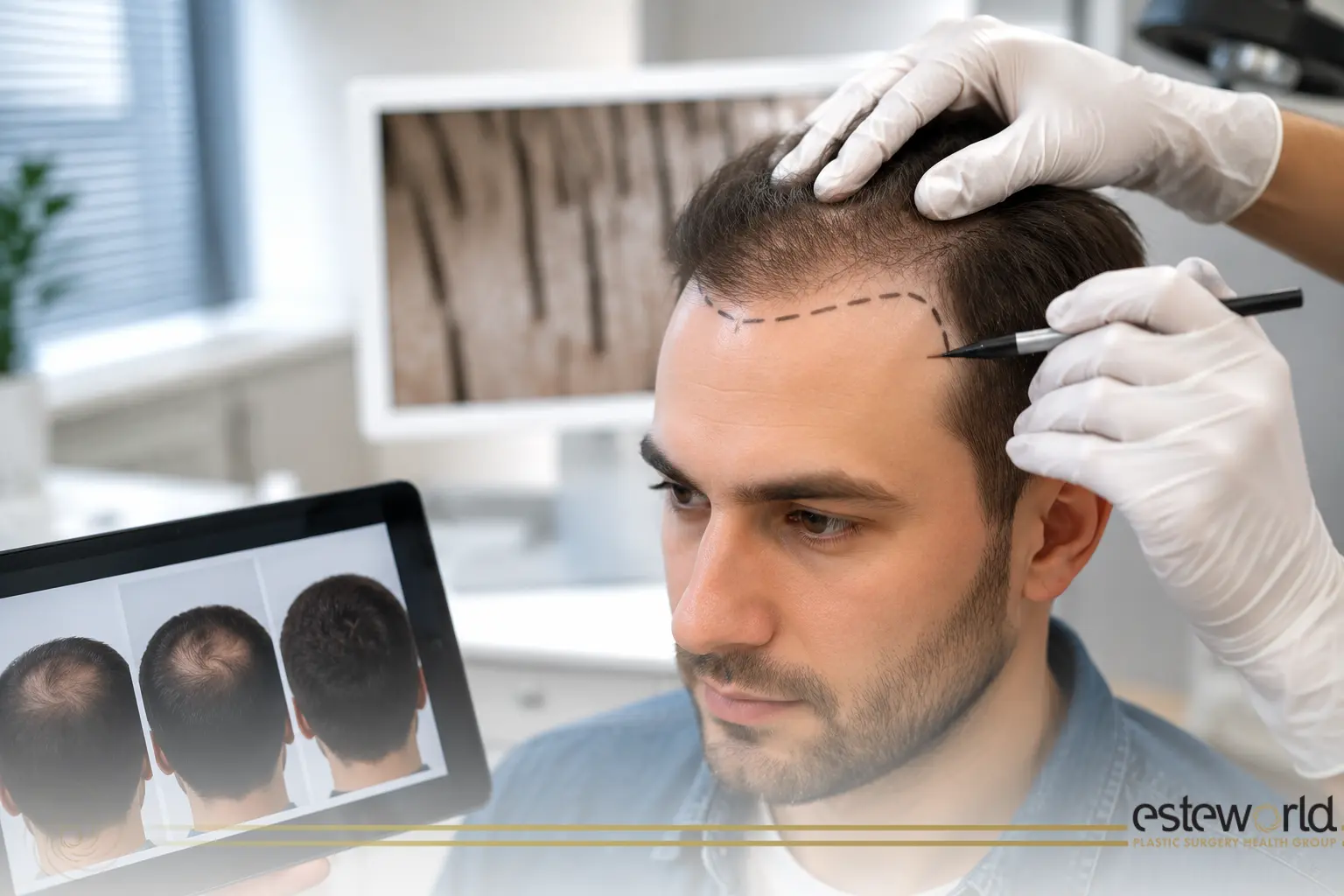
Things are different if the shedding has revealed pattern hair loss underneath. A 2021 review on choosing hair transplant candidates says other scalp and medical conditions should be ruled out or controlled first. Surgeons should also check whether the hair loss is stable.
If the hair loss is progressing quickly, the author advises 6 to 12 months of medical treatment before surgery. This applies when more than 15% of the hairs in the area to be treated have already thinned. At Esteworld, a hair transplant specialist assesses whether a transplant suits you and plans it after an examination.
When to See a Doctor
The NHS advises seeing a doctor if you are worried about your hair loss. Speak to your own doctor if:
- Shedding does not get better, or lasts longer than 6 months.
- Hair falls out in patches, or the skin of your scalp is red or scaly.
- You have heavy periods or follow a strict vegetarian or vegan diet, which can point to low iron.
- You started a new medicine in the few months before the shedding began.
- Your hair loss is affecting your wellbeing.
Losing hair can be upsetting. The NHS says a doctor may be able to help you get counselling, and support groups such as Alopecia UK can also help.
At Esteworld, the causes of hair loss are assessed by medical aesthetics physicians (MD), who also evaluate scalp conditions.
Telogen effluvium is common and usually temporary: shedding starts a few months after a trigger and hair grows back once the cause has passed. If shedding continues, a doctor can check for other causes, such as iron deficiency or pattern hair loss. If you would like to discuss your own hair loss, you can contact our team to ask about a hair analysis.