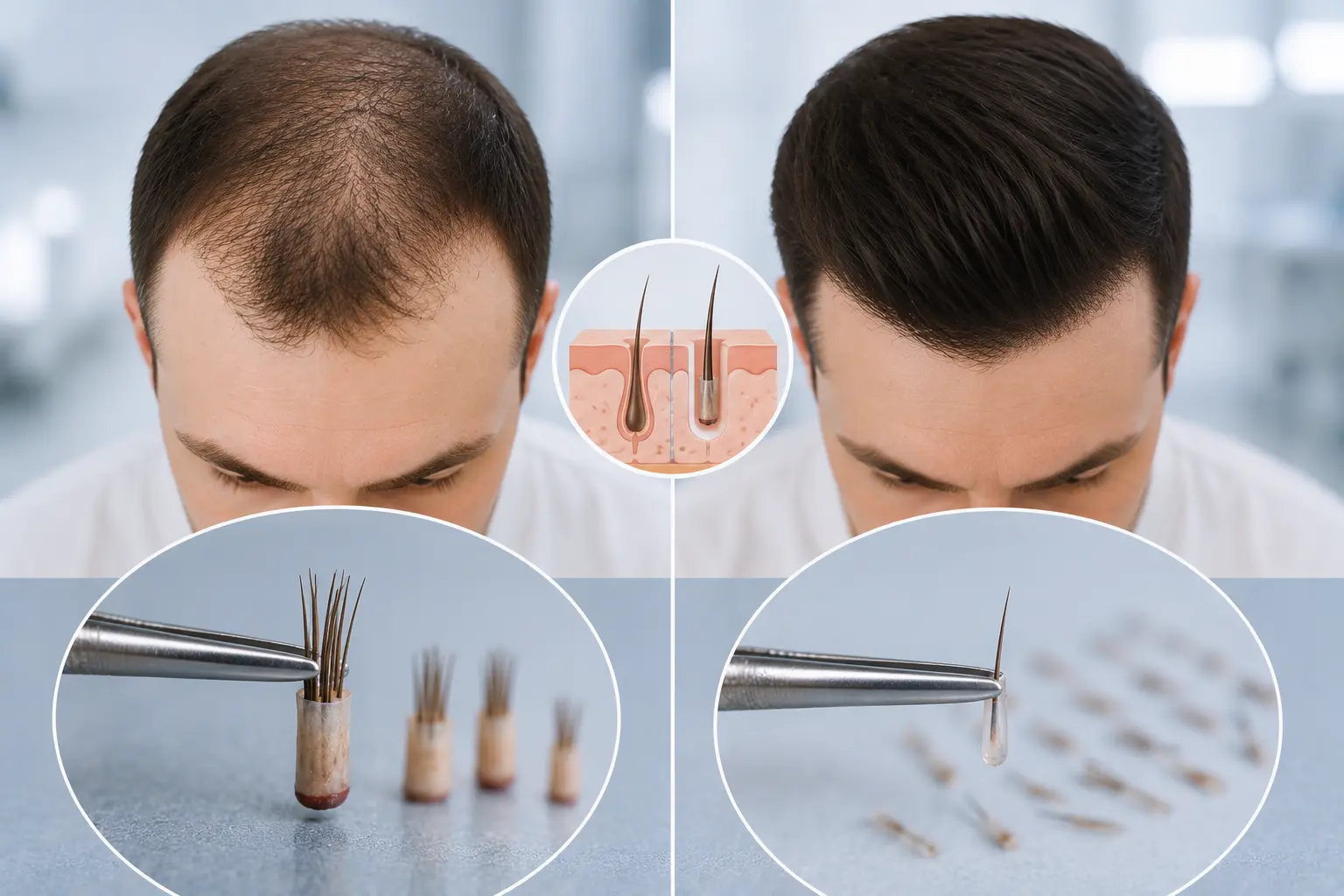
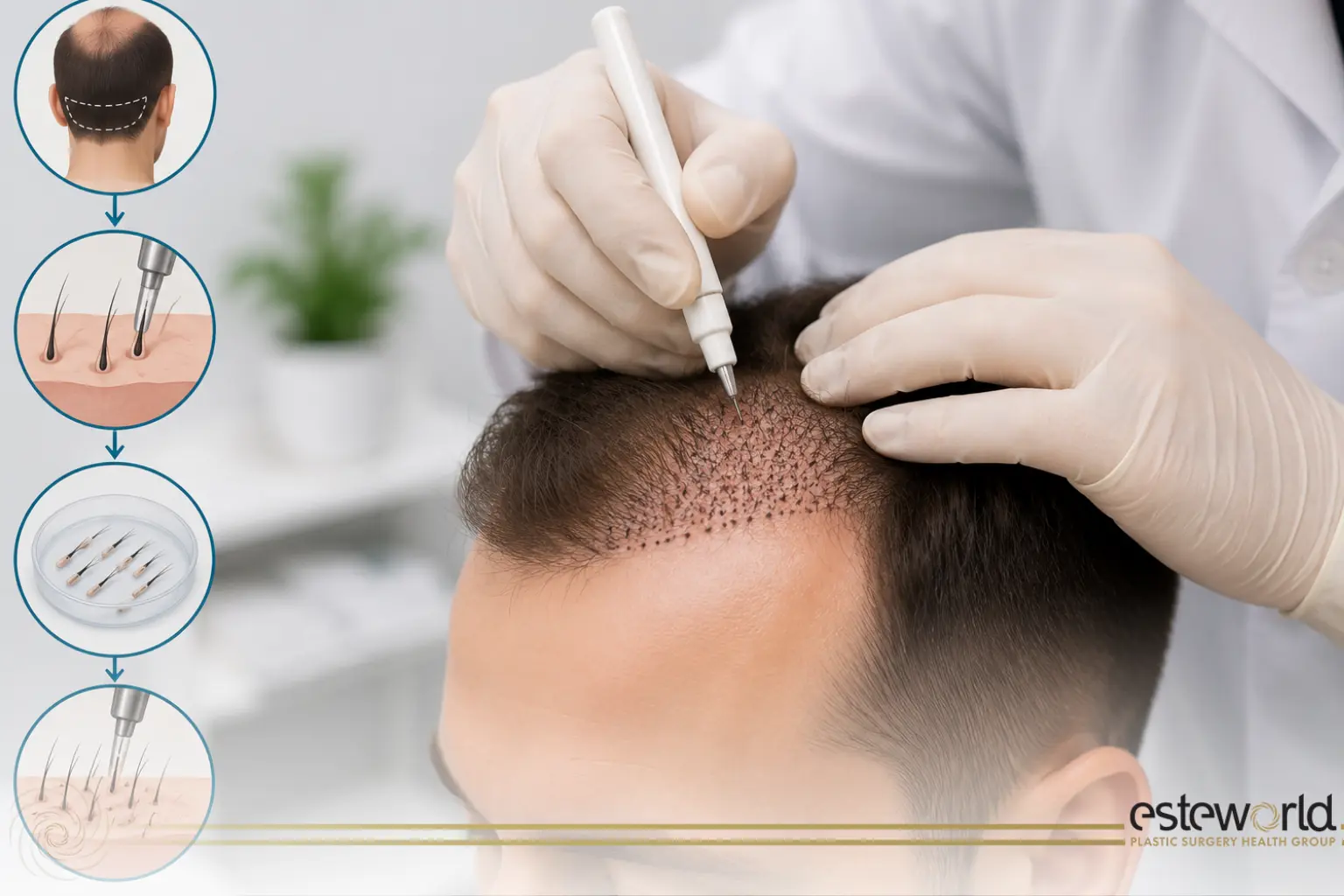
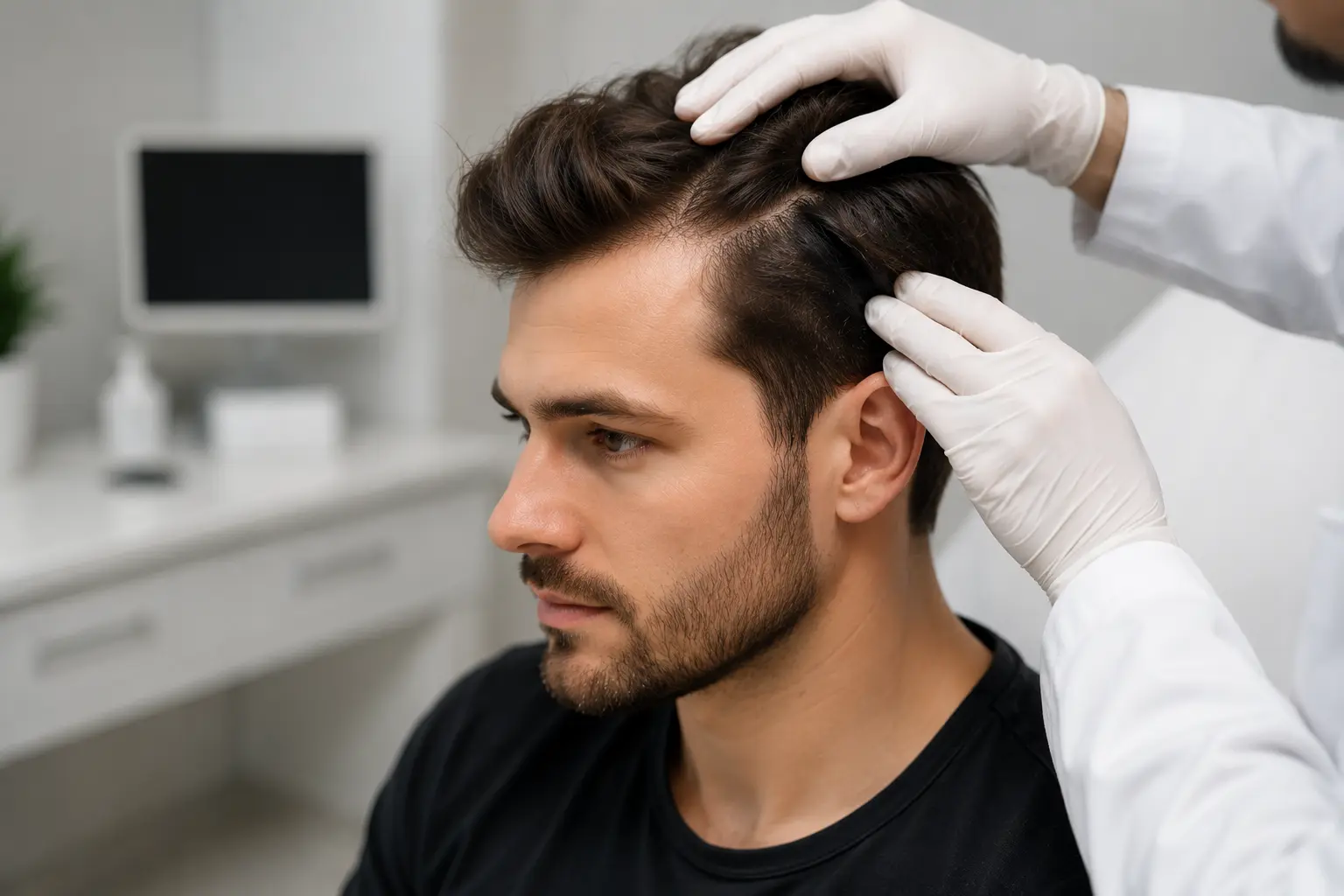
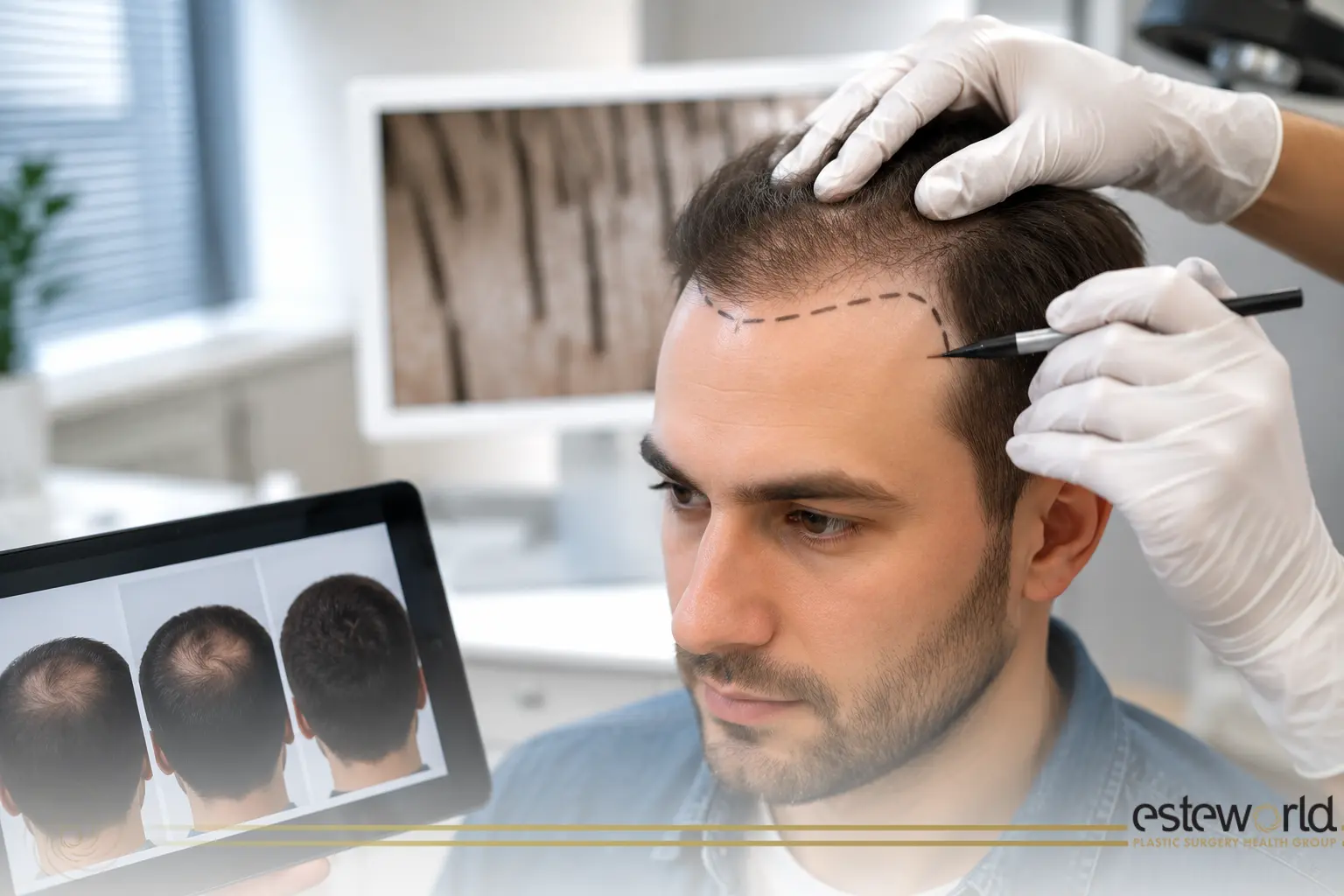
Hair transplant surgery is a surgical hair restoration procedure in which follicular units are moved from a donor area to areas affected by hair loss. Most postoperative effects are temporary, but hair transplantation can also involve risks such as infection, bleeding, folliculitis, scarring, graft failure, donor-area damage and, rarely, more serious complications. Understanding the difference between expected side effects and true complications helps patients recognise normal recovery and know when medical evaluation is needed.
Hair transplantation may also be searched for as hair growth surgery, hair loss surgery or hair graft surgery. Regardless of the term used, it remains a surgical procedure and should be planned after medical assessment, donor-area evaluation and discussion of potential risks.
Quick Summary
- Common hair transplant side effects include temporary swelling, crusting, itching, discomfort, tightness and altered scalp sensation.
- Temporary shedding or shock loss can occur during recovery and does not automatically indicate graft failure.
- Hair transplant risks include bleeding, infection, folliculitis, visible scarring, poor graft growth and aesthetic complications.
- FUE can create small donor scars and may cause visible donor thinning if too many grafts are removed.
- Serious complications such as skin necrosis are uncommon but possible.
- Smoking, diabetes, impaired circulation and some medications may increase surgical or healing risks.
- Correct patient selection, appropriate surgical planning and postoperative care can reduce avoidable complications but cannot make surgery completely risk-free.
Possible Side Effects of Hair Transplantation
Common side effects of hair transplantation are usually temporary changes associated with the surgical and healing process. Swelling, crusting, itching, mild pain, scalp tightness and temporary numbness may occur during the first days or weeks after surgery.
The NHS lists a tight, achy or swollen scalp, temporary scabbing and surgical scarring among expected effects following hair transplantation.
It is useful to distinguish these expected effects from complications.
| Finding | Usually a Temporary Side Effect | May Require Medical Assessment |
| Mild scalp tenderness | Yes | If severe or progressively worsening |
| Mild forehead swelling | Yes | If severe or accompanied by other symptoms |
| Small crusts/scabs | Yes | If associated with pus or spreading inflammation |
| Mild itching | Yes | If intense, persistent or associated with rash/infection |
| Temporary numbness | Can occur | If persistent or associated with significant pain |
| Temporary shedding | Can occur | If pattern is unusual or accompanied by scalp disease |
| Mild pinpoint donor scars | Expected with FUE healing | If scarring becomes extensive or abnormal |
| Significant bleeding | No | Requires assessment |
| Increasing redness and discharge | No | Requires assessment |
| Severe donor-area thinning | No | May indicate overharvesting |
| Skin necrosis | No | Requires prompt medical assessment |
Crusting and Scabbing
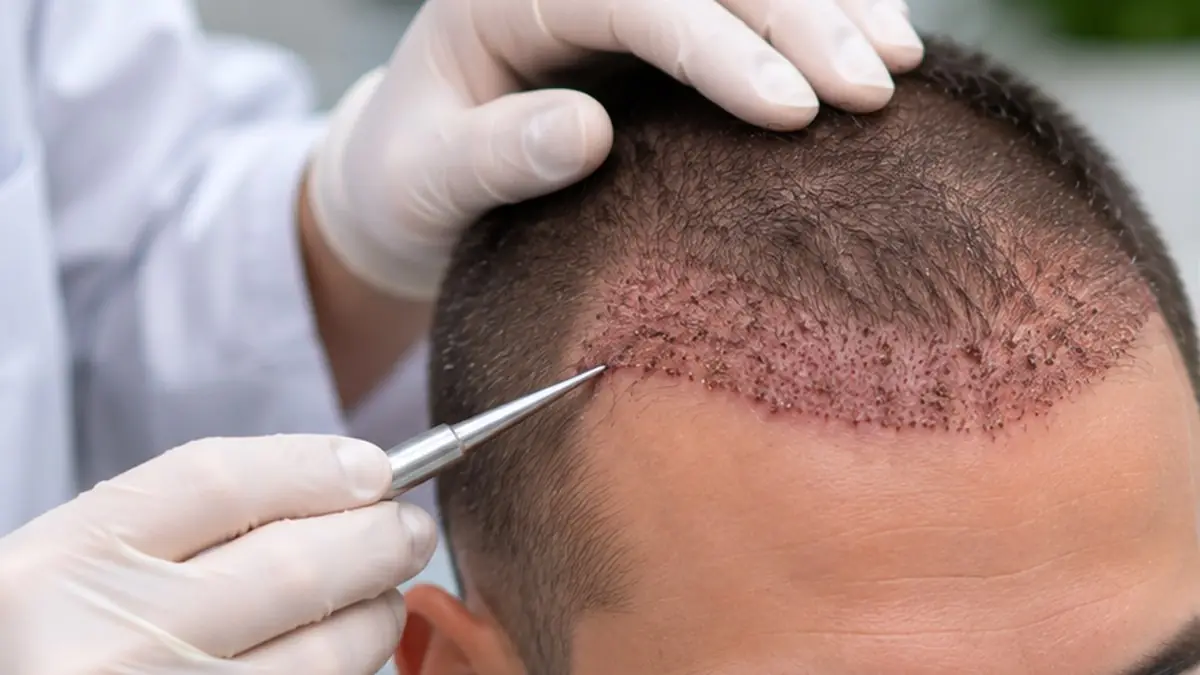
Small crusts can form around transplanted follicular units as the recipient sites heal.
This is generally part of normal early recovery. Patients should follow the clinic’s washing protocol rather than scratching or forcefully removing crusts.
Crusting should not automatically be interpreted as infection.
Bleeding
Minor pinpoint bleeding can occur during or shortly after surgery because hair transplantation involves creating small incisions in both donor and recipient areas.
Significant or persistent bleeding is different from routine postoperative spotting.
Bleeding risk can also be influenced by medical history, coagulation disorders and medications or supplements that affect clotting. These should be discussed before surgery.
Itching
Itching can develop while donor and recipient sites heal.
Patients should avoid scratching the recipient area because mechanical trauma may irritate healing skin or disturb grafts during the early postoperative period.
Persistent itching accompanied by significant redness, pustules or discharge should be assessed rather than assumed to be normal healing.
Swelling and Edema
Swelling can develop around the scalp and forehead during early recovery and may occasionally extend toward the eyelids.
It generally improves as postoperative inflammation resolves.
Edema is among the commonly reported postoperative events in hair transplantation literature.
Temporary Numbness or Altered Sensation
Temporary numbness, tingling or changes in scalp sensation can occur because small sensory nerve branches may be affected during surgery.
Most sensory changes improve with healing, but persistent numbness or neuropathic pain can occur less commonly.
Shock Loss and Temporary Hair Shedding
Temporary shedding can occur in transplanted hair shafts and sometimes in existing native hair around the donor or recipient area.
This is often described as shock loss or postoperative effluvium.
The visible hair shaft may shed while the follicle remains beneath the skin. New growth generally develops later as the hair cycle restarts.
Shock loss should therefore be distinguished from permanent graft failure.
What Are the Main Hair Transplant Risks and Complications?
Hair transplant complications can affect the patient generally, the donor area or the recipient area. They range from temporary inflammatory problems to less common complications such as donor depletion, significant scarring, graft failure or tissue necrosis.
A 2026 scoping review covering 117 studies found that common reported adverse events included pain, infection, folliculitis and edema. Minor infection rates ranged from 1.4% to 2.0%, while folliculitis ranged from 1.1% to 12.1%. The authors stressed that complication reporting differed considerably between studies, so these figures should not be treated as universal rates for every clinic or patient.
Infection
Infection is an established risk of procedures that create surgical wounds, although the scalp’s vascular supply contributes to relatively low infection rates.
Possible warning signs include progressively increasing redness, warmth, pain, swelling, pus or fever.
Sterile folliculitis can sometimes resemble infection, so the presence of small pustules does not by itself establish bacterial infection.
Folliculitis and Ingrown Hairs
Folliculitis is inflammation around hair follicles and may occur in the donor or recipient area.
It may present as:
- Red bumps
- Tenderness
- Small pustules
- Local inflammation
Persistent or extensive folliculitis should be evaluated because treatment depends on whether it is inflammatory, infectious or associated with an ingrown hair.
Graft Dislodgement or Poor Graft Growth
Newly implanted grafts are vulnerable during the early healing period.
Trauma, improper handling or other surgical and biological factors can contribute to graft loss or poor growth.
Even when surgery is technically successful, not every transplanted follicular unit is guaranteed to produce the expected cosmetic density.
Scarring
Every surgical hair transplant produces some degree of scarring.
FUT typically creates a linear donor scar because a strip of donor scalp is removed. FUE avoids the long linear incision but creates many small extraction wounds that can heal as tiny dot-like scars.
Hair transplantation should therefore not be marketed as completely “scarless.”
Keloid or hypertrophic scarring is uncommon but may occur in susceptible individuals.
Donor-Area Overharvesting
Overharvesting is an important FUE hair transplant risk.
FUE permanently removes selected follicular units from the donor area. If too many grafts are extracted or harvesting is unevenly distributed, the donor area can develop:
- Visible thinning
- Patchy density
- A moth-eaten appearance
- Greater visibility of extraction scars
- Reduced donor reserve for future procedures
This can become a long-term aesthetic problem because removed donor follicles do not regenerate in their original locations.
Skin Necrosis
Skin necrosis means loss of tissue caused by inadequate blood supply.
It is a rare but potentially serious hair transplant complication.
The 2026 safety review identified necrosis as uncommon; one included study reported a rate of approximately 0.03%. Risk factors described across the literature include vascular injury, excessive graft density or depth, smoking, diabetes and other factors that may compromise tissue perfusion.
Necrosis requires prompt medical assessment.
Aesthetic Complications
Not every complication is an infection or wound-healing problem.
Hair transplant surgery can also produce aesthetic complications such as:
- An unnatural hairline
- Poor graft direction
- Insufficient density
- Visible donor depletion
- Excessive scarring
- Asymmetry
- Continued native hair loss around transplanted areas
Aesthetic complications may require corrective treatment and can sometimes be difficult to fully reverse. Hair restoration literature specifically identifies poor hairline design, low density and unnatural appearance among recipient-area complications.
What Are the Risks and Side Effects of FUE Hair Transplant?
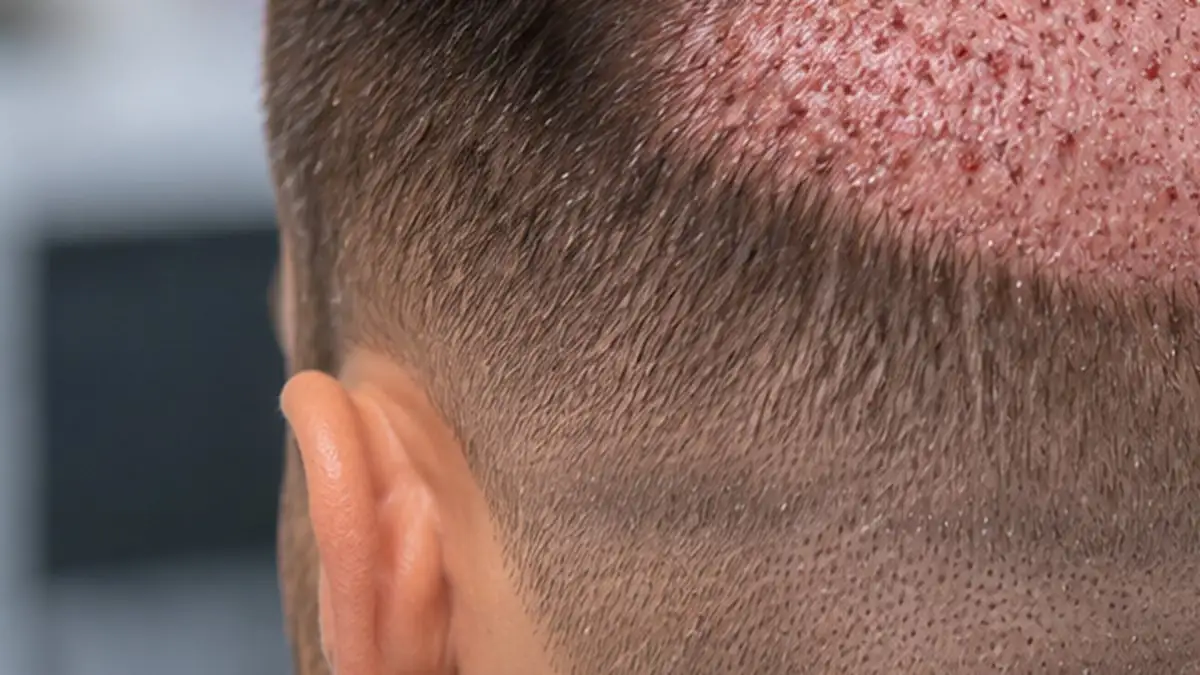
FUE hair transplantation avoids the linear donor scar associated with FUT, but it still carries surgical and donor-area risks. Potential FUE complications include pinpoint scarring, donor depletion, folliculitis, buried grafts, temporary donor shedding, numbness, overharvesting and, rarely, tissue necrosis.
This distinction is important for the query “what are the risks and side effects of FUE hair transplant?”
The 2026 review of FUE complications categorises adverse events into general postoperative problems, donor-area complications and recipient-site complications. Reported donor problems include hypopigmentation, hypertrophic scarring, epithelial cysts and donor depletion, while recipient-site problems include folliculitis, erythema, effluvium and necrosis.
FUE should therefore be described as minimally invasive compared with strip harvesting, not as risk-free or scar-free.
What Are the Long-Term Side Effects of Hair Transplantation?
Most temporary postoperative effects resolve during healing, but some hair transplant complications may have longer-term consequences. These include persistent scarring, donor depletion, altered sensation, poor graft growth, unnatural density and continued loss of non-transplanted hair.
Persistent Scarring
FUT can leave a visible linear scar, while FUE can leave multiple small donor scars.
The visibility depends on surgical technique, punch size, wound healing, hair length and individual scar formation.
Persistent Numbness or Sensory Changes
Most postoperative numbness improves as superficial nerves recover.
Less commonly, altered sensation, neuralgia or persistent discomfort can continue longer term.
Continued Native Hair Loss
Hair transplantation redistributes donor follicles but does not stop androgenetic alopecia in non-transplanted hair.
If native hair continues to thin around transplanted areas, the result may eventually appear uneven or disconnected.
Long-term planning is therefore part of reducing future aesthetic complications. The NHS similarly notes that surrounding hair can continue to thin and that transplant design should account for future changes.
Unsatisfactory Density or Graft Failure
Some grafts may fail to grow or density may remain lower than expected.
Potential contributors include donor limitations, graft handling, recipient-site conditions, surgical planning and individual healing.
The American Society of Plastic Surgeons also lists failure of some grafts to take and visible scarring among potential surgical outcomes.
Which Factors Can Increase Hair Transplant Surgery Risks?
Hair transplant surgery risks are influenced by both patient-related and procedure-related factors. Appropriate preoperative assessment can identify issues that may increase the likelihood of healing problems or complications.
| Risk Factor | Why It Matters |
| Smoking | Can impair tissue perfusion and wound healing |
| Diabetes | May affect wound healing and infection risk, depending on control and individual health |
| Bleeding disorders | Can increase bleeding-related risk |
| Medications affecting coagulation | May affect intraoperative or postoperative bleeding |
| Poor donor density | Raises the risk of visible depletion when harvesting is too aggressive |
| Previous transplant surgery | Reduces remaining donor reserve and may alter scar tissue |
| Dense recipient packing | Can increase tissue stress when poorly planned |
| Inadequate medical history | Can leave relevant risks unidentified |
| Unrealistic expectations | Increases the likelihood of postoperative dissatisfaction |
A recent safety review identified factors including smoking, diabetes, vascular injury, dense graft packing and excessive graft depth among reported risk factors for complications.
These factors do not automatically mean that every affected patient is unsuitable for transplantation. They should be evaluated individually.
How Can Hair Transplant Complications Be Reduced?
Hair transplant risks cannot be reduced to zero, but careful patient selection, medical assessment, surgical planning and postoperative follow-up can reduce preventable problems.
Before surgery, the medical team should evaluate the patient’s medical history, medications, allergies, bleeding risk, hair-loss diagnosis, donor density and expectations.
During treatment, appropriate donor management and recipient-site planning help reduce avoidable problems such as overharvesting, poor hairline design and excessive tissue trauma.
After surgery, patients should follow the clinic’s instructions regarding washing, medications, sleeping, exercise, sun exposure and graft protection.
Published reviews emphasise that careful donor and recipient assessment, medical history and patient counselling are important components of complication prevention.
When Should You Contact the Clinic After Hair Transplant Surgery?
Mild discomfort, swelling, crusting and itching may occur during normal recovery. Symptoms that become progressively worse or fall outside the expected healing pattern should be discussed with the medical team.
Patients should seek medical advice for significant or persistent bleeding, increasing pain, spreading redness, fever, unusual discharge, severe swelling, abnormal skin colour changes, worsening donor-area damage or other unexpected symptoms.
Early assessment is especially important when infection, vascular compromise or significant tissue injury is suspected.