Scalp micropigmentation (SMP) is cosmetic micro-tattooing: tiny dots of pigment placed in the scalp to create the look of more density. It does not grow hair, but it can soften the look of a donor scar or low density after a transplant. The International Society of Hair Restoration Surgery (ISHRS) advises waiting at least a year after a transplant, so the new hair can grow in first.
This article is for general information only. It does not replace a consultation, diagnosis or treatment by a doctor.
What Scalp Micropigmentation Is (and Is Not)
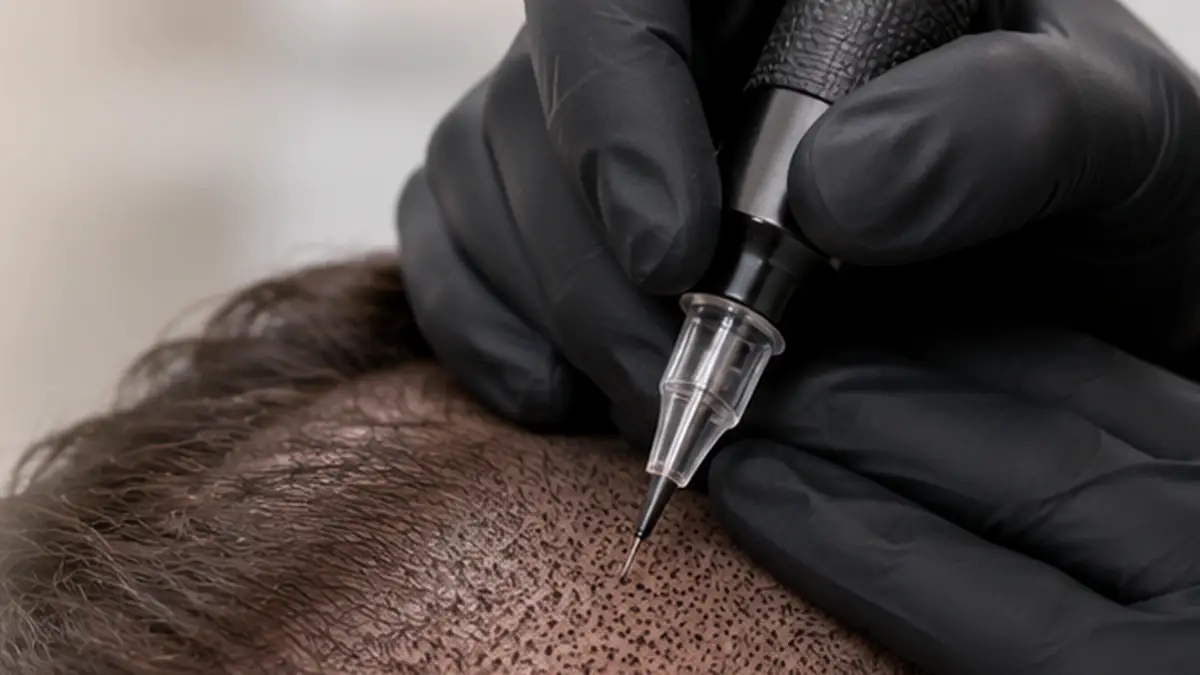
SMP places pigment between existing hairs to mimic short-cut hair or a fuller scalp. A case report that examined SMP under the microscope found pigment deposited between follicles in a fine, dotted pattern. It is widely used to camouflage scars and hair loss, and a 2022 review stresses that a natural look depends on the skill of the person applying it.
Depth matters. According to the ISHRS, needle depth has to be adjusted across the scalp to keep pigment in its topmost layers. Pigment placed too deep can spread under the skin. In the case report, the pigment was found in the dermis when examined under the microscope.
What SMP does not do:
- It does not grow, thicken or protect hair.
- It does not treat the cause of hair loss.
- It does not move or create follicles, as a transplant does.
It is a cosmetic camouflage, used alone or alongside surgery.
How SMP and a Hair Transplant Are Used Together
Adding the look of density between grafts
A transplant is limited by the amount of donor hair. If, after a transplant, there is not enough hair to reach the density someone wants, the ISHRS suggests SMP may be a reasonable next step. It can also help where hair covers the whole scalp but is less dense than the person would like. The same applies where more grafts would not fit without damaging existing hair.
Camouflaging a donor scar
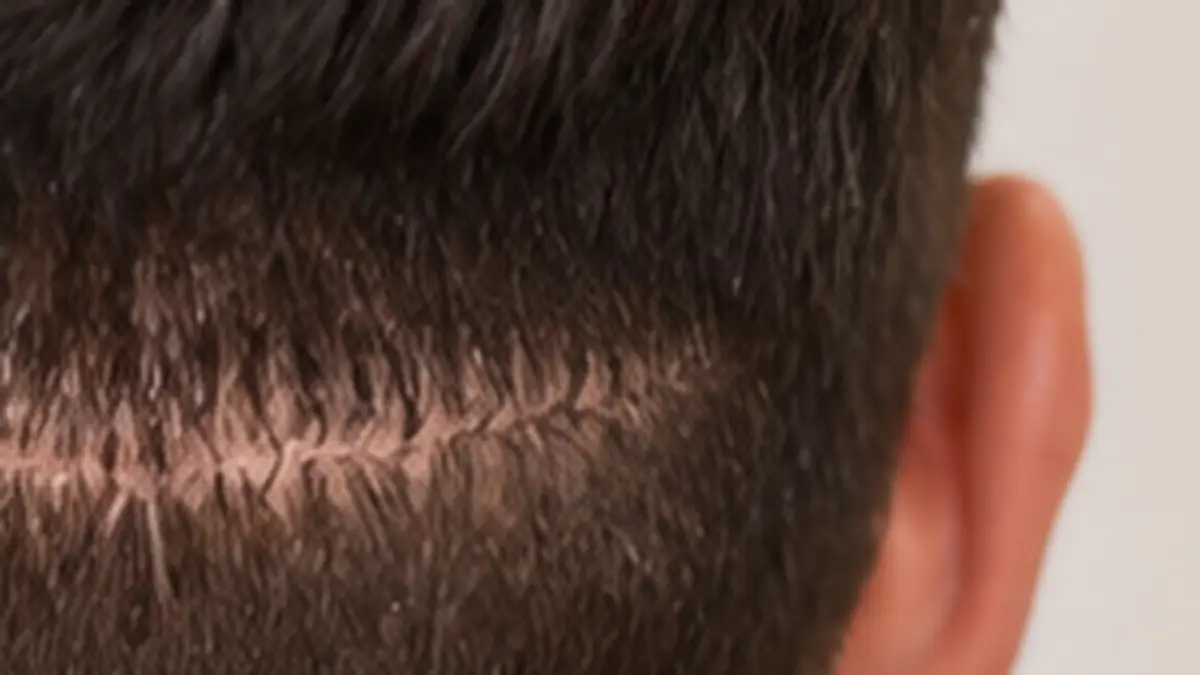
FUT leaves a single scar and FUE leaves many tiny scars. SMP can visually reduce a scar’s appearance and, in some cases, nearly hide it. The ISHRS describes scars as the most demanding area for SMP, because pigment placed into scar tissue often spreads, fades or changes colour unpredictably. For other options, see ways to hide a hair transplant scar and FUE vs FUT scars.
During surgery: an old scar and a shaved donor area
Someone with an old linear scar may want FUE with a shaved donor area. In that case, SMP applied during surgery can hide the scar and the shaved area for one to two weeks while the donor hair regrows. This SMP is often temporary.
A “hybrid” SMP hairline when hair loss may progress
When the hairline is expected to keep receding, the ISHRS describes a “hybrid” SMP. It uses temporary pigment at the front edge and longer-lasting pigment where the mature hairline is expected. This can sit alongside a transplant plan, but the two should be timed with your surgeon.
Choosing Between a Transplant and SMP
The two are not always combined; sometimes the question is which one suits you. In a 2024 study of 40 women with female pattern hair loss, existing hair density was the most important factor in the choice. The authors recommended SMP at higher densities and a transplant at lower ones. Our article on scalp micropigmentation for women covers this in more detail.
Hair length matters too. SMP imitates either denser hair or a shaved look. Where a completely bald area sits next to longer, fairly dense hair, the contrast can look unnatural, so the ISHRS advises against SMP there. A transplant to the bald area may suit better.
| Hair transplant | SMP | Combined | |
|---|---|---|---|
| What it does | Moves your own follicles to thinning areas | Adds pigment to create the look of density | Grows hair and adds visual density |
| Grows hair? | Yes, in the treated area | No | Yes, from the grafts |
| Needs donor hair? | Yes | No | Yes, for the transplant part |
| Ongoing care | Medicine may be advised, as thinning can continue | Touch-ups as pigment fades | Both |
| How long it lasts | Transplanted hair grows in over months; hair around it may keep thinning | Usually 5 to 10 years when well placed | Depends on both parts |
| Main risks | Bleeding, infection, a noticeable scar | Colour change, spreading, allergy | Risks of both |
| Usual order when combined | Usually first | Usually at least a year after a transplant | Planned in stages |
Timing: Which Comes First?
SMP after a hair transplant. The ISHRS advises avoiding SMP for at least a year after a transplant. Hair grows in at different densities and rates, and pigment placed before healing is complete risks fading early. New hair usually starts to appear after about 4 months. Most people see results 6 to 9 months after surgery, and for some it takes 12 months. The NHS says the full result can take 10 to 18 months. Waiting lets you and your practitioner see the final density before adding pigment.
A hair transplant alongside SMP. This is assessed case by case. People with SMP for a shaved look can also have a transplant to add real hair at the hairline or crown, the ISHRS notes. Tell your surgeon about any SMP before planning, so it can be taken into account when they examine your scalp.
What the Process Involves
SMP is usually done over several sessions. In one series of 22 patients, each had three weekly sessions and a touch-up one month later. A practitioner may first try a “test patch” to find the right pigment shade. Results tend to be strongest where hair and scalp skin contrast clearly. Some scalps are too oily or flaky for the pigment to stay.
Afterwards, protect the scalp from the sun: ultraviolet light fades the pigment more quickly. Your practitioner will give you aftercare instructions for the first days.
How Long SMP Lasts and Why It Fades
Well-placed SMP lasts five to ten years, and some people choose a yearly touch-up. Fading is not the same as removal: “permanent” pigments can fade, while “temporary” ones may never fully leave the skin.
In the 22-patient series, followed for an average of 20 months, the authors reported little fading. Some of these patients had SMP alongside a transplant. This was a small study without a comparison group.
Risks and Side Effects
As a form of tattooing, SMP carries tattoo risks:
- Colour change. With conventional tattoo ink, the colour can shift from black or brown to an unnatural shade such as blue or orange. The ISHRS prefers carbon-only pigments for SMP.
- Spreading and blotches. Pigment placed too deep, as described above, can blur into patches.
- Allergic reactions. One patient in the 22-patient series had an allergic reaction. The FDA notes that a rash near a tattoo may be a sign of allergy, and that reactions can persist.
- Granulomas, keloids and late reactions. Small bumps called granulomas can form around tattoo pigment, and people prone to keloid scars may react in the same way. The FDA has received reports of reactions right after tattooing and even years later.
- Contaminated ink and infection. The FDA has not approved any pigment for cosmetic injection into the skin, and ink can be contaminated even in a sealed container.
- MRI. Rarely, a tattoo can swell or burn briefly during an MRI scan.
- Inflamed scalp. SMP should wait if the scalp has an active inflammatory condition, such as scarring alopecia, until the area has been stable and disease-free for two to three years.
- Removal. A tattoo removal laser can clear SMP in as little as one session, though some cases need more. The FDA notes that some tattoo removal procedures can leave scars and may not remove all the pigment.
Medicines. If you take an anticoagulant (a medicine that helps prevent blood clots), tell the practitioner, and only stop it on the advice of your GP or another healthcare professional.
Choosing a Practitioner
SMP calls for its own training and experience. Some hair surgeons perform it themselves; others refer patients to SMP practitioners. There is currently no international licensing body for SMP practitioners. Look for:
- Someone who specialises in SMP rather than general tattooing
- Consistent photos of previous work, taken in the same lighting and position
- Pigment and equipment made for SMP rather than ordinary tattoo ink
Ask how they would handle a scar, what happens when the pigment fades, and how touch-ups work.
When to See a Doctor
See a doctor or contact your practitioner if:
- The treated area does not seem to be healing, or you develop a fever, which may be a sign of infection.
- A rash, redness or bumps appear over the pigment, even years later, which may be a reaction to the ink.
- The pigment spreads, blurs or changes colour.
- Your hair loss is sudden, patchy or has not been diagnosed: the cause should be found before any cosmetic option, and a blood test or biopsy may be needed.
- You need an MRI scan: tell the team about your SMP beforehand.
A transplant moves your own hair; SMP adds the look of density. When the two are combined, timing matters most, and the ISHRS advises letting transplanted hair grow in first. If you are considering SMP, ask your surgeon about timing before you book it. If you would like to know what a transplant could achieve for you first, you can contact our team for an assessment. You may also find non-surgical alternatives to a hair transplant useful.