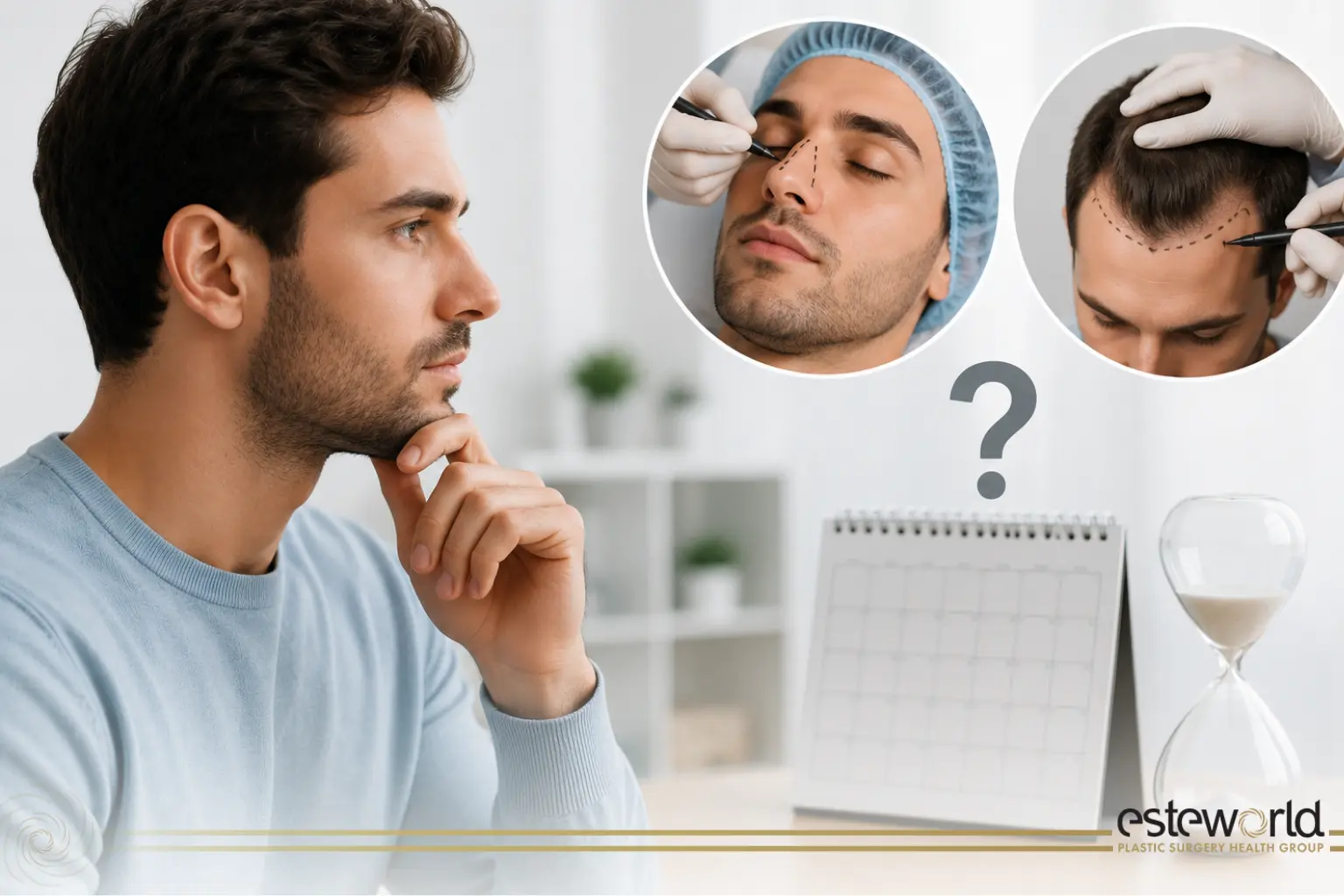

Many people who consider facial aesthetic procedures often ask whether it is safe to combine or schedule multiple treatments close together. One of the most common questions among international patients is: “How long after rhinoplasty can I get a hair transplant?” Since both procedures involve healing, swelling management, and recovery planning, timing becomes an important part of achieving safe and natural-looking results.
Patients travelling abroad for aesthetic procedures, especially those researching rhinoplasty cost Turkey and hair transplant options, usually want to organise treatments efficiently. However, combining surgeries too quickly may place unnecessary stress on the body and affect the healing process. For this reason, surgeons usually recommend waiting for a certain recovery period after rhinoplasty before planning a hair transplant procedure.
Rhinoplasty and hair transplant procedures focus on different areas of the body, but both require careful healing and recovery management. Most specialists recommend waiting several months after rhinoplasty before undergoing a hair transplant. This waiting period allows swelling to decrease, circulation to stabilise, and the body to recover properly from surgery. The exact timeline depends on the patient’s healing process, overall health, and the complexity of the rhinoplasty procedure. Proper planning helps reduce unnecessary risks and supports more comfortable recovery.
Most patients wait between 3 to 6 months after rhinoplasty before getting a hair transplant. The ideal timing depends on healing speed, swelling reduction, and medical evaluation by the surgeon. Allowing the body enough recovery time supports safer procedures and more balanced aesthetic results.
Why Timing Matters Between Rhinoplasty and Hair Transplant Procedures
Although rhinoplasty and hair transplantation target completely different areas, both procedures affect the body’s healing response. Rhinoplasty involves bone, cartilage, soft tissue, and nasal structure adjustments, while hair transplantation requires graft extraction and implantation into the scalp.
After rhinoplasty, the body enters a recovery phase where swelling, bruising, tissue sensitivity, and circulation changes continue for weeks or even months. Scheduling a hair transplant too early may increase physical stress and make recovery less comfortable.
Patients travelling internationally for procedures often search for terms such as rhinoplasty Turkey cost or rhinoplasty in Turkey cost because Türkiye remains one of the most popular destinations for medical tourism. Many clinics offer both rhinoplasty and hair transplantation, but experienced surgeons usually focus on recovery timing rather than rushing procedures together.
What Happens During Rhinoplasty Recovery?
The nose continues healing internally even after visible bruising disappears. While most patients return to social activities within a few weeks, deeper tissue healing takes much longer. Swelling around the nasal area gradually decreases over several months.
During this period, the body prioritises tissue repair. Allowing enough time before another elective procedure helps support healthier recovery conditions.
How Long Should You Wait Before a Hair Transplant?
Most surgeons recommend waiting at least 3 months after rhinoplasty before considering a hair transplant. In some cases, specialists suggest waiting 6 months depending on how extensive the nasal surgery was.
There is no single answer that applies to every patient because healing speeds vary significantly. Some people recover quickly with minimal swelling, while others experience prolonged sensitivity or slower healing.
General Recovery Timeline
| Recovery Stage | Typical Timeline |
| Initial rhinoplasty recovery | 1-2 weeks |
| Swelling reduction | 1-3 months |
| Internal healing continuation | Several months |
| Recommended hair transplant timing | 3-6 months |
Patients who undergo revision rhinoplasty or more complex nasal procedures may require additional waiting time before a hair transplant.
Can Rhinoplasty and Hair Transplant Be Done Together?
Some patients ask whether both procedures can be performed during the same trip. Technically, it may be possible in selected cases, but many surgeons prefer separating the treatments.
A hair transplant procedure often requires long hours in a seated or reclined position. After rhinoplasty, pressure management and head positioning become extremely important during recovery. Combining procedures too closely may increase discomfort and complicate post-operative care.
Factors Doctors Evaluate Before Combining Procedures
- Overall health condition
- Complexity of rhinoplasty surgery
- Amount of swelling after surgery
- Blood circulation and healing capacity
- Duration of the hair transplant session
- Patient comfort during recovery
For these reasons, surgeons often prioritise safety and healing quality over convenience.
Does Rhinoplasty Affect Hair Transplant Results?
Rhinoplasty itself does not directly affect hair graft survival. However, undergoing a hair transplant too early after nasal surgery may create indirect challenges related to recovery management.
Patients recovering from rhinoplasty often need to sleep in elevated positions, avoid pressure on the face, and limit intense physical activity. Hair transplantation also requires careful scalp protection during the first days after the procedure. Managing both recoveries simultaneously may become physically demanding.
In addition, stress placed on the body during repeated procedures may temporarily affect overall comfort and energy levels. Allowing adequate healing time helps patients focus fully on each recovery stage.
Why Recovery Planning Improves Final Results
Aesthetic procedures are not only about the surgery itself. Recovery quality plays a major role in achieving natural and stable results. Patients who allow enough healing time between procedures usually experience more comfortable recovery and lower stress levels.
Why Many International Patients Choose Türkiye
Türkiye continues attracting international patients for both rhinoplasty and hair transplantation because of experienced surgeons, modern hospitals, and competitive pricing. Searches related to Turkey rhinoplasty cost and rhinoplasty cost in Turkey continue increasing each year as medical tourism grows worldwide.
One reason patients combine research for both procedures is convenience. Clinics in Istanbul often provide comprehensive consultation services for multiple aesthetic treatments. However, reputable clinics focus on personalised planning rather than performing procedures too quickly.
Average Considerations for International Patients
| Procedure Consideration | Why It Matters |
| Recovery scheduling | Supports safer healing |
| Travel planning | Reduces physical stress |
| Surgeon experience | Improves treatment planning |
| Follow-up process | Important for monitoring healing |
| Accommodation duration | Helps early recovery management |
International patients usually benefit from detailed consultation before deciding on procedure timing.
How to Prepare for a Hair Transplant After Rhinoplasty
Preparation becomes important once the rhinoplasty recovery stabilises. Patients considering hair transplantation after nasal surgery usually undergo a new medical evaluation before scheduling the procedure.
Doctors often assess overall healing, circulation, medication use, and scalp condition before approving treatment timing. This process helps reduce avoidable complications.
Helpful Recovery Recommendations
- Follow rhinoplasty aftercare instructions carefully
- Avoid smoking during recovery
- Maintain balanced nutrition and hydration
- Attend regular follow-up appointments
- Wait until swelling significantly decreases
- Discuss timing directly with both specialists
Patients who approach recovery patiently often experience smoother treatment journeys overall.
Emotional Recovery Also Matters
Physical healing is only one part of the process. Many patients underestimate the emotional adjustment period after aesthetic surgery. Rhinoplasty changes facial balance significantly, and patients often need time to adapt to their new appearance.
Scheduling another aesthetic procedure too quickly sometimes creates emotional fatigue or unrealistic expectations. Allowing recovery time between treatments often helps patients make calmer and more confident decisions.
This balanced approach becomes especially important for international patients travelling for multiple cosmetic procedures.
The question “How long after rhinoplasty can I get a hair transplant?” does not have a universal answer, but most specialists recommend waiting approximately 3 to 6 months. The safest timeline depends on healing progress, swelling reduction, and medical evaluation.
Patients researching rhinoplasty cost turkey, rhinoplasty turkey cost, and hair transplant procedures often prioritise convenience, but recovery quality should always come first. Allowing the body enough time to heal helps improve comfort, reduce stress, and support healthier long-term results.
Careful planning with experienced specialists remains one of the most important parts of a successful aesthetic journey.