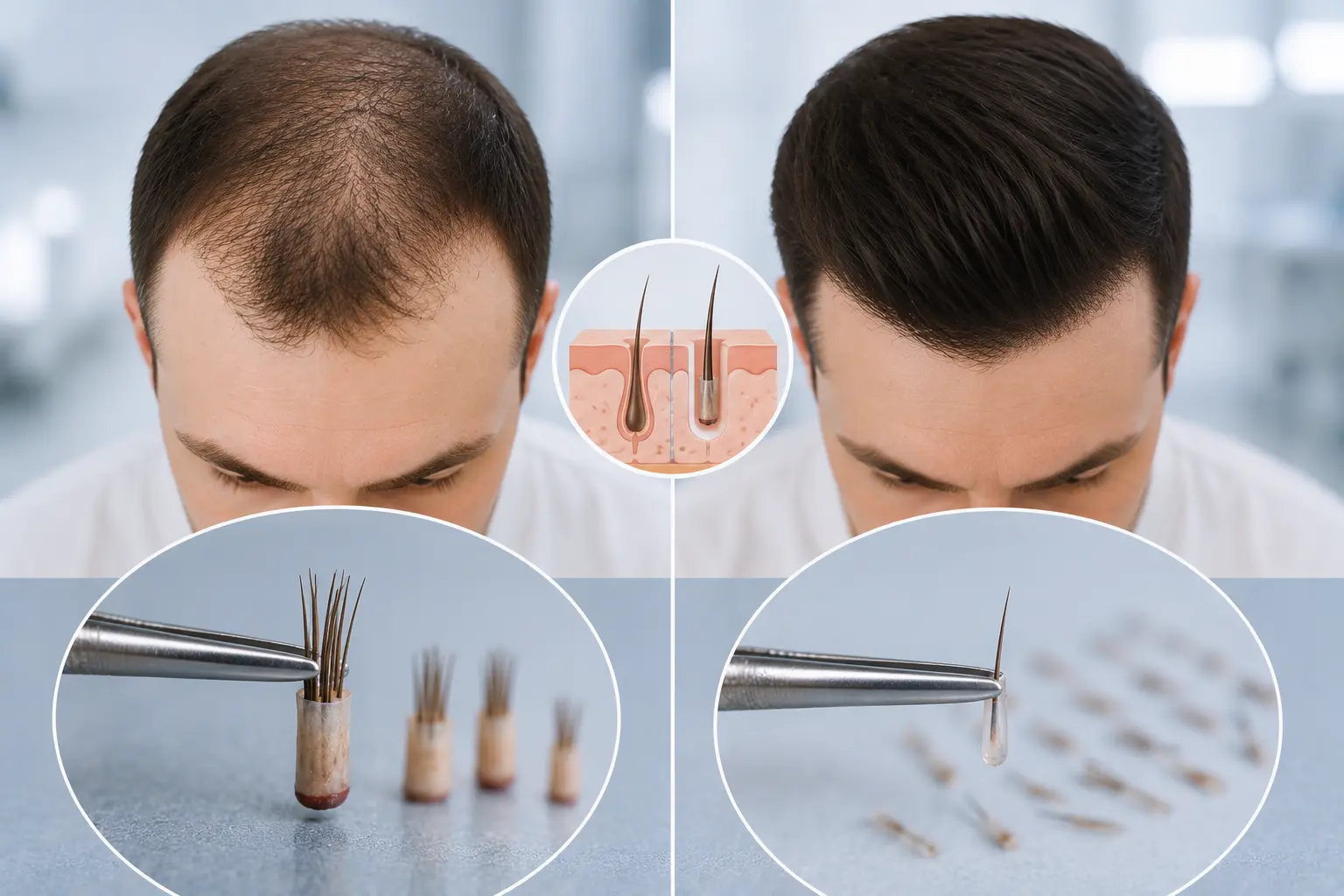
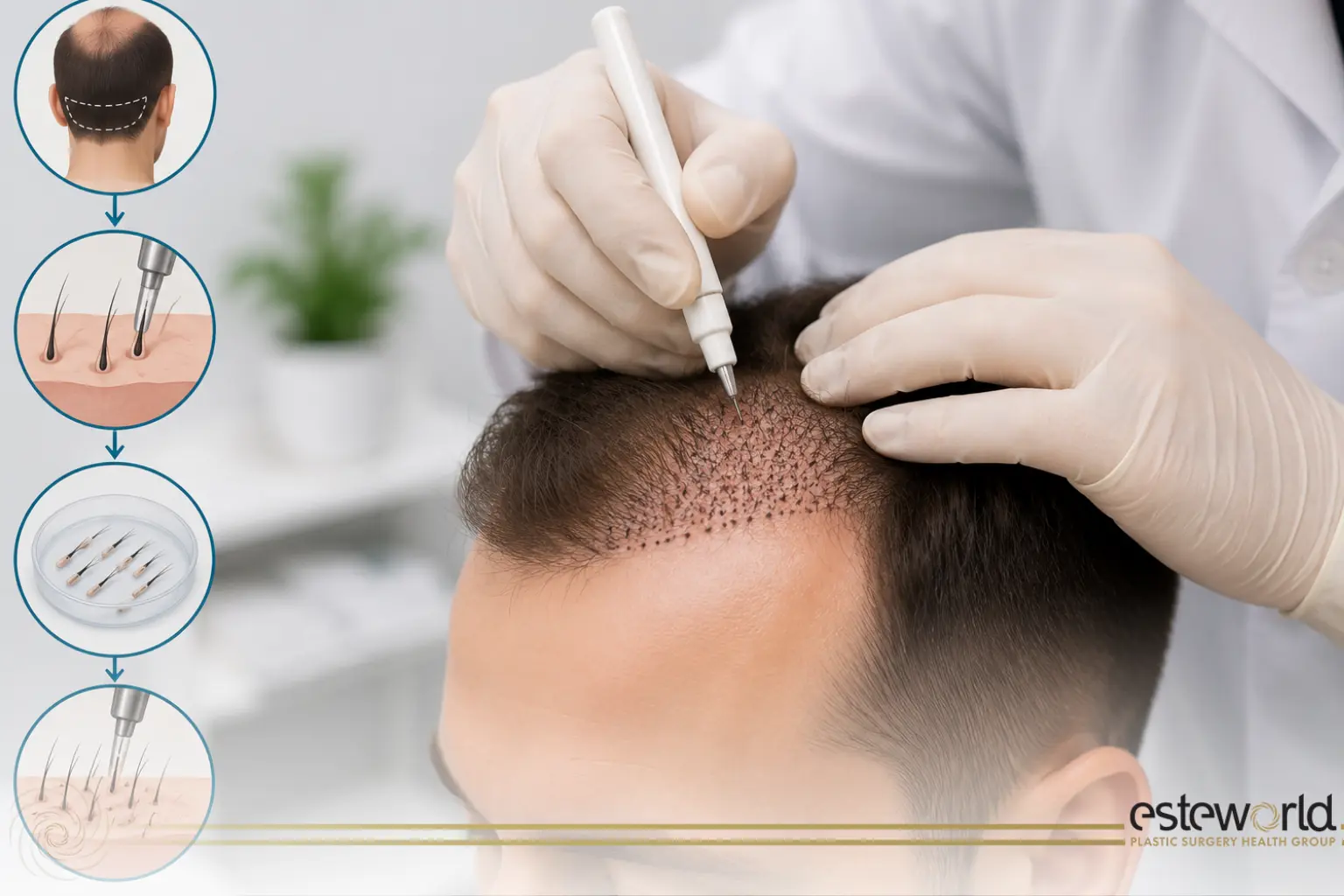
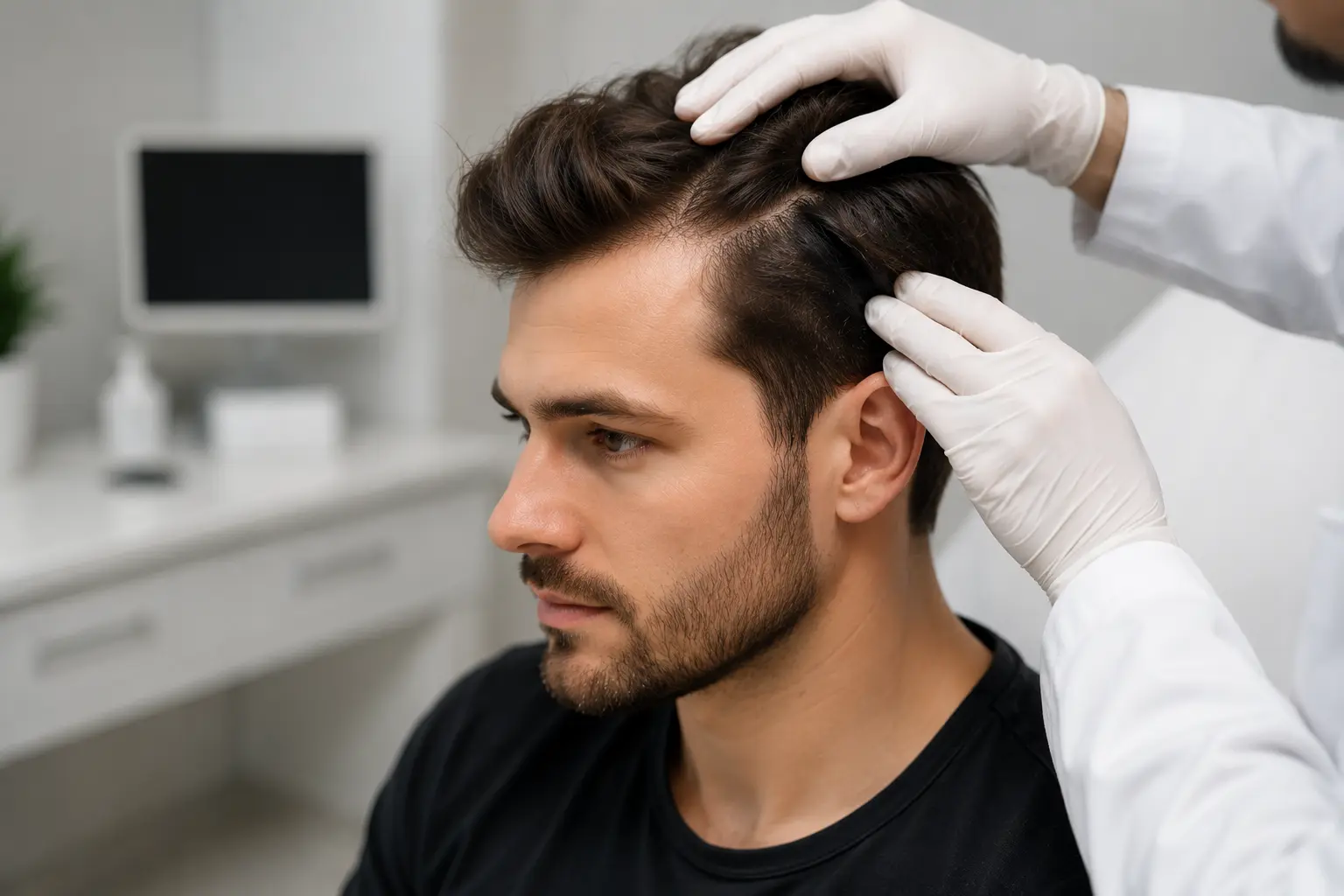
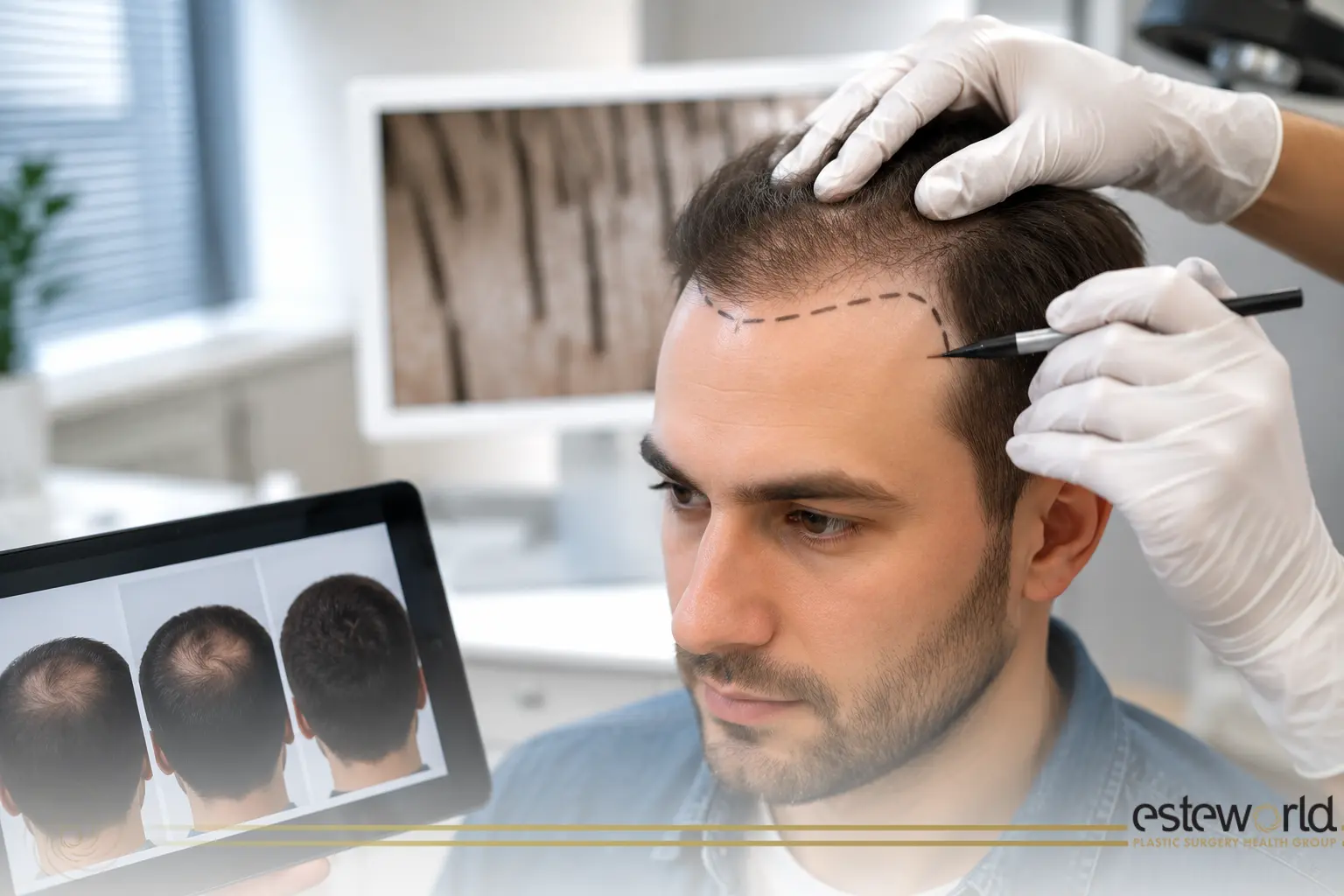
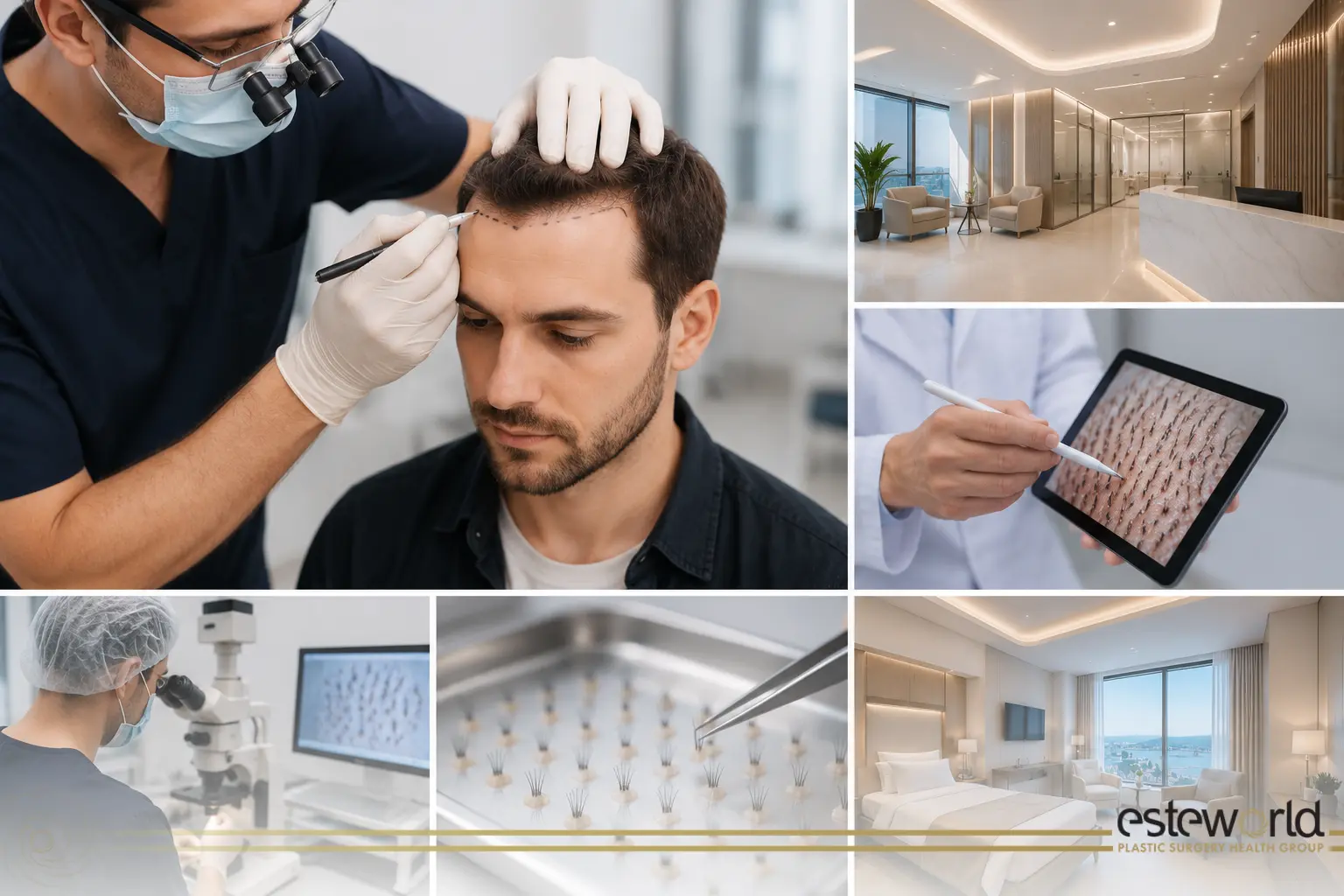
A hair transplant may be considered unsuccessful when grafts grow poorly, the hairline looks unnatural or the donor area has been over-harvested. Most people see results at 6 to 9 months, and some need 12 months. Thinning in the early months is therefore not necessarily a sign of failure. No result can be guaranteed. You can, however, ask any clinic to explain in writing the risks, the aftercare and what happens if you are unhappy.
This article is for general information only. It does not replace a consultation, diagnosis or treatment by a doctor.
What Counts as a Failed Hair Transplant?
There is no single agreed definition. People usually mean one or more of these:
- Little or no growth in the transplanted area after a full year
- Growth that is much patchier or thinner than was planned
- A hairline that is too low, too straight or at an unnatural angle
- A donor area at the back of the head that looks thin or “moth-eaten”
- Wide or visible scarring
Nor is there a reliable “success rate” to compare between clinics. A 2026 review of 117 studies found that complications are defined and reported in very different ways. The data could not be combined statistically, and the authors called for standardised reporting. Without agreed definitions, a single success percentage is hard to check.

When Can You Judge the Result?
| Time after surgery | What is usually normal | When to ask your surgeon |
|---|---|---|
| Weeks 2 to 8 | Transplanted hairs fall out. This is expected. | Redness, pain or swelling that is getting worse |
| From about week 3 | Some existing, non-transplanted hair in the treated area may also shed (“shock loss”); it usually grows back after 3 to 4 months. | Shedding that seems unusually heavy or does not recover |
| Around month 3 | The area may look thinner than before surgery. | If you are very worried, a check-up can reassure you |
| Months 6 to 9 | Most people see results in this window. | Growth that seems far behind what was planned |
| Months 12 to 18 | Some people need 12 months to see results; the NHS says the full result can take 10 to 18 months. | Little or no growth at 12 months: a common point to review the outcome |
At Esteworld, check-ups take place on day 1, day 10 and at 1, 4, 7 and 12 months after the procedure.
For what to expect in the early months, see our article on shedding after a hair transplant.
Common Reasons a Hair Transplant Does Not Meet Expectations
Ongoing hair loss around the grafts
A transplant moves hair but does not stop the underlying hair loss. Native hair around the grafts can keep thinning, which can leave an unnatural pattern over time. The American Academy of Dermatology (AAD) notes that medicine can prevent or slow down new hair loss and thinning. Whether that suits you is your doctor’s decision.
The wrong candidate or the wrong plan
Not everyone with hair loss is suitable for surgery. A 2021 review lists situations that make someone an unsuitable candidate. They include unstable or scarring hair loss, body dysmorphic disorder and unrealistic expectations. The AAD puts it plainly: a full head of hair may be unrealistic, but a fuller head of hair can be the goal. Read more on who may not be a good candidate.
Technique and design
The International Society of Hair Restoration Surgery (ISHRS) describes repair cases caused by poor design. Examples are hairlines placed too low or too straight, and grafts at the wrong angle. Other repair cases involve large “pluggy” grafts from older techniques.
Donor over-harvesting
Taking too many follicles from the donor area can leave it thin and “moth-eaten”. Because donor hair is limited, this also restricts what can be done later.
Healing problems, including necrosis
Smoking, diabetes and very dense graft placement are among the risk factors for complications identified in the 2026 review. Studies in that review reported minor infection in about 1.4 to 2.0% of patients and folliculitis (inflamed follicles) in about 1.1 to 12.1%. Necrosis, where part of the treated skin loses its blood supply, was rare: 0.03% in one study. It shows as dusky skin, then persistent crusting, and can leave a scarred patch without hair.
Scarring scalp conditions such as lichen planopilaris
Transplanted grafts are your own tissue, so they are not rejected, but some scarring scalp conditions can affect them. A 2026 systematic review found that lichen planopilaris (LPP) after hair transplantation is rare. Surgery may act as a trigger in people who are prone to it, but it has not been shown to cause it. That is one reason the scalp should be examined carefully before surgery. See also scarring alopecia: symptoms and solutions.
Can a Failed Hair Transplant Be Fixed? Hair Transplant Repair Options
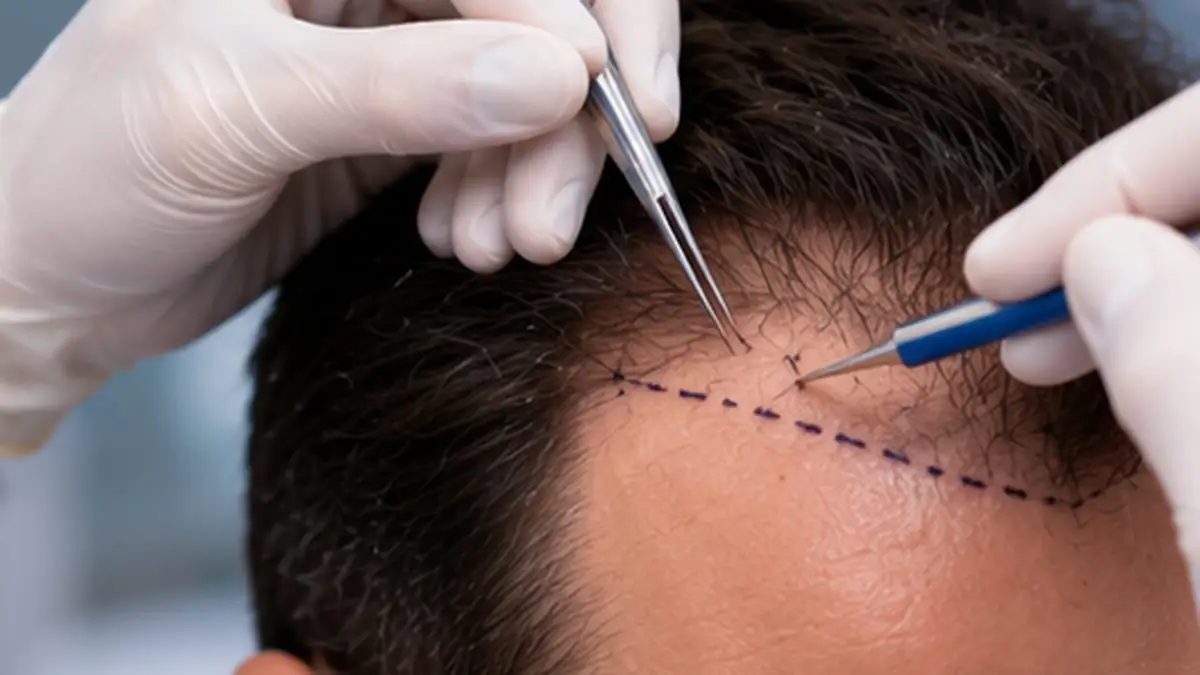
Often it can be improved, but not always. ISHRS notes that not all patients can be helped, and that with limited donor hair, correction can be challenging or even impossible. The first step is a diagnosis of what went wrong, usually once the result has had time to mature.
| Problem | Options a doctor may discuss |
|---|---|
| Unnatural or “pluggy” grafts, wrong angle | Removing some grafts and, with FUE, moving them to a better place |
| Low density | Adding grafts, if donor hair allows |
| Visible scars or thin areas | Scalp micropigmentation (small pigment dots), alone or with surgery |
| Ongoing thinning of native hair | Medical treatment to slow further loss, decided by your doctor |
| Limited scalp donor hair | In some cases, beard or body hair as an extra donor source |
ISHRS adds that, depending on how complex the case is, correction may take several procedures. If you are not happy with your result, the NHS advises speaking with the surgeon who treated you. An independent second opinion from another hair restoration doctor can also help you weigh up the options.
Hair Transplant Guarantees: What Can and Cannot Be Promised
How well grafts grow depends on your biology, your diagnosis, your healing and whether your hair loss continues. None of these can be fully controlled by a surgeon, so a particular density or result cannot be promised.
What to ask for in writing
If a clinic mentions a revision policy or aftercare support, ask for the written terms before you book:
- In which situations will the clinic review the result, and who decides?
- At what point after surgery is the result assessed?
- If further treatment is offered, what costs fall on you, including travel?
- What is excluded, for example ongoing hair loss or not following aftercare?
- Who do you contact if you have a complication after you return home?
Your right to clear information
Before you agree to surgery, the risks, alternatives and realistic outcome should be explained in a way you understand. For a complaint or legal claim, seek independent legal advice. Our guide to legal and ethical considerations in hair transplant tourism has a full checklist of questions to ask before booking. See also how to choose the right clinic and comparing clinics and surgeons.
Who performs each step
In Türkiye, a Ministry of Health regulation sets out who may carry out each stage of a hair transplant. Only staff whose certificates are registered with the Ministry may work in a hair transplant unit. Recipient-site incisions may only be made by the doctors the regulation authorises, such as plastic surgeons, dermatologists and doctors with a hair transplant certificate. Graft removal and placement may also be done by certified healthcare staff under a doctor’s supervision and responsibility. At Esteworld, graft harvesting is carried out by certified healthcare staff under the physician’s responsibility.
When to See a Doctor
Contact your surgeon or a doctor promptly if you have:
- Spreading redness, pus, a high temperature or pain that is getting worse
- Skin in the transplanted area that turns dusky or dark, stays crusted or does not heal
- New itching, burning, redness or shiny scarred patches around the grafts or elsewhere on the scalp
- A donor area that looks visibly thin or patchy
- Little or no growth at 12 months
- Low mood or distress about your result that does not ease
A disappointing result is distressing, but it is usually too early to judge before 6 to 12 months. The most useful next step is an honest assessment of the cause and of your remaining donor hair. At Esteworld, patients receive a written aftercare booklet with their procedure. To have a doctor look at your recovery or your result, contact our team to arrange a review.