Holiday After a Hair Transplant: What Is Safe and When
Short answer: You can travel after a hair transplant, but a typical beach holiday does not mix well with the first weeks of recovery. Strong sun, swimming, alcohol, hard exercise and long excursions can all slow healing. Plan any holiday activities with your surgeon, and keep the first part of your trip calm.
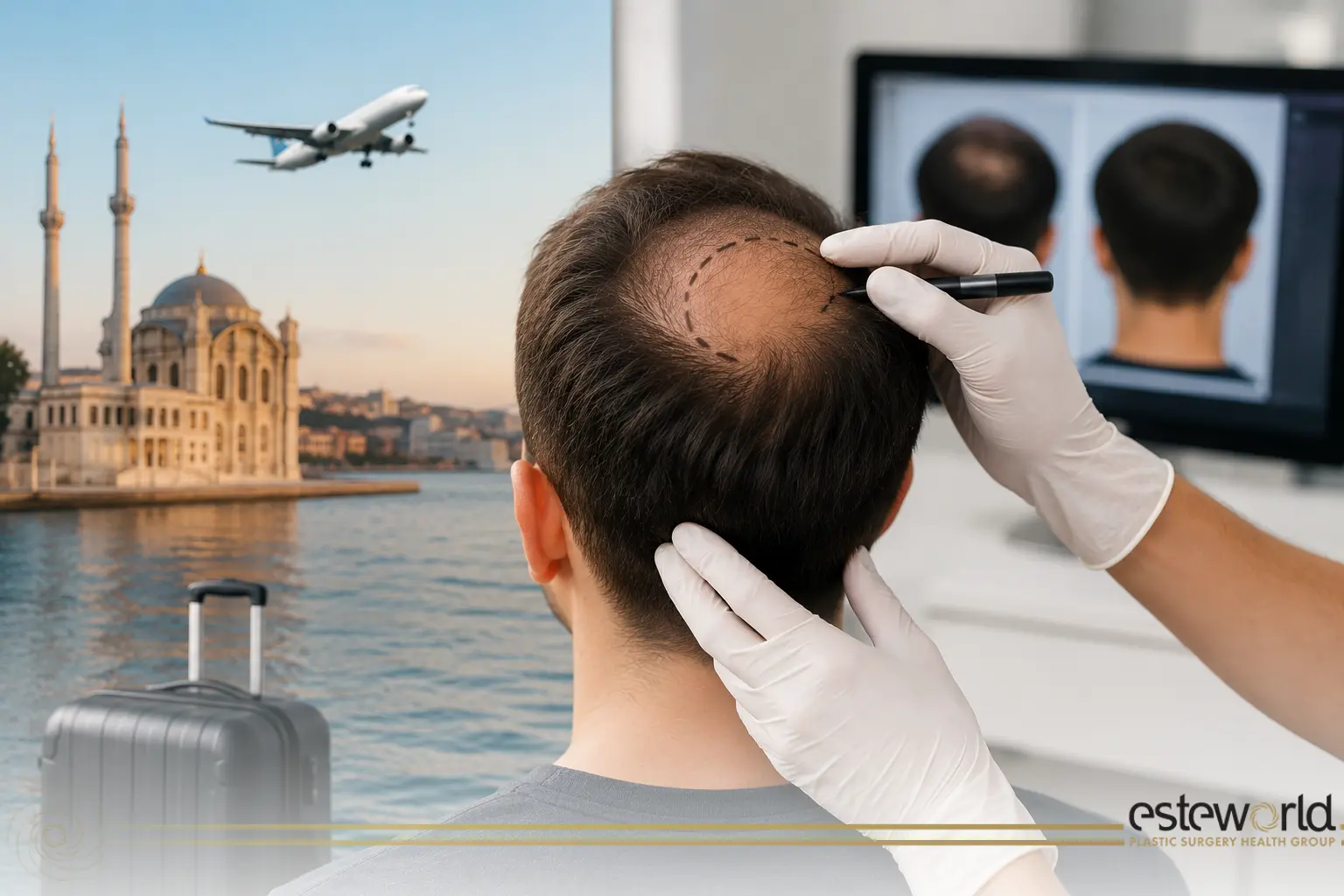
Many people who travel to Istanbul for a hair transplant want to add a few days of holiday to the same trip. This guide explains what to keep in mind, from the flight home to the sun, the sea and the hotel bar.
Why the First Weeks Matter
After a transplant, the scalp has many small wounds in the donor area and in the area where grafts were placed. The grafts need time to settle, and the skin needs time to close and heal. The NHS notes that you may need one to two weeks off work and may be told to limit exercise in the first month. Our hair transplant recovery timeline explains what happens in each phase.
The CDC’s guidance for people who travel abroad for medical care is direct: typical holiday activities such as drinking alcohol, strenuous exercise, sunbathing, swimming and long tours can delay or interfere with healing after a procedure.
That is why many patients choose to do the sightseeing part of their trip before the procedure, or to plan a separate holiday later.
Flying After a Hair Transplant
There is no single rule for every patient. Many international patients fly home within a few days of an FUE procedure, after their first check and wash at the clinic. Your surgeon will confirm when it is safe for you.
A few things make the flight easier:
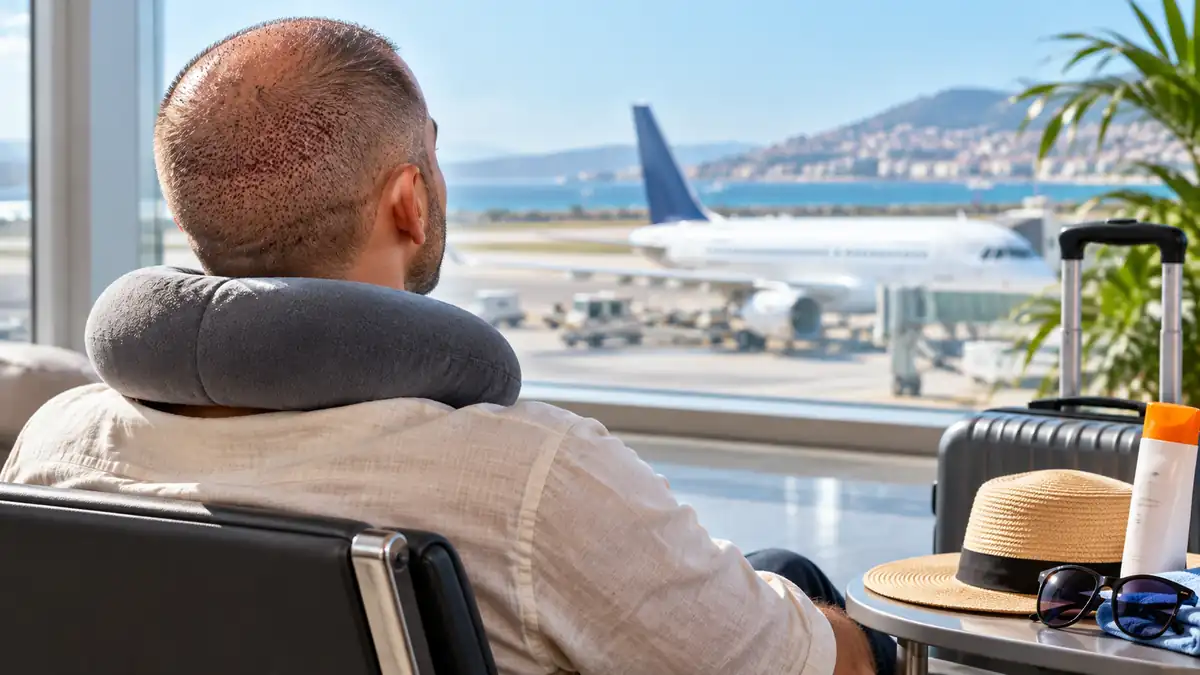
- Protect the grafts. Avoid leaning your head against the seat or window, and ask your clinic whether a neck pillow is a good idea for you.
- Lower your risk of blood clots. The NHS lists recent surgery and trips of more than four hours by plane, car or train as situations that raise the risk of deep vein thrombosis (DVT). It recommends walking around when possible, drinking plenty of water and avoiding alcohol on long trips. Tell your clinic if you have had a blood clot before.
- Keep your aftercare kit in your hand luggage, including prescribed medicines and the clinic’s written instructions.
Sun Exposure
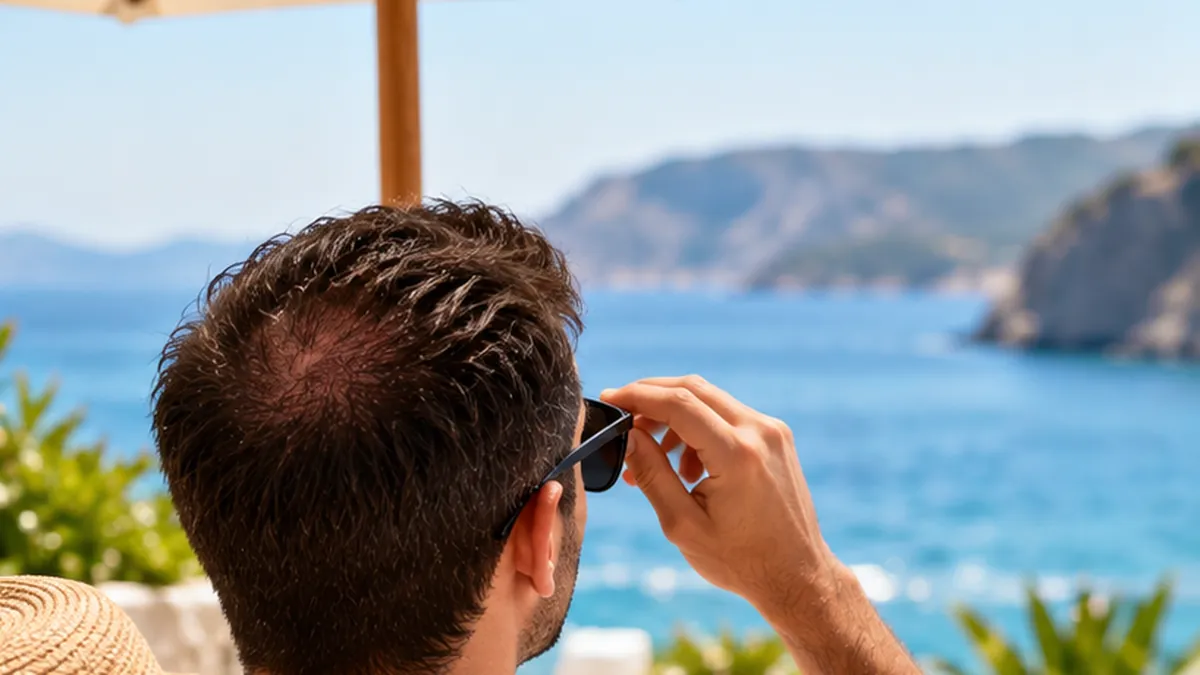
A healing scalp burns easily, and sunburn on fresh wounds is something to avoid. In the first weeks:
- Stay in the shade when you can. The American Academy of Dermatology (AAD) notes that the sun’s rays are strongest between 10 a.m. and 2 p.m.
- Wear a loose, clean hat that does not press on or rub the grafts. Your clinic will tell you from which day you can wear one.
- Do not apply sunscreen to the scalp until your surgeon says the skin is ready. Once it is, the AAD recommends a broad-spectrum, water-resistant sunscreen with SPF 30 or higher, reapplied every two hours or after swimming or sweating.
If you are using minoxidil, MedlinePlus advises not to apply it to a sunburned or irritated scalp. Our article on seasonal factors in planning a hair transplant covers summer procedures in more detail.
Swimming in the Pool or Sea
Swimming is one of the activities the CDC lists as something that can slow healing after a procedure. Pools, the sea, lakes, hot tubs and saunas all expose healing skin to water, chlorine, salt or heat.
Ask your surgeon when you can swim. In general, this is not before the scabs have cleared and the scalp has fully closed. Until then, keep your head out of the water. For the longer-term question, see can chlorine cause hair loss?
Exercise and Excursions
Hard exercise, long walking tours in the heat, water sports and contact sports put strain on the body while it is healing and increase the risk of knocking your head. The NHS says you may be told to limit exercise during the first month.
Gentle walks, relaxed meals and short trips are usually easier to fit into early recovery. Your surgeon will tell you when you can go back to the gym or sport. Our guide to sports after a hair transplant has more detail.
Alcohol on Holiday
The CDC includes alcohol among the holiday activities that can delay healing, and a 2026 review of FUE complications lists alcohol among factors that can increase bleeding risk. Ask your surgeon how long to avoid it. Read more in smoking and alcohol after a hair transplant.
Ask Your Surgeon Before You Book
- When can I fly, and is there anything I should avoid on the plane?
- From which day can I wear a hat, and what type?
- When can I use sunscreen on my scalp?
- When can I swim in a pool or the sea?
- When can I exercise, and when can I drink alcohol?
- Do I need any follow-up appointments before I leave Turkey?
The CDC also advises medical travellers to ask for copies of their medical records in English and to check whether they need extra travel or medical insurance. See our guides to travel insurance for hair transplant patients and what to pack for your hair transplant trip.
Warning Signs While You Are Away
Contact your clinic without delay if you notice increasing pain, spreading redness, swelling, pus, a high temperature, or any symptom that worries you. The CDC advises medical travellers not to delay seeking care if they suspect a complication, whether they are still travelling or have returned home. Throbbing pain or swelling in one leg together with shortness of breath or chest pain needs emergency care. More information is in our article on managing infection and complications.
If you are planning your trip, you can contact our team and ask how a holiday fits around your procedure.
This article is for general information and does not replace a medical consultation. Your surgeon’s aftercare instructions always take priority.