
On day 2 after a hair transplant, mild swelling, redness, scalp sensitivity and small crusts around the transplanted follicles can be part of the normal early healing process. The main priorities are protecting the grafts from friction or scratching, following the clinic’s washing and medication instructions, resting and avoiding strenuous activity.
The second day is still an early stage of hair transplant recovery. The scalp should therefore be handled carefully, and Esteworld’s individual postoperative instructions should take priority because washing, medication and activity recommendations may vary according to the procedure and patient.
Things to Consider on Day 2 of Hair Transplant
The second day after a hair transplant is an important stage of the recovery and healing process. Newly transplanted grafts should still be protected while the donor and recipient areas begin to recover.
Some common experiences and recommendations for the second day after a hair transplant include the following.
Swelling and Discomfort
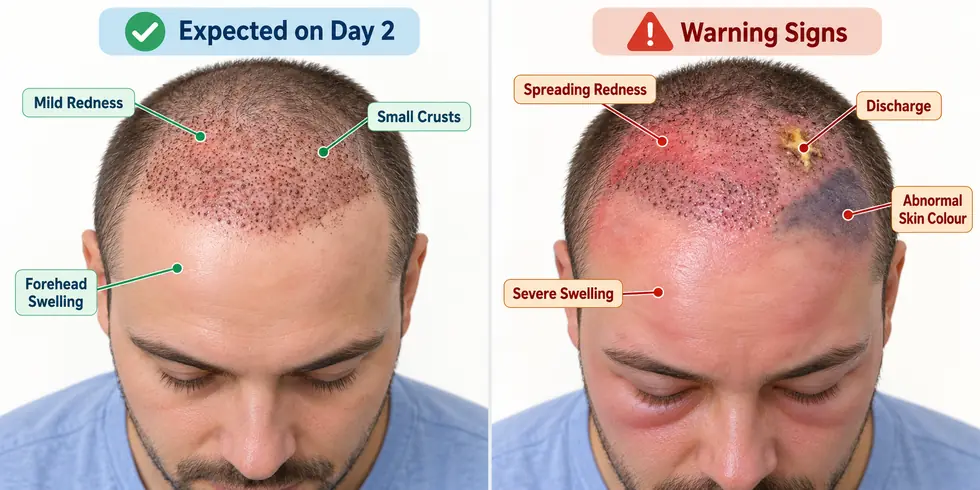
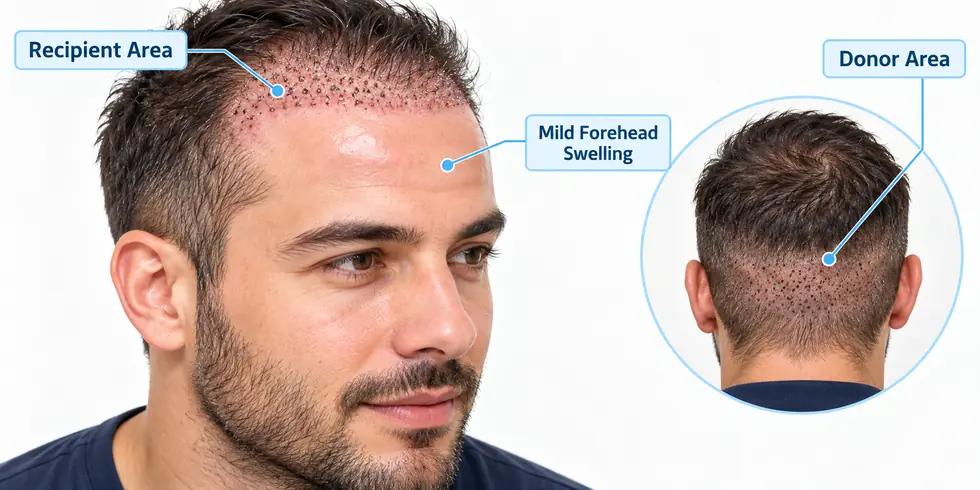
Mild swelling can occur after a hair transplant, particularly around the forehead, and may become more noticeable during the first few days after surgery.
Patients may also notice:
- Mild redness
- Scalp tightness
- Tenderness
- Small crusts around grafts
- Mild donor-area sensitivity
Postoperative forehead swelling is a recognised temporary effect after hair transplantation. The amount of swelling varies between patients.
Resting and following the positioning instructions provided by the medical team can help during this stage.
Patients should contact the clinic if swelling is severe, rapidly worsening or accompanied by symptoms such as significant pain, fever or unusual discharge.
Pain Management
Mild discomfort or tenderness can occur during the first days after transplantation.
Follow the pain-management plan provided by your surgeon and use only medications approved or prescribed by the medical team.
Do not increase the dose of medication or add another pain reliever without checking that it is appropriate for your treatment plan.
Severe or progressively worsening pain is not something that should automatically be assumed to be part of normal recovery and should be reported to the clinic.
Cleaning the Transplanted Area
Depending on your surgeon’s instructions, gentle cleaning or the first hair wash may begin around the second or third day after transplantation.
If Esteworld has advised you to wash the scalp on day 2:
- Use the recommended shampoo or postoperative products.
- Use lukewarm water.
- Avoid strong water pressure directly on the grafts.
- Do not rub the transplanted area.
- Do not scratch with your fingernails.
- Do not attempt to remove crusts forcefully.
The purpose of early washing is to keep the scalp clean while avoiding unnecessary trauma to the transplanted area.
Published postoperative protocols vary regarding the exact timing of the first wash, which is why the clinic’s own instructions should be followed rather than a generic schedule.
Avoiding Touching or Scratching
It is important to avoid touching, picking or scratching the transplanted area during early recovery.
Itching can develop as the scalp begins to heal, but scratching may irritate recipient sites and disturb crusts.
Patients should also avoid:
- Rubbing the scalp with a towel
- Pulling crusts away
- Touching grafts to check whether they are secure
- Applying unapproved oils, lotions or cosmetic products
If itching becomes uncomfortable or persistent, contact the clinic for advice.
Rest and Elevate Your Head
Rest remains important on day 2 after hair transplantation.
Patients are commonly instructed to sleep on their back and keep the head supported or elevated during the early postoperative period. This can also help avoid direct pressure or friction against the recipient area.
When sleeping:
- Avoid placing the transplanted area directly against the pillow.
- Use clean pillowcases.
- Avoid sleeping face-down.
- Follow the exact sleeping position recommended by Esteworld.
The duration of elevated sleeping can vary according to the patient and procedure.
Avoid Strenuous Activities
Strenuous exercise and activities that cause heavy sweating should still be avoided on the second day after a hair transplant.
Activities such as:
- Running
- Weight training
- High-intensity exercise
- Contact sports
- Heavy lifting
should not be resumed without clearance from the medical team.
Gentle daily movement may be different from strenuous exercise, but patients should follow the recovery timeline given by their surgeon.
Follow Dietary Guidelines
A special or restrictive “hair transplant diet” is generally unnecessary on day 2. The practical aim is to maintain normal hydration and eat balanced meals that support general recovery.
Meals can include:
- Protein sources
- Vegetables
- Fruit
- Whole grains or other suitable carbohydrates
- Healthy fats
- Adequate fluids
Patients should follow any individual dietary instructions given because of medication, medical history or the procedure itself.
For more detailed information, Esteworld’s nutrition after hair transplantation article can be linked contextually here.
Avoid Sun Exposure
The treated scalp should be protected from prolonged direct sunlight during the early healing period.
However, patients should not automatically place a tight hat or cap over newly transplanted grafts simply for sun protection.
The type of headwear and when it can safely be used should follow Esteworld’s postoperative protocol.
During the first days, reducing unnecessary outdoor exposure may be the simplest way to protect the scalp.
Stay Hydrated
Maintaining normal hydration supports general postoperative recovery.
Drink suitable fluids regularly during the day, particularly if your appetite or normal routine has changed following the procedure.
There is no need to drink excessive amounts of water solely because you have undergone hair transplantation.
Follow Up with Your Surgeon
The second day is still early enough that patients may have questions about swelling, washing, crusts or the appearance of the donor and recipient areas.
Contact your surgical team if you are uncertain whether a symptom is expected.
Follow-up is particularly important if you notice:
- Increasing rather than improving pain
- Rapidly spreading redness
- Significant bleeding
- Pus or unusual discharge
- Fever
- Severe swelling
- Unexpected skin colour changes
- Obvious trauma to the transplanted area
Early communication is more useful than trying to diagnose unusual postoperative changes from photographs found online.
Continue Medications
Continue any prescribed medications exactly as directed by your medical team.
Depending on the treatment plan, postoperative medication may be prescribed for pain, inflammation or other specific clinical reasons.
Do not stop medication simply because you feel well on the second day, and do not begin additional medication or supplements without checking whether they are appropriate.
What Should a Hair Transplant Look Like on Day 2?
A normal day-2 appearance may include mild redness, small crusts around the transplanted grafts, slight swelling and visible extraction points in the donor area. The exact appearance varies according to skin tone, graft number, technique and individual healing.
A useful distinction is whether symptoms are stable and consistent with early healing or are becoming progressively worse.
| Day-2 Finding | Often Expected | Should Be Reviewed |
|---|---|---|
| Mild redness | Yes | If rapidly spreading or worsening |
| Small crusts | Yes | If accompanied by pus or unusual discharge |
| Mild forehead swelling | Yes | If severe or associated with other concerning symptoms |
| Mild tenderness | Yes | If pain is increasing significantly |
| Mild itching | Yes | If accompanied by severe rash or inflammation |
| Donor-area sensitivity | Yes | If associated with worsening redness or discharge |
| Fever | No | Contact the clinic |
| Persistent bleeding | No | Contact the clinic |
| Foul-smelling discharge | No | Contact the clinic |
The appearance of another patient’s scalp on day 2 should not be used as an exact benchmark. Graft numbers, skin characteristics and the areas treated can make early recovery look different from one patient to another.