
Today, hair transplantation has become an indispensable part of aesthetic and personal care. Advances in technology, scientific research and environmental factors are leading to new trends and developments in the field of hair transplantation. In this article, we will explore the prominent trends and predictions for the future of hair transplantation. From technological innovations to aesthetic-oriented methods, from genetic treatments to environmental sensitivity, we will examine the factors shaping the future of hair transplantation and discover what we can expect in hair care in the coming period.
Current Status of Hair Transplantation
Since the discovery in 1952 of hair transplant surgery, the hair growth methods used today have undergone a significant evolution.
Treatments now include sophisticated new medications, advances in hair transplant surgery and sophisticated methods that involve cloning individual hair cells instead of unnatural-looking transplants.
New technology has the potential to override donor hair restrictions.
Among the treatment methods generally used in the field of hair transplantation are techniques such as FUE (Follicular Unit Extraction) and FUT (Follicular Unit Transplantation).
-
FUE (Follicular Unit Extraction):
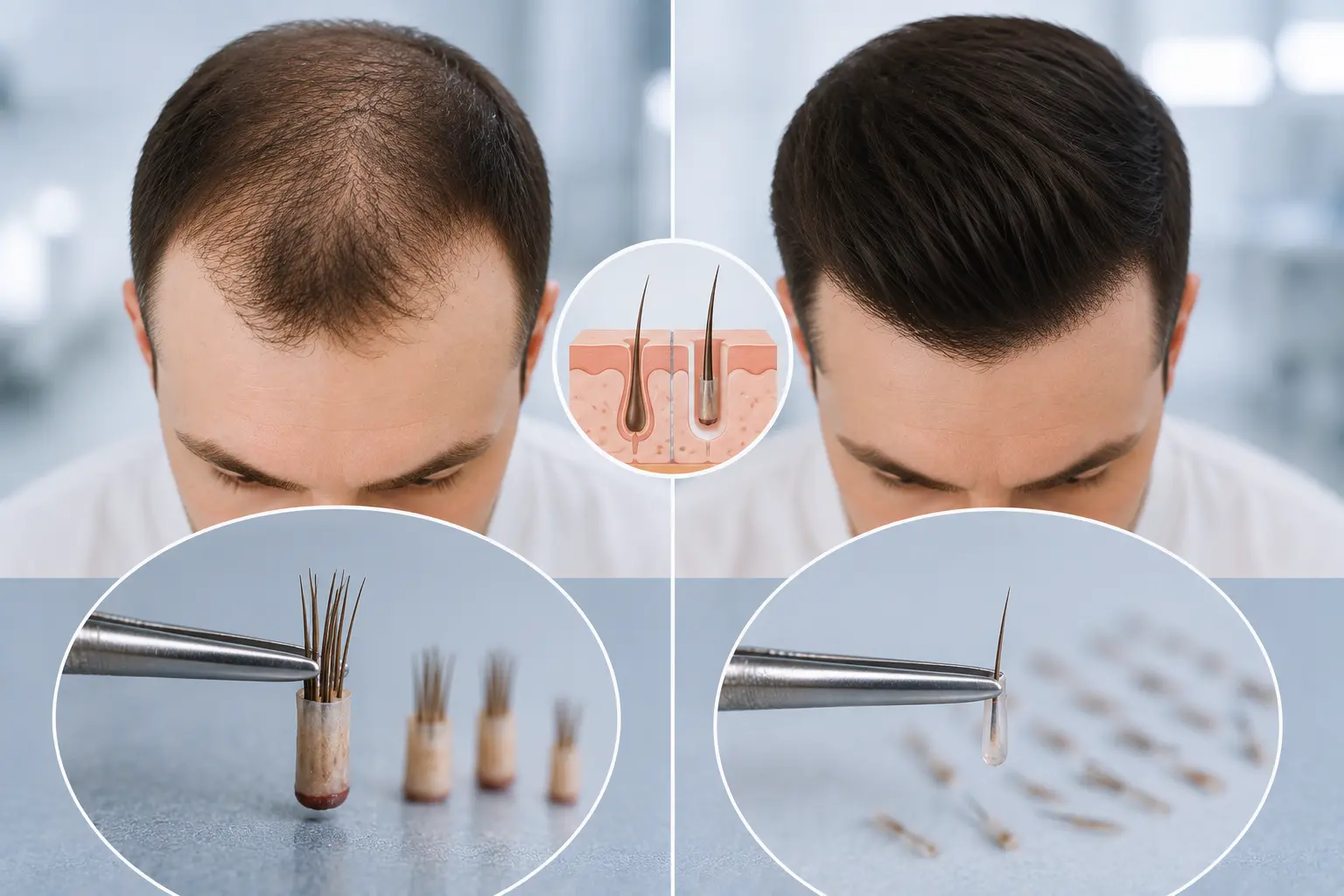
In this method, individual hair follicles are extracted from the donor area and transplanted to the area to be transplanted. This is a less invasive method and does not require incisions or stitches.
-
FUT (Follicular Unit Transplantation):
In this method, a strip is taken from the scalp and the hair follicles are separated by examining this strip. These follicles are then transplanted to the area to be transplanted. The FUT method is generally preferred for larger hair transplantation procedures.
After the first hair transplantation methods, DHI (Direct Hair Implantation) and sapphire FUE (Follicular Unit Extraction) methods have come to the fore among the most widely preferred hair transplantation techniques today.
Sapphire FUE Hair Transplant:
Sapphire FUE is based on the principle of extracting hair follicles one by one from the donor area and transplanting them to the area to be transplanted. Unlike traditional FUE, sapphire blades are used as surgical instruments in this method. The use of sapphire blades allows for more precise incisions and can speed up the healing process. In addition, the incisions made with sapphire blades can help achieve more natural-looking results.
DHI Hair Transplant:
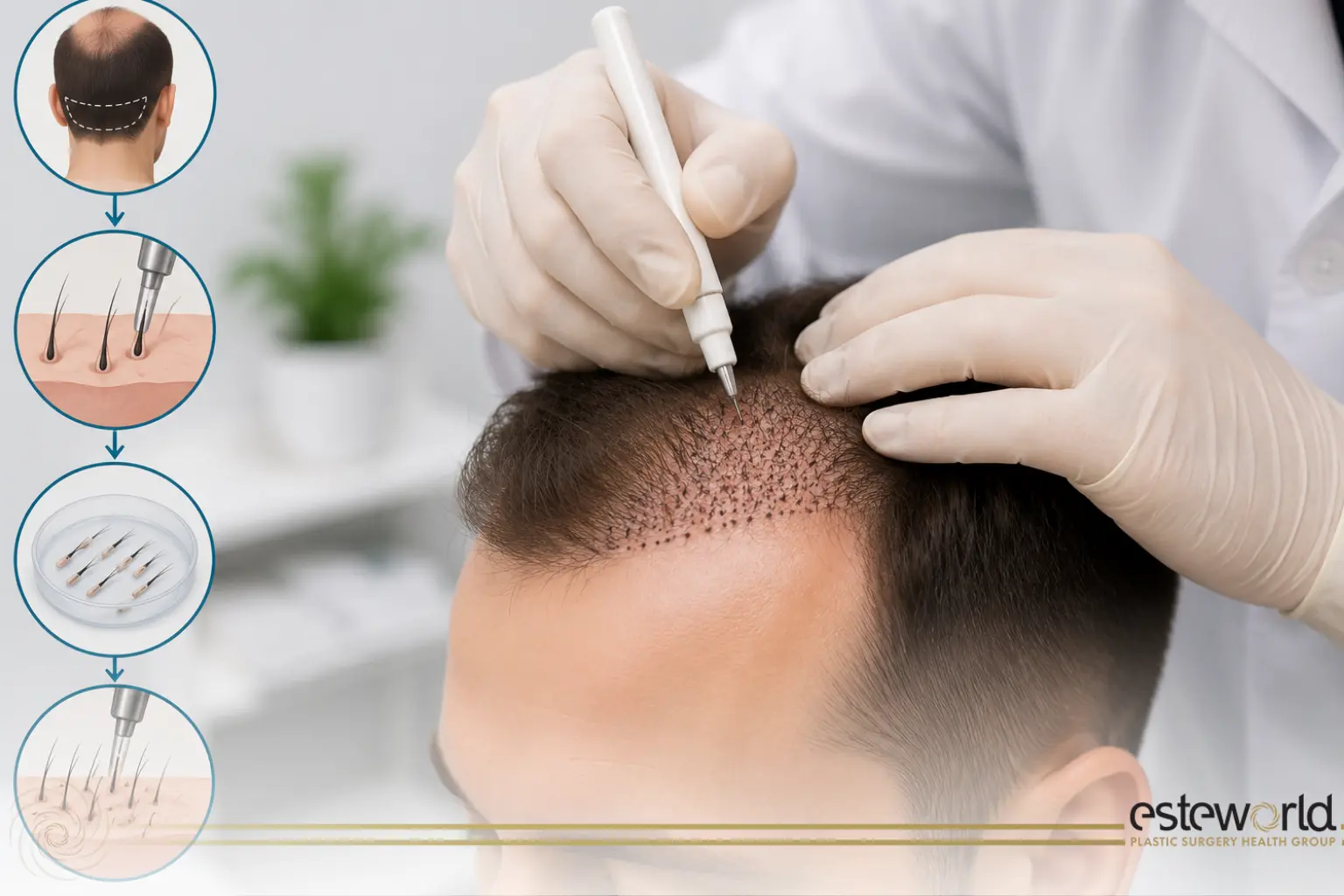
DHI (Direct Hair Implantation) is a hair transplantation technique performed using a special pen-like device. In this method, hair follicles are removed and then implanted directly into the recipient area for transplantation with the help of a special pen. The advantages of DHI include a faster healing process and less scarring. It also stands out for its ability to create a more natural hairline.
Both techniques are highly accepted in the field of hair transplantation, have achieved patient satisfaction and are among the preferred techniques due to their minimally invasive methods. However, the most appropriate method should be chosen in consultation with a specialist doctor, taking into account individual situations and preferences.
Latest Innovations in Hair Transplantation
The latest innovations in the field of hair transplantation with the impact of technology offer more comfortable and effective solutions for patients. The prominent ones among these innovations are as follows:
-
Robotic Hair Transplantation:
With the advancement of technology, robotic hair transplant devices offer the ability to remove and transplant hair follicles more precisely. This method minimizes surgical intervention and provides faster healing processes and natural-looking results.
-
Unshaven Hair Transplant:
Traditional hair transplantation methods usually required shaving of the donor area, but with unshaven hair transplantation, this requirement is eliminated. This method, which offers a significant advantage especially for female patients or male patients who do not want to grow their hair, means less pronounced recovery periods and less impact on social life.
-
Stem Cell Hair Transplantation:
Stem cell hair transplantation aims to repair hair follicles using the patient’s own cells. This method has the potential to improve hair quality and prevent hair loss. In addition, when used in combination with stem cell treatments, it can contribute to longer-term hair transplant results.
These innovations make hair transplantation techniques more personalized, effective and minimally invasive, making them more attractive to patients. However, it is important to consult a specialist to determine which method is most suitable for the individual.