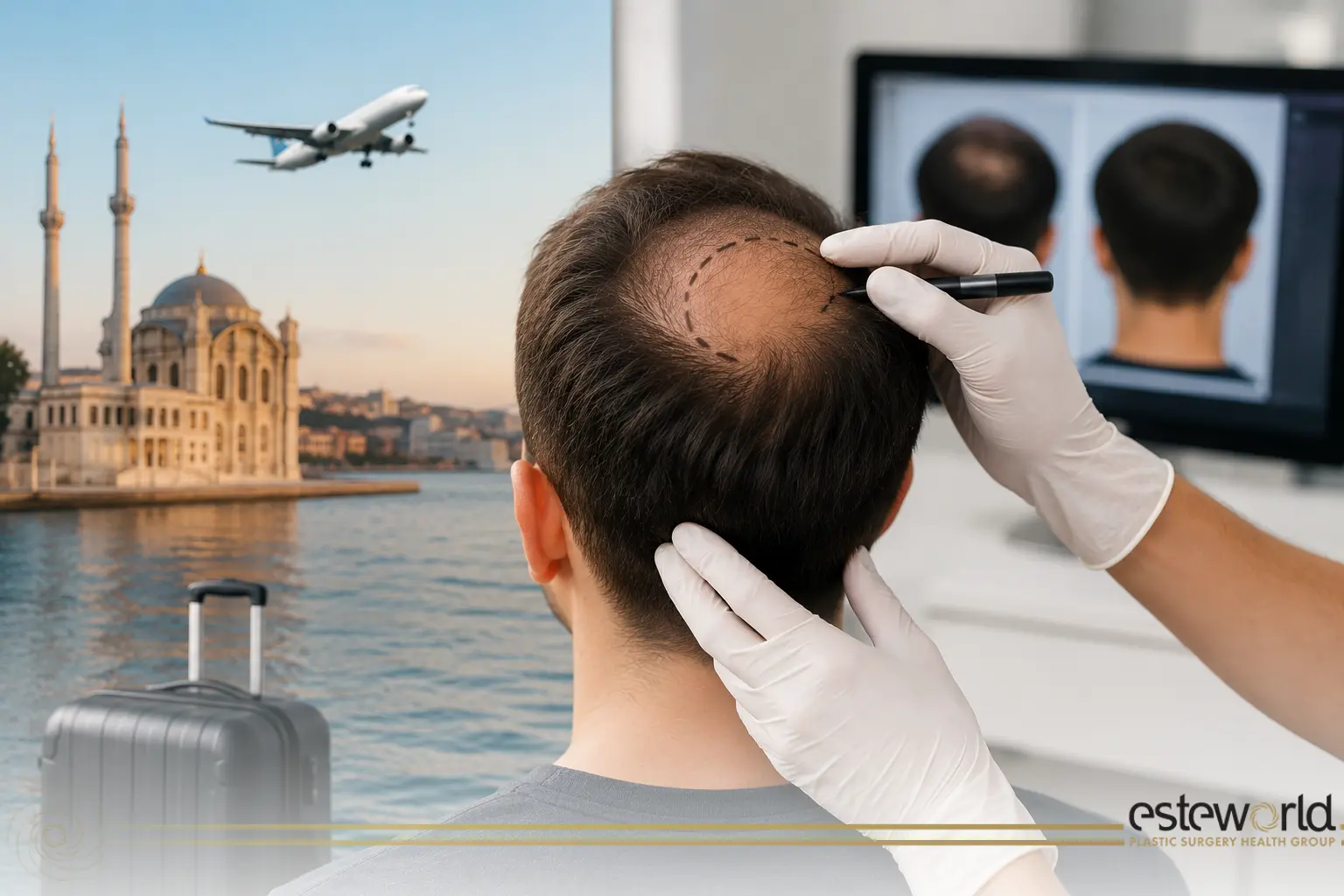
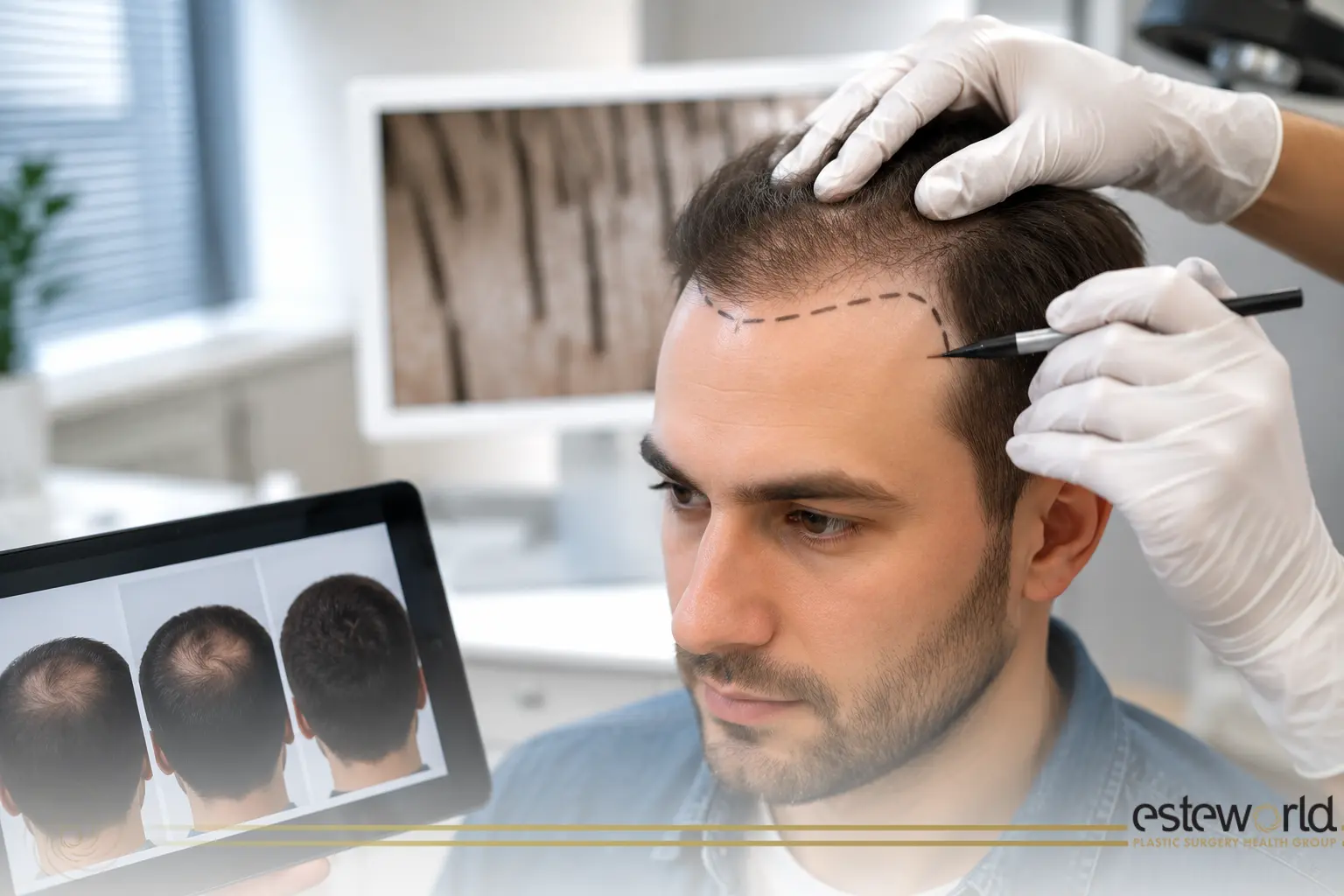
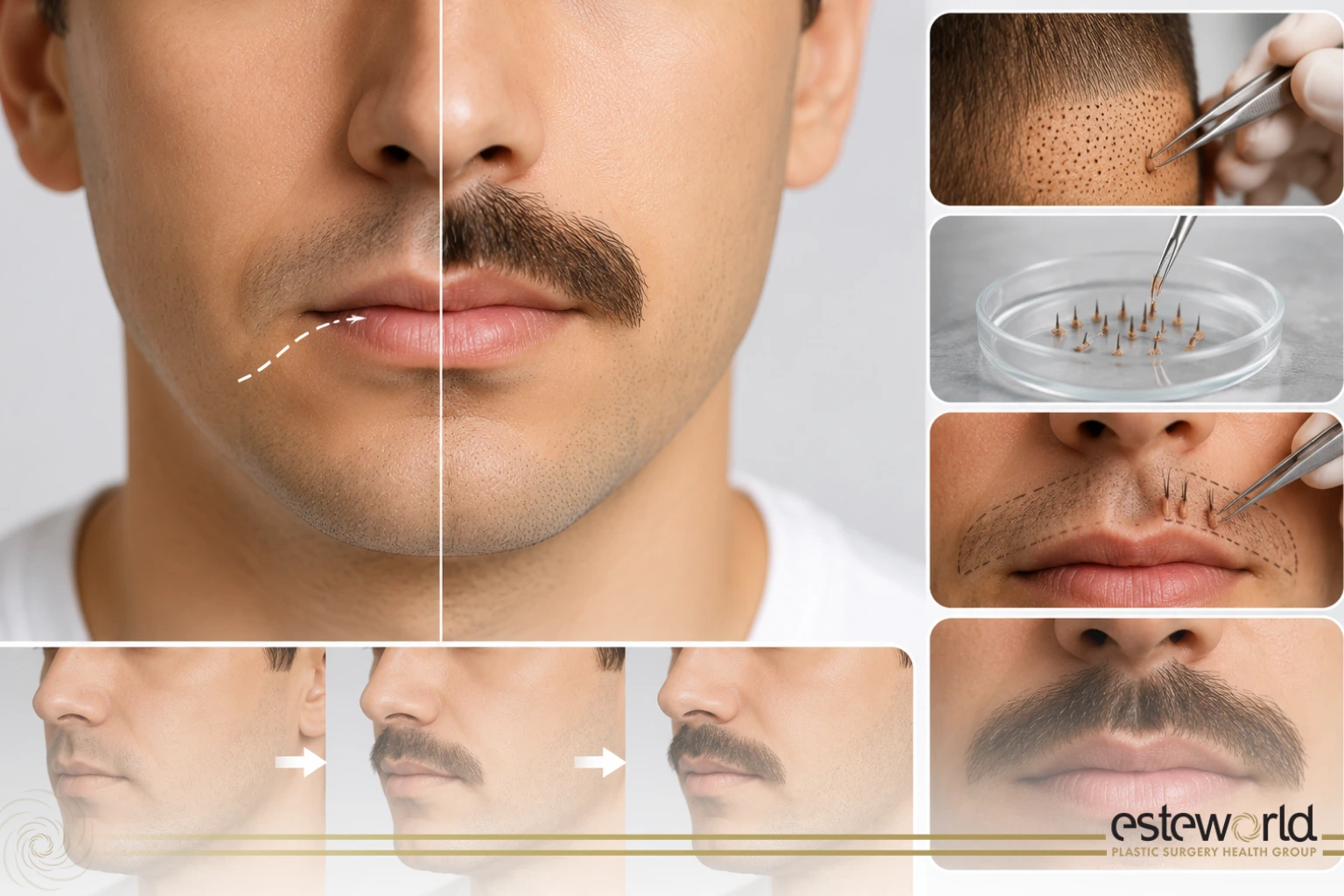
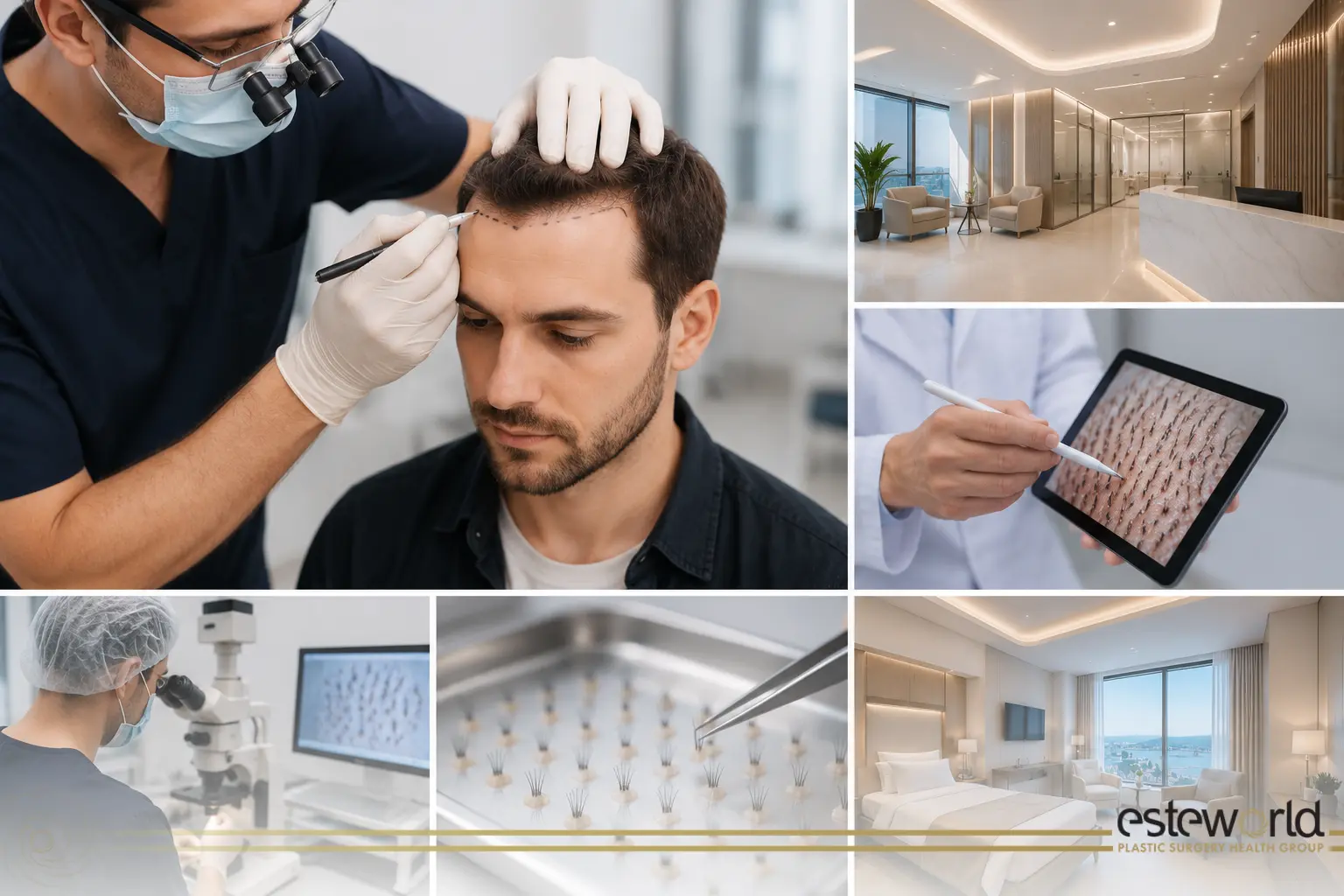
Traction alopecia is hair loss caused by repeated or prolonged pulling on the hair follicles, usually from tight hairstyles, extensions, braids, ponytails or similar sources of tension. Early traction alopecia may improve when the pulling stops, but long-standing cases can permanently damage or scar follicles. In selected stable cases with permanent hair loss, a hair transplant for traction alopecia may be considered to restore density in the affected area.
The first step is therefore not surgery. A medical assessment should determine whether the follicles still have the potential to recover naturally or whether the affected area has reached a stable, permanent stage. Early-stage traction alopecia can be reversible, whereas long-standing disease may progress to permanent scarring hair loss
Quick Summary
- Traction alopecia is hair loss caused by repeated pulling or tension on the hair follicles.
- Early traction alopecia may improve when the source of tension is removed before permanent scarring develops.
- Long-standing traction alopecia can permanently damage follicles and may not regrow naturally.
- Treatment may include hairstyle changes, medical therapy and, in selected stable cases, hair transplant for traction alopecia.
- Hair transplantation is considered only after the condition is stable, active inflammation has resolved and the donor area is suitable.
- Continuing tight hairstyles after treatment can cause further damage to both native and transplanted hair.
What Is Traction Alopecia?
Traction alopecia is a type of hair loss caused by repeated mechanical tension on the hair and scalp. It commonly affects areas where hairstyles continuously pull on the follicles, particularly the frontal hairline, temples and edges of the scalp.
Common causes include tight braids and cornrows, tight ponytails or buns, hair extensions and weaves, locs worn under significant tension, repeatedly tight updos and other hairstyles that cause persistent scalp pulling.
In early traction alopecia, follicles may still be present and capable of producing new hair. If pulling continues for a long period, repeated trauma can eventually lead to fibrosis and permanent follicular damage.
What Does Traction Alopecia Look Like?
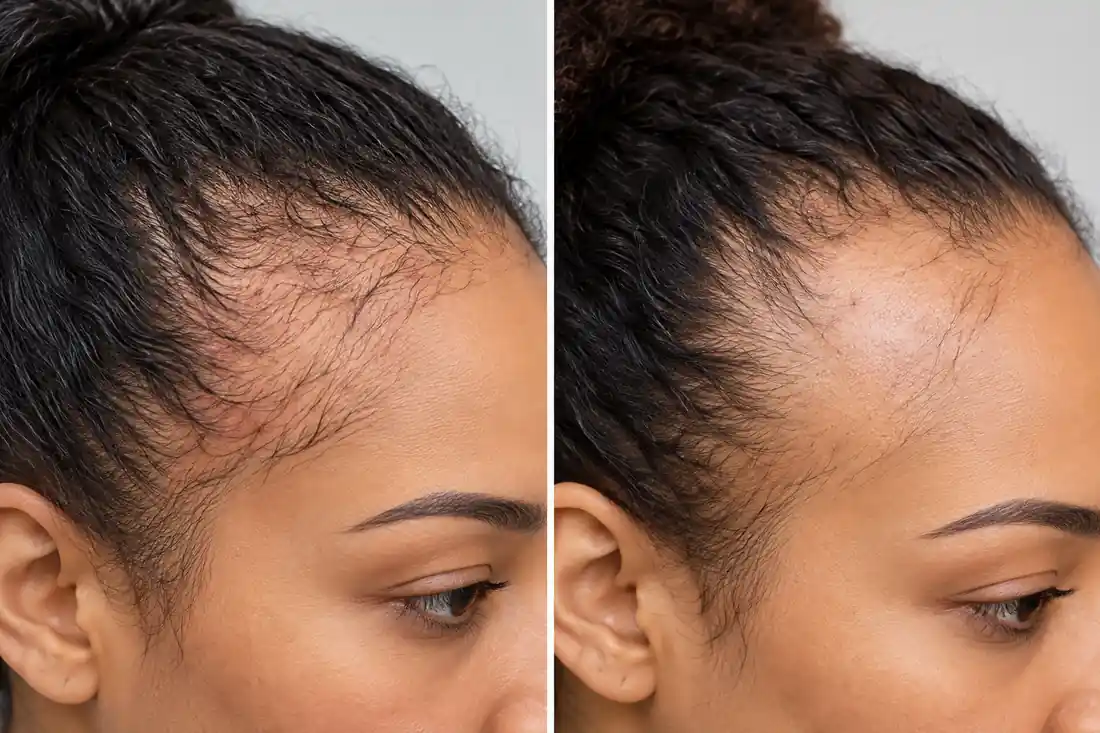
The appearance of traction alopecia varies according to its duration and severity. Early signs can include broken hairs around the hairline, reduced density, scalp tenderness, mild redness, small follicular bumps and gradual recession in areas exposed to tension.
More advanced traction alopecia can result in smoother areas of hair loss with fewer visible follicular openings. The fringe sign, in which some hairs remain along the frontal or temporal edge despite hair loss behind them, can also occur in traction alopecia.
Can Traction Alopecia Regrow Naturally?
Traction alopecia can regrow naturally when it is identified early enough and the damaging tension is removed before permanent follicular scarring develops. Once follicles have been destroyed and replaced by scar tissue, spontaneous regrowth becomes much less likely.
This distinction is important for users searching for traction alopecia regrowth naturally, traction alopecia natural treatment, traction alopecia remedies or how to treat traction alopecia naturally.
In early traction alopecia, the main priority is removing the mechanical cause. Hairstyles should be loosened, heavy extensions reduced and repeated pulling on the same areas avoided. The American Academy of Dermatology also emphasises changing hairstyles early because continued tension can eventually lead to permanent loss.
When the condition has been present for a long time, smooth or scarred areas may no longer contain viable follicles. In these cases, changing hairstyle remains important to prevent further damage, but it may not restore hair in areas where follicles have already been permanently destroyed.
How Is Traction Alopecia Treated?
Traction alopecia treatment depends primarily on whether the condition is early and potentially reversible or advanced and permanently scarred.
| Stage | Typical Findings | Main Treatment Focus |
|---|---|---|
| Early traction alopecia | Broken hairs, mild thinning, inflammation, follicles still present | Remove tension and protect the scalp |
| Potentially reversible stage | Reduced density without established scarring | Medical assessment and regrowth treatment where appropriate |
| Advanced/scarring stage | Stable permanent loss and follicular destruction | Hair restoration surgery may be considered |
The first treatment step is usually to stop or modify the hairstyle or practice creating repeated tension. Clinical treatment may then be considered according to the condition of the scalp.
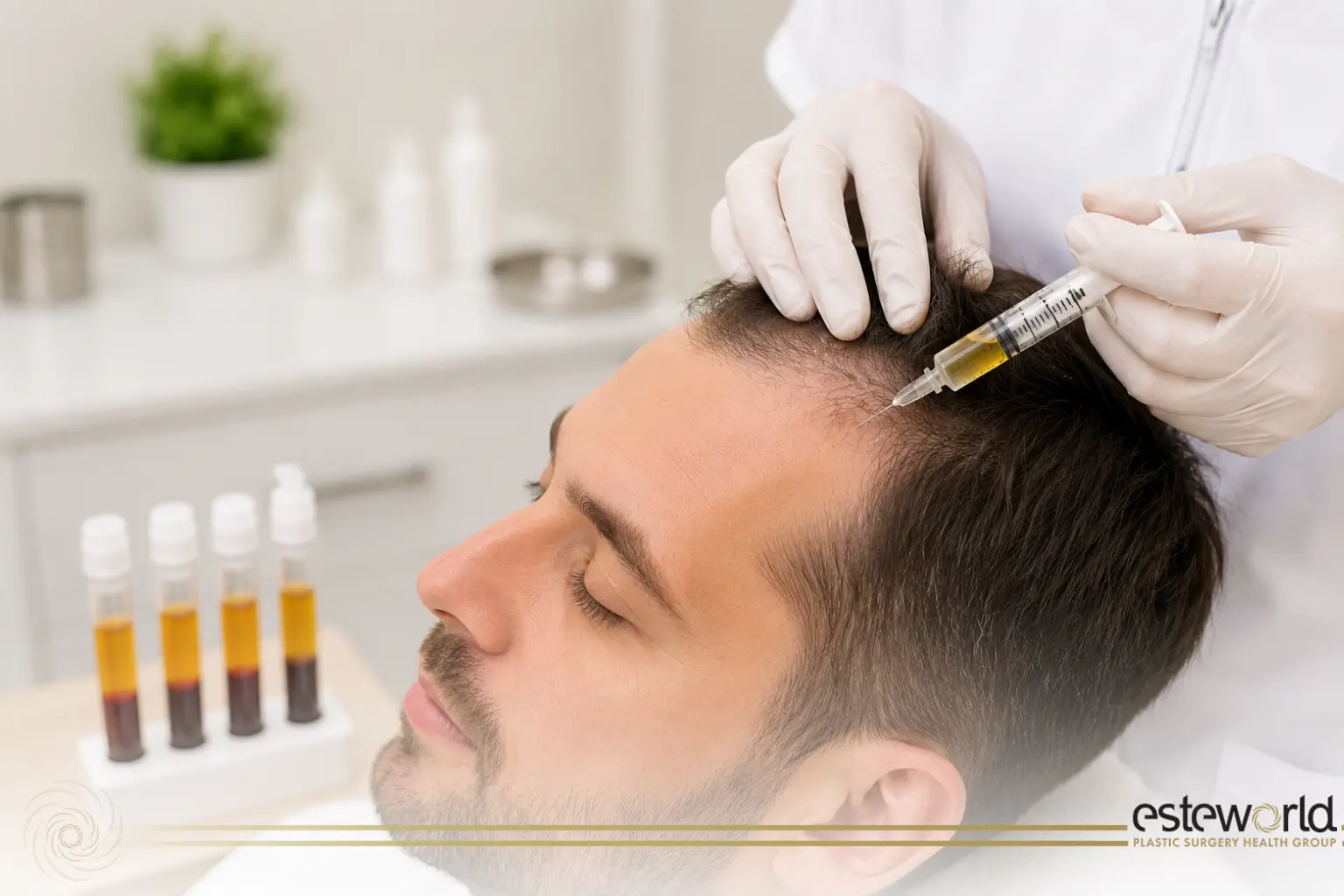
Topical or intralesional corticosteroids may be used when inflammation is present, while minoxidil has been used in selected patients to support regrowth. Antibiotics can also be considered when clinically indicated. Treatment should be individualised rather than assuming that every case of traction alopecia needs the same medication.
Does Natural Treatment Work for Traction Alopecia?
The most important non-surgical measure is removing the mechanical cause early enough.
There is not strong evidence that oils, scalp massage, supplements or home remedies can recreate follicles that have already been permanently destroyed by scarring. General scalp care may reduce additional breakage, but it should not replace medical diagnosis when hair loss persists.
This is particularly important because users searching for an alopecia solution or traction alopecia remedy may encounter claims suggesting that individual products can reverse every stage of the condition. The likelihood of regrowth depends substantially on whether viable follicles remain.
Can You Get a Hair Transplant With Traction Alopecia?
Yes. A hair transplant for traction alopecia can be considered when the hair loss is permanent, the source of traction has been removed, the condition is stable and the donor area contains enough healthy follicles.
Hair transplantation is generally not the first option for early traction alopecia because follicles may still have the ability to recover after the tension is removed.
Before considering traction alopecia hair transplant surgery, the medical team should assess the diagnosis, stability of the hair loss, presence of inflammation or scarring, donor-area quality, size of the recipient area and whether the behaviour that caused the traction has stopped.
Long-standing traction alopecia that has progressed to scarring is less responsive to medical treatment, while hair transplantation has been reported as an option in selected advanced cases. PMC
Is Hair Transplant Suitable for All Types of Alopecia?
No. The GSC query “get a hair transplant with alopecia” is broader than traction alopecia itself.
“Alopecia” simply describes hair loss and includes several different conditions. Hair transplantation may be appropriate for certain forms of stable permanent hair loss, while active autoimmune, inflammatory or unstable forms of alopecia may require a very different approach.
Therefore, an alopecia hair transplant should only be considered after the underlying cause of hair loss has been established.
Who Is a Good Candidate for Traction Alopecia Hair Transplant Surgery?
A suitable candidate for traction alopecia surgery generally has stable permanent hair loss, an adequate donor area and a recipient area that is clinically appropriate for transplantation.
The source of traction should no longer be active. Persistent redness, inflammation, tenderness or ongoing hair loss may indicate that surgery should be postponed while the underlying condition is assessed.
Hair characteristics also matter. Hair calibre, curl pattern, donor density and the amount of scarring can affect surgical planning and the visual coverage that can realistically be achieved.
A hair transplant does not treat the behaviour that originally caused traction alopecia. Continuing the same high-tension hairstyles after transplantation can expose both native and transplanted hairs to further mechanical stress.
How Is a Hair Transplant for Traction Alopecia Performed?
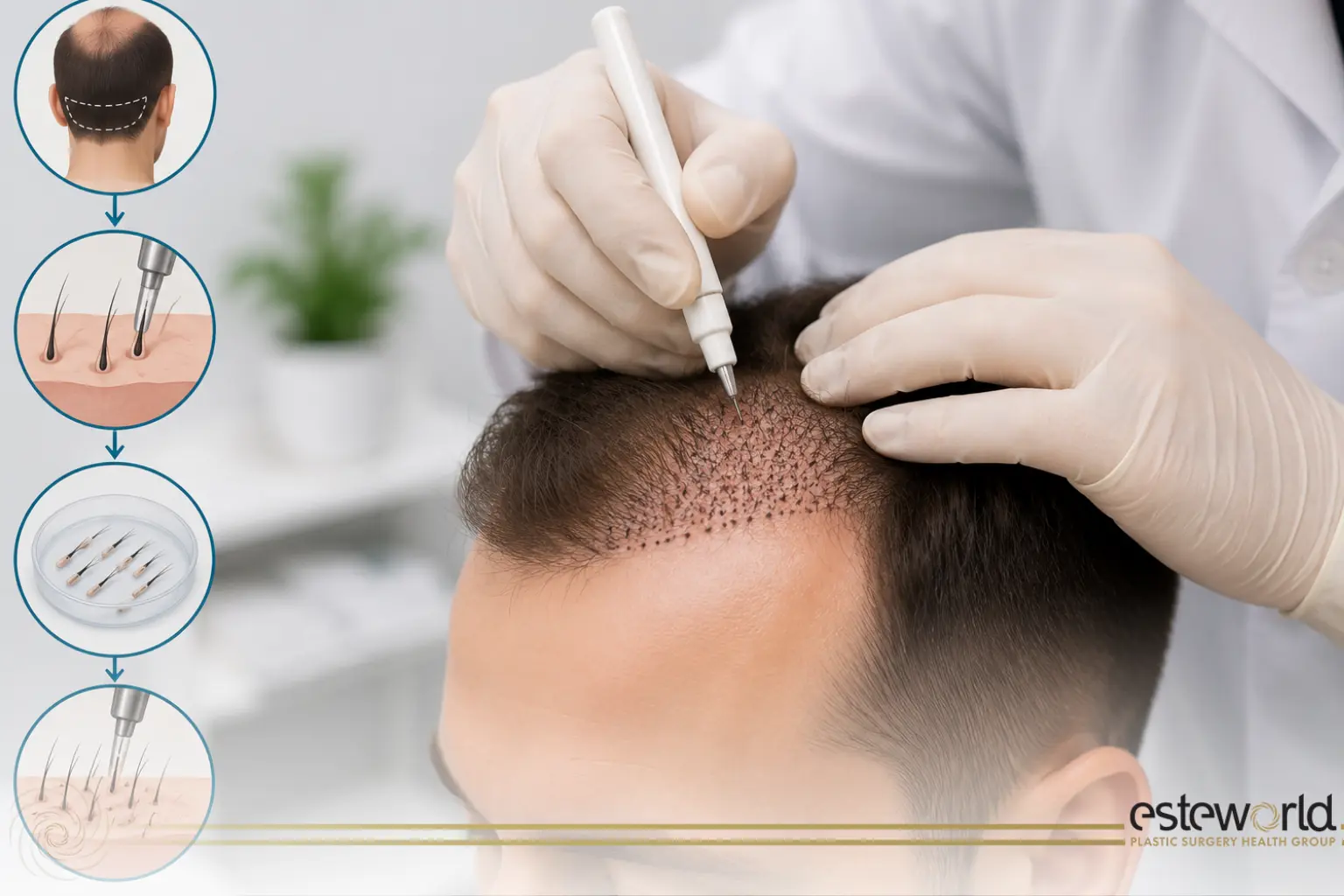
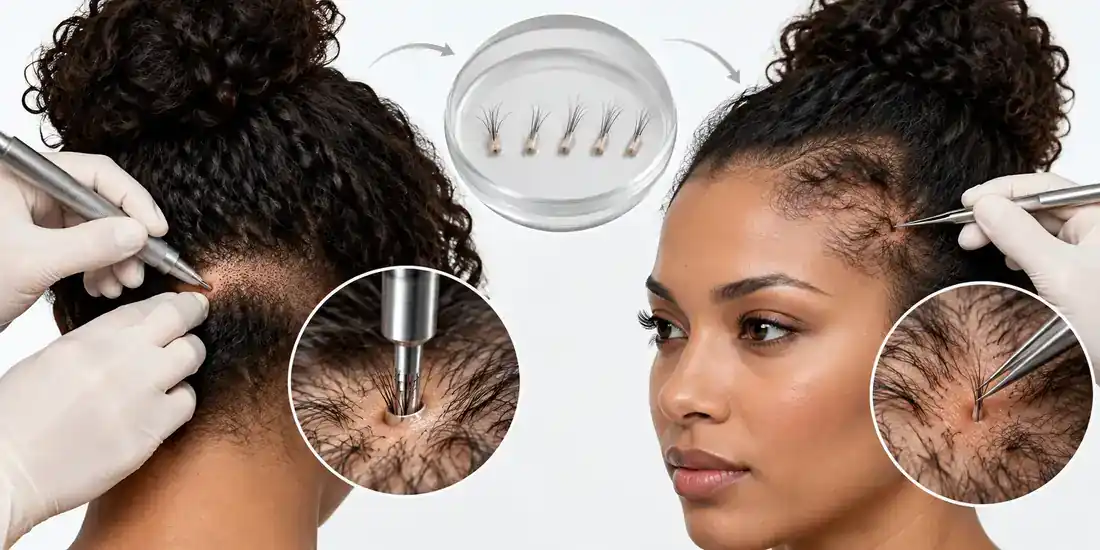
A traction alopecia hair transplant surgery transfers healthy follicular units from a suitable donor area to a permanently thinned or bald recipient area.
The procedure begins with donor-area assessment and recipient-area planning. Healthy follicular units are then extracted according to the selected technique and implanted into areas affected by permanent traction alopecia.
For frontal hairline and temple restoration, graft direction and distribution are especially important. Fine single-hair follicular units may be used along the leading edge to create a softer transition into existing hair.
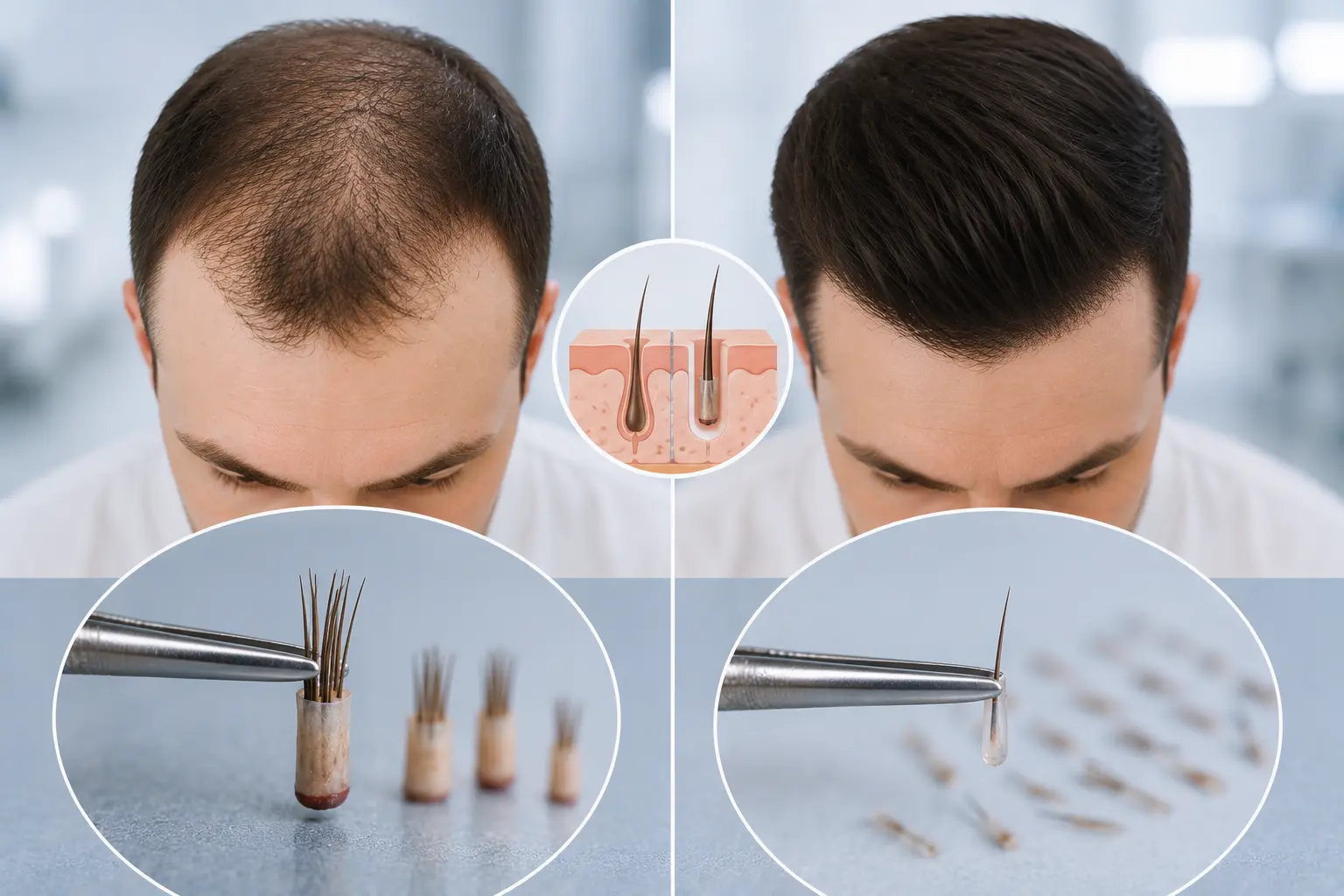
The choice between FUE, Sapphire FUE, DHI or another workflow should depend on donor characteristics, recipient-area condition and individual surgical planning rather than presenting one technique as universally superior.
What Results Can Be Expected After Traction Alopecia Hair Transplantation?
Traction alopecia surgery results develop gradually rather than immediately. The visible transplanted hair shafts may shed during the first weeks, followed by a temporary resting phase before new hair begins to emerge.
Early new growth may become noticeable from approximately the third or fourth month, while density and hair calibre generally continue to develop over the following months. Final maturation may take around a year or longer depending on the treated area and individual hair cycle.
The result depends on several factors, including donor quality, scar tissue, recipient-area blood supply, graft survival, hair characteristics and long-term avoidance of damaging traction.
Published literature documents successful transplantation in selected advanced traction alopecia cases, but this should not be converted into a blanket success-rate claim for every patient.
Can Traction Alopecia Return After Hair Transplantation?
The mechanical process that caused traction alopecia can damage hair again if the same high-tension styling practices continue.
A transplanted follicle is not automatically immune to repeated pulling.
Long-term protection therefore requires avoiding hairstyles that produce pain or persistent tension, reducing the weight of extensions and modifying styling practices that repeatedly stress the same areas.
Care After Traction Alopecia Hair Transplantation
Postoperative care follows the general principles of hair transplant aftercare, but traction alopecia patients also have an important long-term consideration: the styling practice responsible for the original hair loss should not be reintroduced in a way that creates damaging tension.
During early recovery, patients should follow Esteworld’s own washing, medication, sleeping, exercise and sun-exposure protocol. Scratching, rubbing and unnecessary pressure on the newly transplanted area should be avoided.
Long-term styling habits are equally important. Tight braids, extensions, ponytails or other tension-producing hairstyles should be modified to protect transplanted and native hair.