Forehead reduction with hair transplantation is a surgical approach that makes the forehead appear shorter by placing hair grafts below the existing hairline. It adds hair without removing forehead skin or changing the forehead bone. This differs from forehead reduction surgery, which removes a strip of skin and moves the hair-bearing scalp forward. Depending on individual needs, these procedures may be considered separately or combined.
Can a hair transplant reduce forehead size? Yes, a hair transplant can reduce the visible height of the forehead by creating a lower hairline. The achievable change depends on donor hair availability, the area requiring coverage, existing hair loss and a suitable long-term hairline design.
At a glance:
- Hair transplantation lowers the visible hairline through new hair growth.
- Surgical forehead reduction lowers the existing hairline through scalp advancement.
- Both approaches require individual assessment and involve surgical risks.
- Neither procedure prevents future hair loss or guarantees a particular appearance.
Forehead Reduction vs Hair Transplant: What Is the Difference?
“Forehead reduction”, “forehead narrowing” and “hairline lowering” are sometimes used interchangeably. However, they can describe different procedures. Understanding the distinction helps patients compare treatment plans accurately.
Hair transplant to reduce forehead height
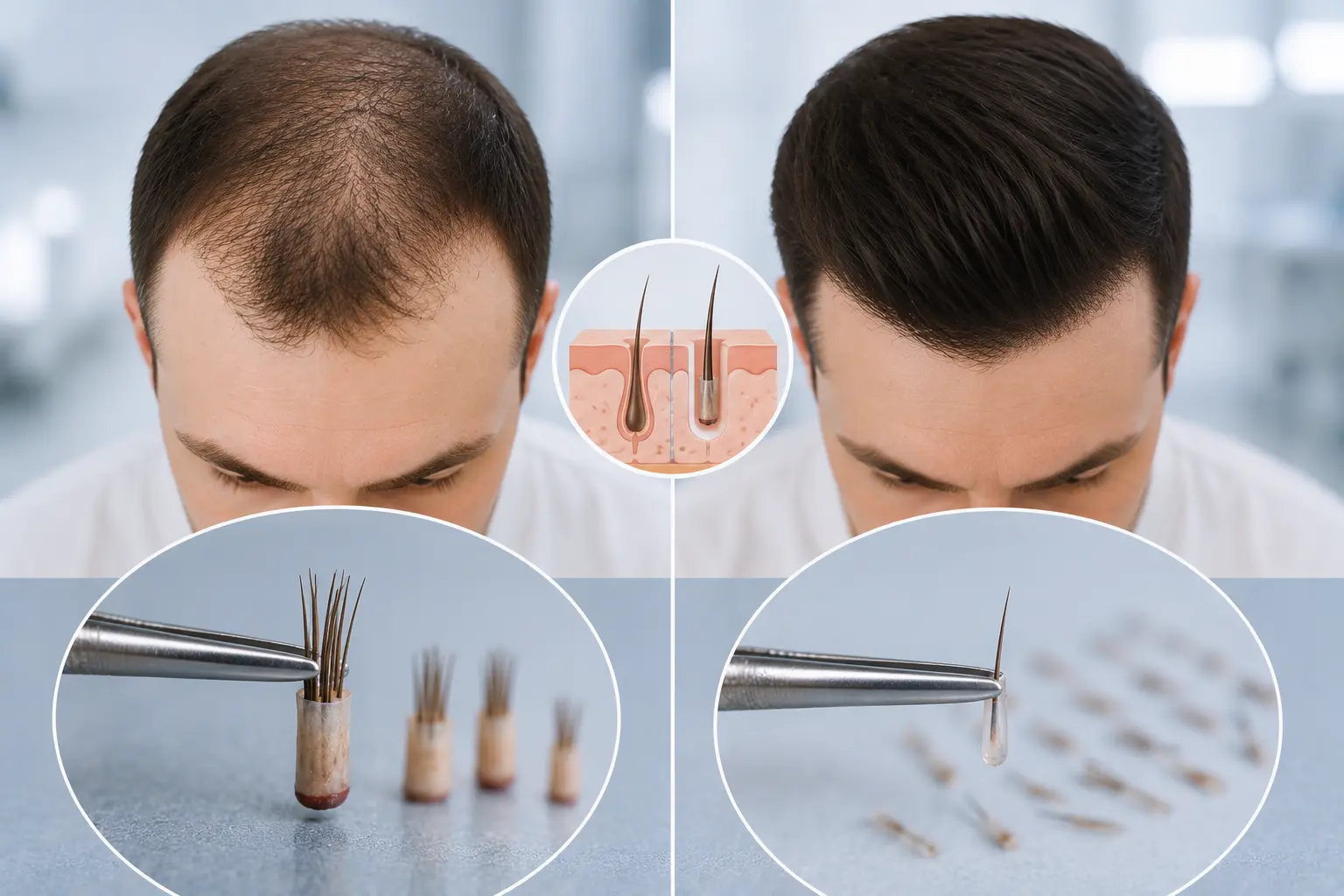
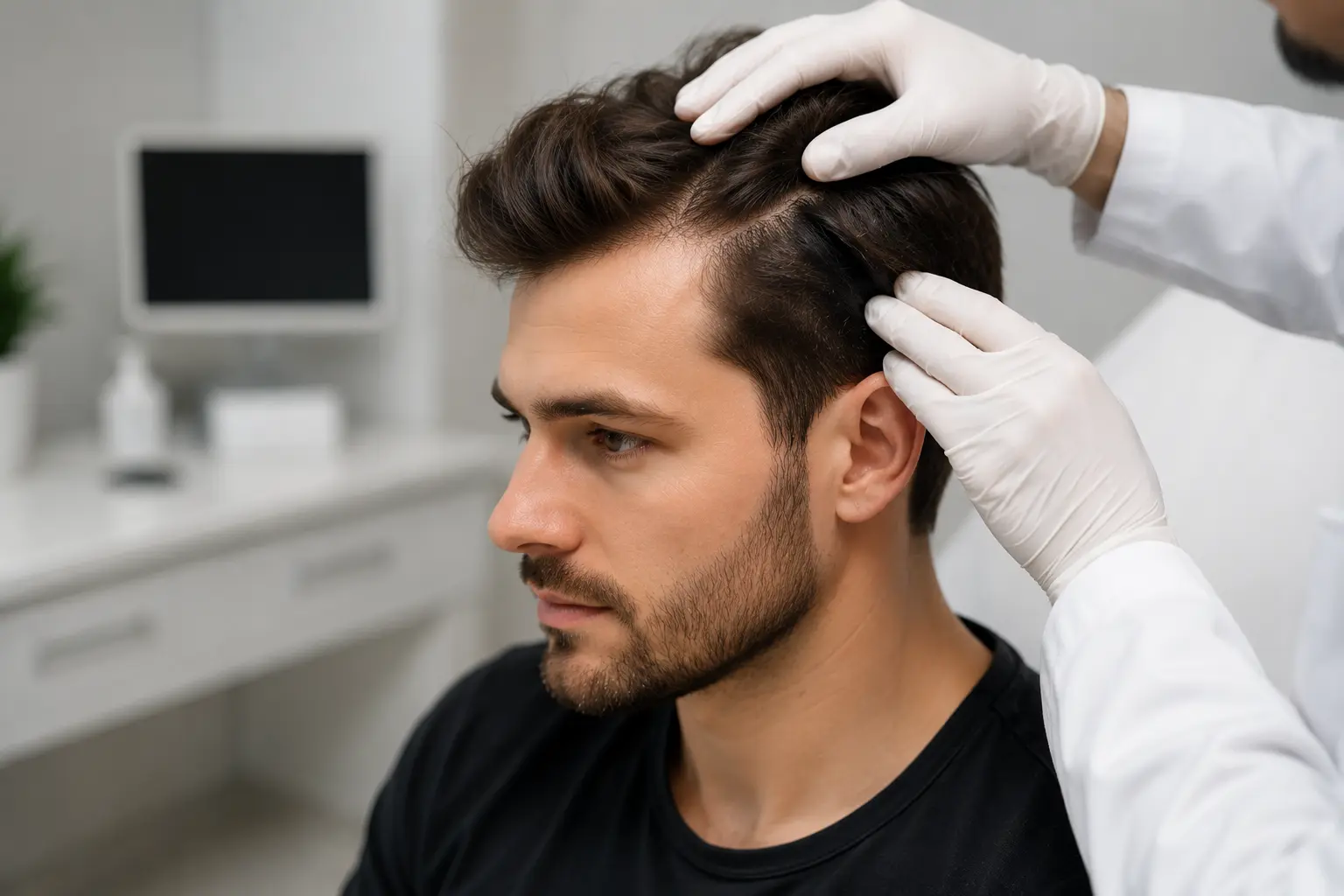
A forehead hair transplant transfers living hair follicles from a suitable donor area, usually at the back or sides of the scalp, into a planned area along the frontal hairline.
As the transplanted hair grows, it creates a new boundary between the forehead and scalp. This can make a high forehead appear smaller and improve the shape of the frontal hairline or temples.
Hair grafting for forehead reduction does not physically shorten the forehead bone. Its effect comes from increasing hair coverage in the planned area.
Forehead reduction surgery
Forehead reduction surgery, also called scalp advancement or surgical hairline lowering, involves removing a strip of forehead skin near the hairline and bringing the hair-bearing scalp forward.
This changes the position of the existing hairline without waiting for transplanted follicles to grow. Scalp flexibility, hairline stability and incision planning are important considerations. Esteworld’s explanation of surgical hairline lowering describes this skin-removal and repositioning approach.
| Consideration | Hair transplantation | Surgical forehead reduction |
|---|---|---|
| How it works | Adds hair grafts below the existing hairline | Advances the existing hair-bearing scalp |
| Main assessment | Donor supply, recipient area and future hair loss | Scalp flexibility, hairline stability and surgical suitability |
| Visible change | Develops as transplanted hair grows | Hairline position changes during surgery |
| Scarring | Donor scars depend on the harvesting technique | An incision scar remains along the hairline |
| Main limitation | Available donor hair and achievable coverage | Safe scalp movement and incision healing |
Both are surgical procedures. Neither should be described as universally better or suitable for everyone.
Forehead bone contouring and brow lifting are separate operations with different goals. They should not be confused with lowering the hairline.
Who Is Suitable for Forehead Reduction or Hairline Lowering?
Suitability depends on why the forehead appears high and whether the existing hairline is stable. A naturally high hairline is different from a hairline that is progressively receding.
A high forehead is also a normal anatomical variation. Treatment is an individual choice, and there is no single forehead measurement that everyone should aim to achieve.
During an assessment, the surgeon considers:
- The position, shape and stability of the existing hairline.
- The cause and likely progression of any hair loss.
- Donor hair density, thickness and available supply.
- Scalp health, previous surgery and existing scars.
- Scalp flexibility when considering surgical advancement.
- Medical history, healing factors and realistic expectations.
Forehead reduction in women
Women with a naturally high forehead may consider either hair transplantation or surgical hairline lowering after assessment.
A hair transplant can help adjust the frontal outline and fill selected areas near the temples. Surgical advancement may be considered when the hairline is stable and the scalp can move sufficiently.
Women experiencing diffuse thinning or active scalp disease need assessment of the underlying condition first. Dense-looking hair at the front does not, by itself, confirm that someone is a suitable candidate.
Forehead reduction in men
Male forehead reduction surgery may be considered in selected patients, but the possibility of future hairline recession requires careful planning. Recession could expose an incision scar or change the appearance achieved by surgery.
Hair transplantation also requires a long-term approach. Lowering the hairline too aggressively can use donor hair that may be needed elsewhere if hair loss progresses.
For patients whose concern is progressive recession, understanding the options for a hair transplant for a receding hairline can help distinguish hair restoration from correction of a lifelong high forehead.
How Does Forehead Reduction With Hair Transplantation Work?
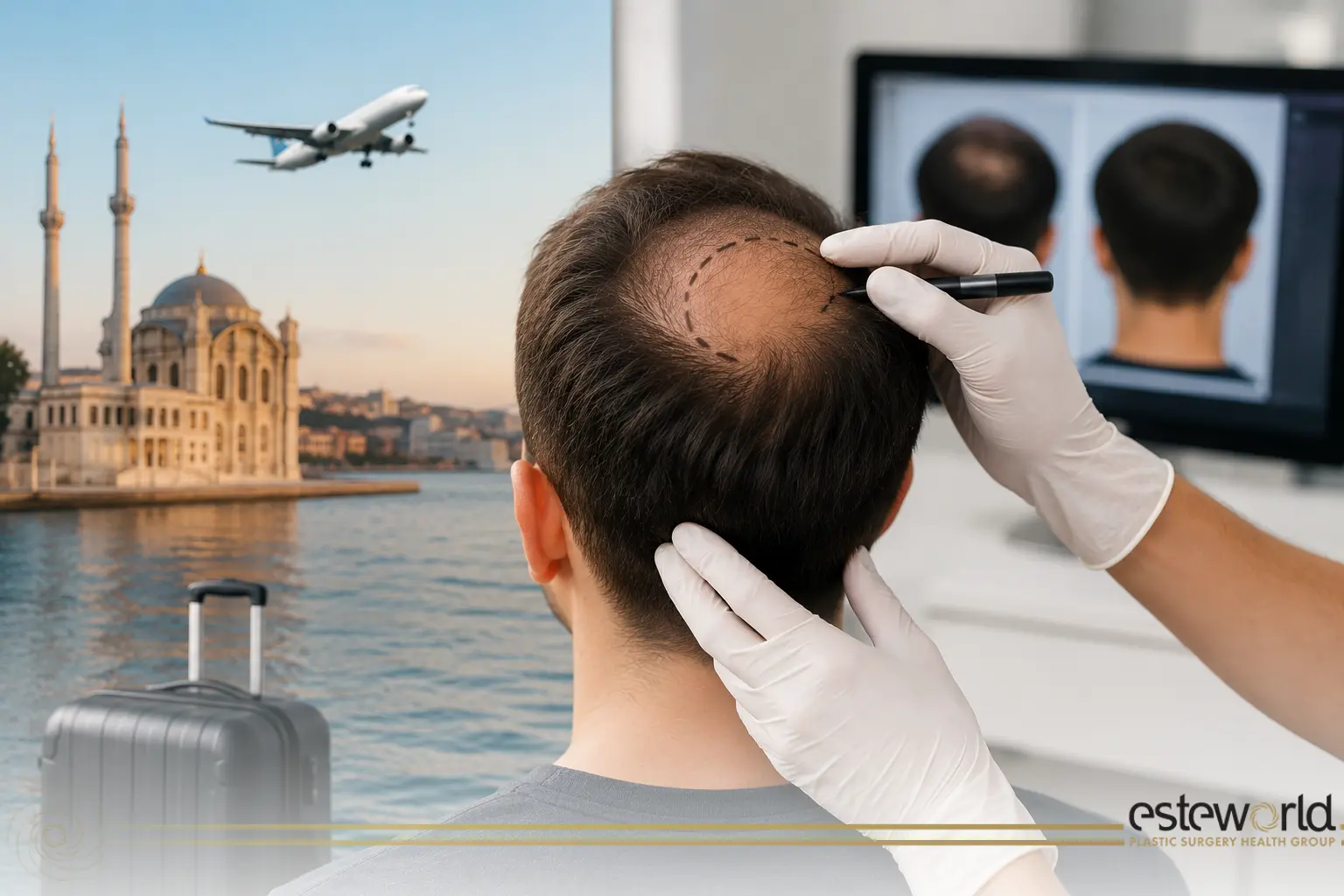
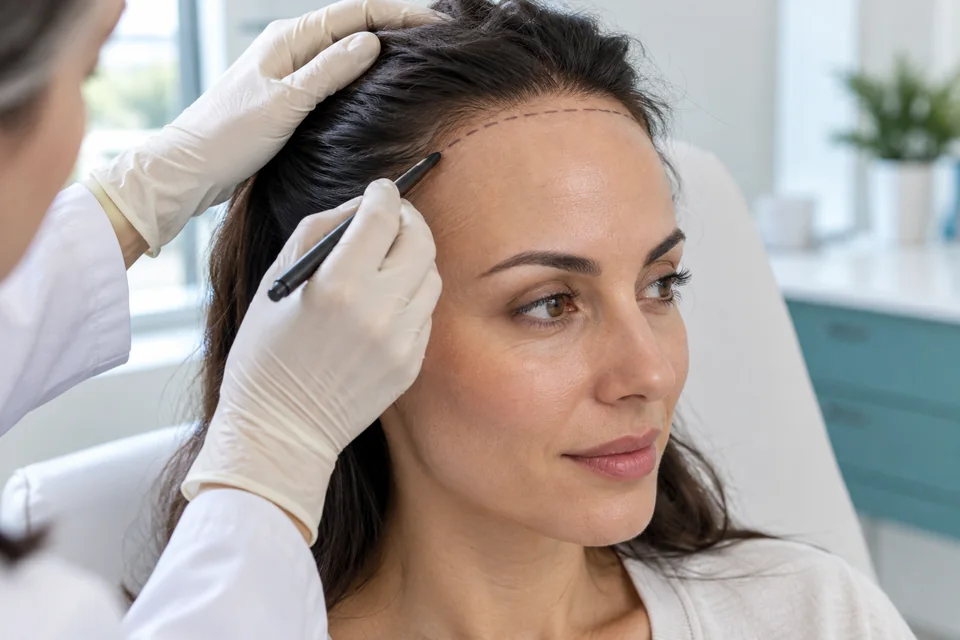
Treatment starts with a plan for the position and shape of the new hairline. The surgeon should explain whether the proposed approach involves hair grafting, scalp advancement or a combination.
1. Hairline assessment and design
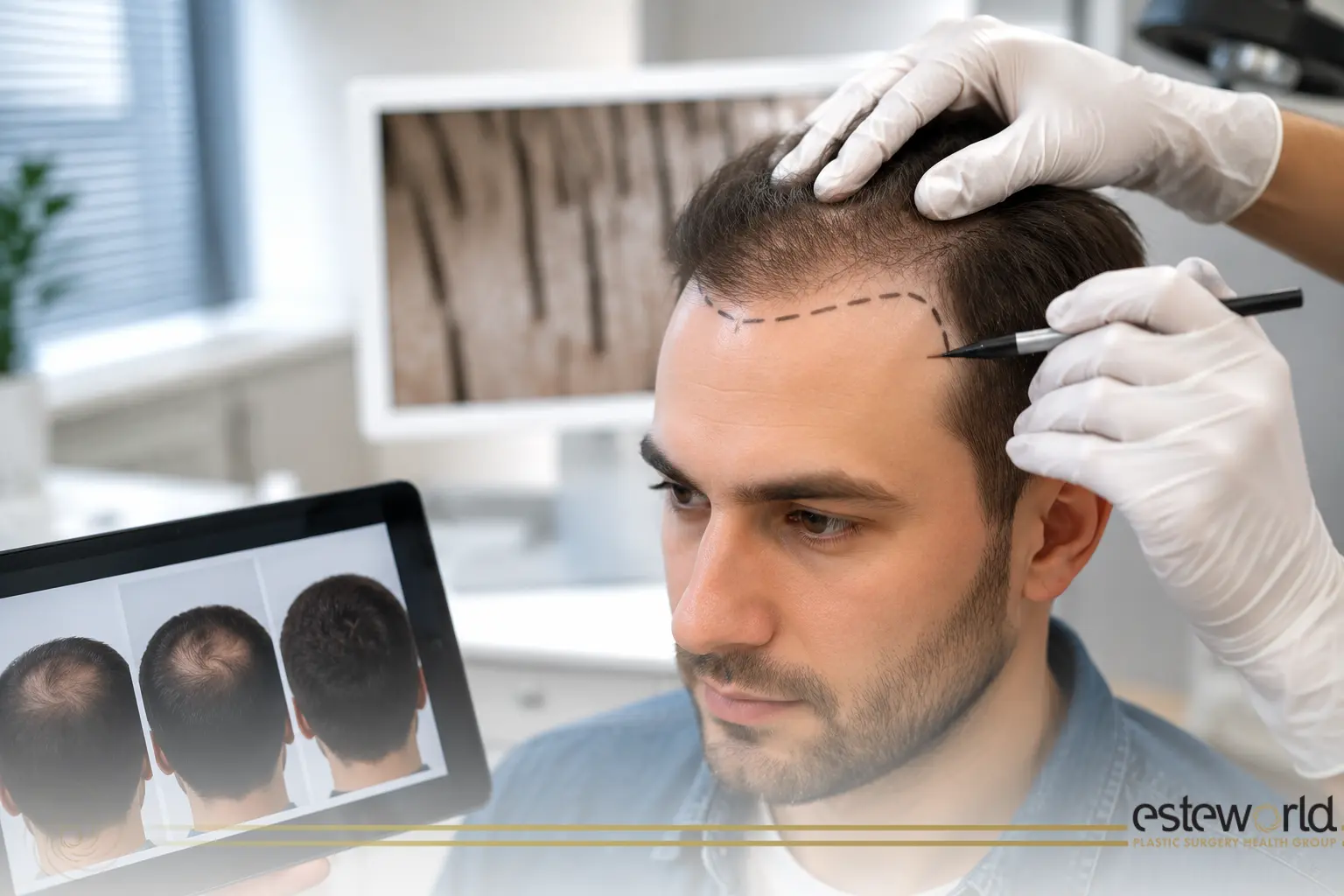
The planned hairline is assessed in relation to facial proportions, existing hair direction, temple shape and likely future hair loss.
A natural-looking design involves more than moving the hairline down. The transition at the front, the distribution of grafts and the relationship between the central hairline and temples all influence the appearance.
The surgeon should explain the limits of the proposed change before treatment. Photographs and markings help patients understand the plan, but they do not guarantee the final result.
2. Donor assessment and graft planning
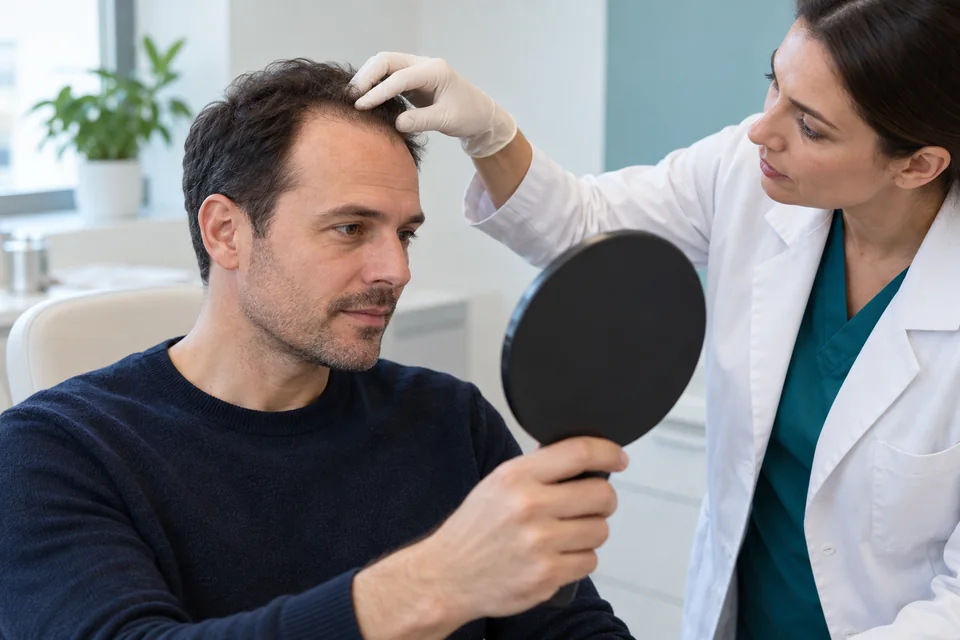
A hair graft is a small piece of tissue containing one or more hair follicles. The number needed depends on the size of the recipient area, the intended density and the characteristics of the available hair.
Two people seeking the same amount of hairline lowering may need different graft numbers. Hair thickness, curl, existing coverage and the width of the planned area can all affect the estimate.
A responsible plan balances visible improvement with preservation of the donor area. A larger graft count is not automatically a better treatment plan.
3. Harvesting and placement
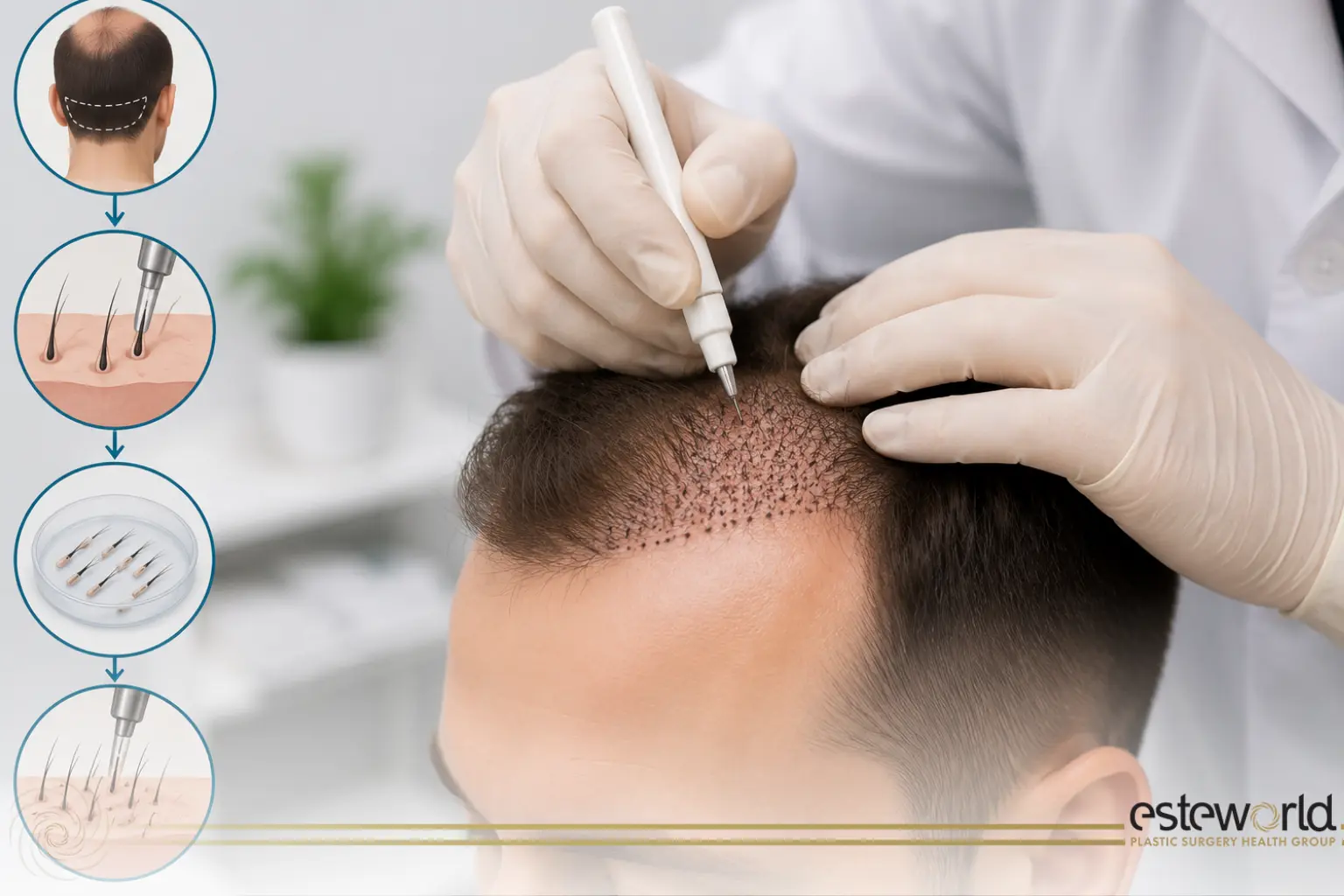
With follicular unit excision, or FUE, individual follicular units are removed from the donor area. With follicular unit transplantation, or FUT, grafts are prepared from a strip of donor scalp.
The grafts are placed into the planned frontal area, with attention to direction, angle and distribution. Hair transplantation is usually performed under local anaesthesia; additional sedation depends on the clinical plan.
The harvesting method and the placement technique should be explained separately so patients understand what their treatment includes.
4. Combining forehead reduction surgery and hair transplantation
Some patients may benefit from scalp advancement followed by hair transplantation to refine the hairline, fill selected areas or improve coverage around a healed incision.
A combined approach is not automatically necessary. The surgeon must assess tissue condition, blood supply, healing and the expected benefit of each procedure. Treatment may be staged rather than performed together.
Patients should receive a clear explanation of why both procedures are proposed and what each is intended to achieve.
Forehead Reduction Recovery, Scars and Results
Recovery depends on the procedure performed and the individual healing response. A hair transplant recovery plan is not interchangeable with instructions for scalp advancement surgery.
Recovery after a forehead hair transplant
Temporary redness, swelling, tenderness and small crusts can occur around the treated areas. The clinic should provide instructions on washing, sleeping position, exercise and protection of the grafts.
Transplanted hairs may shed before new growth develops. This early shedding does not automatically indicate that the follicles have failed.
Hair growth and density develop gradually over the following months. Esteworld describes progressive regrowth and maturation over approximately the first year, although individual timing varies.
Recovery after surgical forehead reduction
Scalp advancement involves an incision that needs wound care and follow-up. Swelling, bruising, tightness and changes in scalp sensation may occur.
The timing of dressing changes, stitch removal and return to work depends on the surgical technique and healing. Patients should follow their surgeon’s schedule rather than assume everyone can resume normal activities on the same day.
When hair transplantation and scalp advancement are combined, aftercare must address both the incision and the transplanted areas.
Does forehead reduction leave scars?
Yes. Surgical forehead reduction leaves a permanent incision scar, although its visibility may improve as it matures and surrounding hair provides coverage. It cannot be guaranteed to disappear.
Hair transplantation also creates scars. FUE generally leaves small dot-like donor scars, while FUT leaves a linear donor scar. Visibility depends on factors such as technique, healing and hairstyle.
Scar planning is particularly important when there is a possibility of future hairline recession.
Risks and realistic expectations
Potential complications include bleeding, infection, altered sensation, visible scarring, temporary shedding and an unsatisfactory cosmetic result. Hair transplantation also carries risks such as poor graft growth and donor-area thinning.
Contact the treating clinic promptly for worsening pain, spreading redness, discharge, fever or other unexpected symptoms.
Neither approach guarantees a specific hairline height, density or scar appearance. Existing hair may continue to thin, and further treatment may be discussed if the appearance changes over time.
Forehead Reduction in Turkey: Cost and Choosing a Clinic
When comparing forehead reduction in Turkey, first confirm which procedure the quotation covers. A hair transplant to lower the hairline and a scalp advancement operation involve different planning, techniques and aftercare.
What affects forehead reduction surgery cost?
Forehead reduction cost depends on the chosen procedure and the individual treatment plan. Relevant factors may include:
- Whether treatment involves grafting, scalp advancement or both.
- The recipient area and estimated graft requirement.
- Previous surgery, scars or revision work.
- Anaesthesia, operating facilities and the surgical team.
- Follow-up appointments and included aftercare.
For hair transplant forehead reduction cost, request a written explanation of the graft estimate and the areas to be treated. For scalp advancement, ask what the surgical fee includes and whether any later grafting would be charged separately.
A meaningful comparison requires equivalent treatment plans. An advertised package price alone does not explain suitability, surgical scope or long-term care.
How can you choose the right clinic?
Ask who will assess your hairline, design the procedure and perform its surgical stages. Review the clinician’s experience with the specific technique being recommended.
Before booking, clarify the proposed change, the expected scar location, the approach to future hair loss and the follow-up arrangements after returning home.
Before-and-after photographs can support a discussion, but they should show comparable patients, consistent views and the time elapsed since treatment.
You can contact Esteworld to discuss your concerns and request an individual assessment of suitable treatment options.