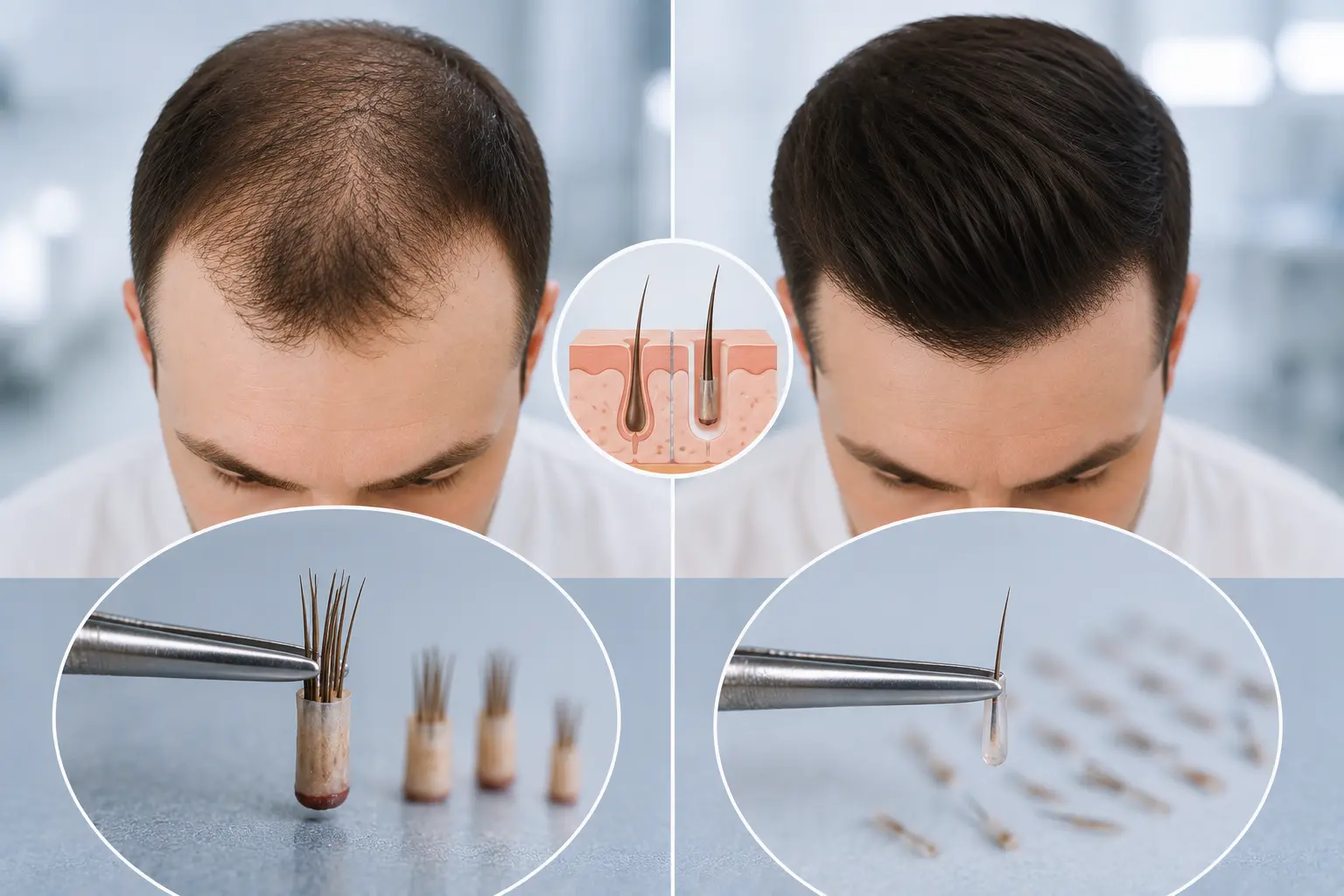

Hair loss is a common problem for both women and men. If you are considering hair transplantation to solve the problem of baldness, you need to find out how many grafts of hair you need to achieve your hairline. The number of grafts is an important factor in hair transplantation and may vary depending on many variables. In this article, we will examine the maximum number of grafts required in different stages of baldness and the factors that are effective in determining this number.
What are the Different Stages of Baldness?
Norwood Hair Loss Scale is a visual classification system used by many hair transplant centers in Turkey to evaluate male pattern baldness, also known as the Hamilton-Norwood Scale.
Stage 1: There is no significant regression or loss in the hairline, a natural hairline is preserved.
Stage 2: The hairline recedes slightly and an “M” shaped appearance begins to form.
Stage 3: The hairline continues to recede, revealing a more pronounced “M” shape and a bald spot appearing on the crown of the head.
Stage 4: The hairline recedes further, the bald spot in the crown area grows.
Stage 5: The bald spot on the top expands and merges with the receding hairline, leaving only a band of hair on the sides and back of the head.
Stage 6: The hair band on the sides and back of the head becomes thinner, the bald spot on the top continues to grow.
Stage 7: It is the most advanced stage of hair loss, only a narrow band of hair remains on the sides and back of the head and generally represents the period when the hair is almost completely lost.
How Do I Know How Many Grettes I Need for Different Stages of Baldness?
There are three basic criteria used to determine the number of grafts needed:
- Hair Loss Size:
- Ongoing Hair Loss Rate
- Potential for Future Hair Transplants
The scalp is divided into different regions and a certain number of grafts is required to complete each region.The extent of your hair loss is examined by the Norwood Scale. The Norwood Scale is a measurement system that shows hair loss in 7 stages in men with androgenetic alopecia, also known as male pattern baldness.
While the extent of baldness in men is calculated according to the Norwood scale, baldness in women is calculated differently.
Hair Graft Calculation for Women
Hair transplantation specifically for women has a different measurement system to evaluate the progression of female pattern hair loss. This chart uses a system of measurement known as the Ludwig Scale:
Ludwig Scale used to determine the level of hair loss in women experiencing hair loss:
The table below shows the average number of grafts for each Ludwig stage:
Ludwig Phase |
Average Number of Hair Grafts Needed |
| 1 | 500-1200 |
| 2 | 1200-1800 |
| 3 | 1800+ |
What are the Treatment Options for Different Stages of Baldness?
Hair loss may require different treatment approaches at different stages. Here are the effective treatment options for various stages of baldness:
First Symptoms and Hair Care:
When you notice the first signs of hair loss, you can control the problem by adopting healthy hair care routines.
Support your hair health by using appropriate shampoos, hair masks and nourishing lotions.
Mesotherapy Hair Treatment:
Mesotherapy is a treatment method applied by injecting a special mixture containing vitamins, minerals and amino acids into the scalp.
It strengthens hair follicles, can reduce hair loss and promote hair growth.
Laser Hair Treatment:
Laser therapy can prevent hair loss by using low-level laser light focused on the scalp.
It can increase blood circulation, stimulate hair follicles and improve hair quality.
Hair Transplantation:
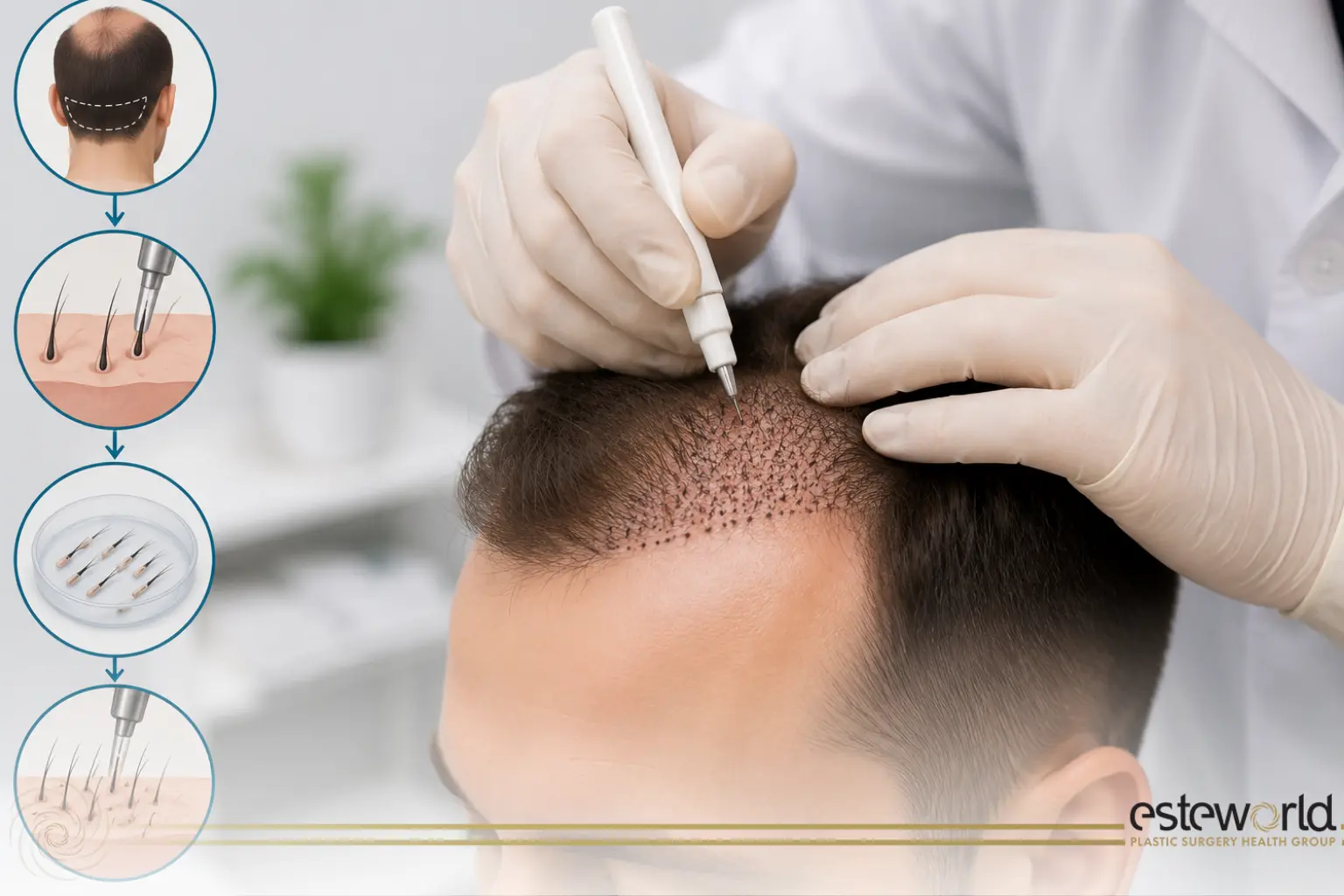
Hair transplantation is the process of transplanting healthy hair follicles taken from the donor area to areas experiencing baldness.
It can be an effective method to treat advanced stages of baldness and provide permanent results.
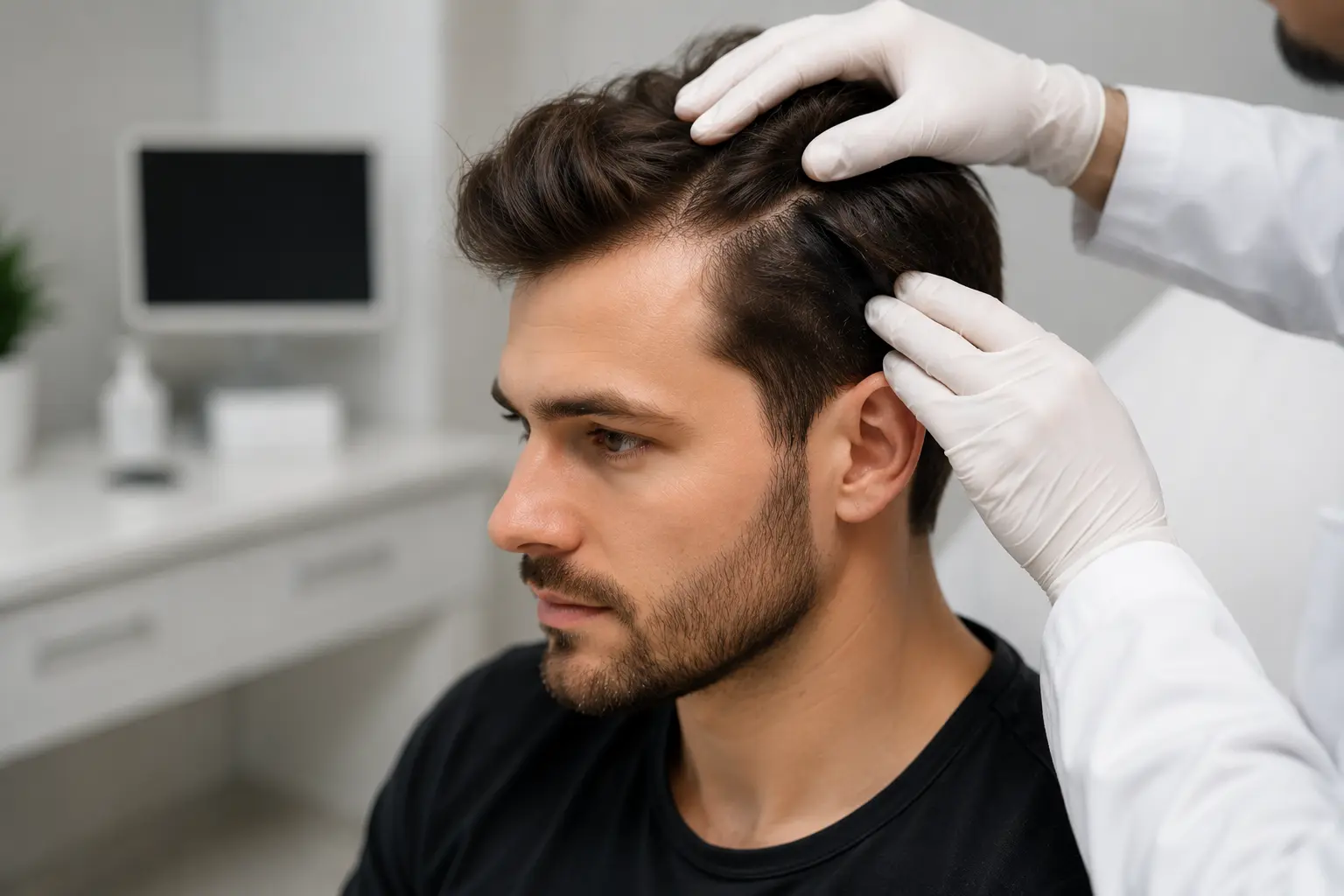
These treatment options vary depending on the stage of baldness and the individual situation. It is important to consult with a specialist hair doctor to determine the appropriate treatment method.
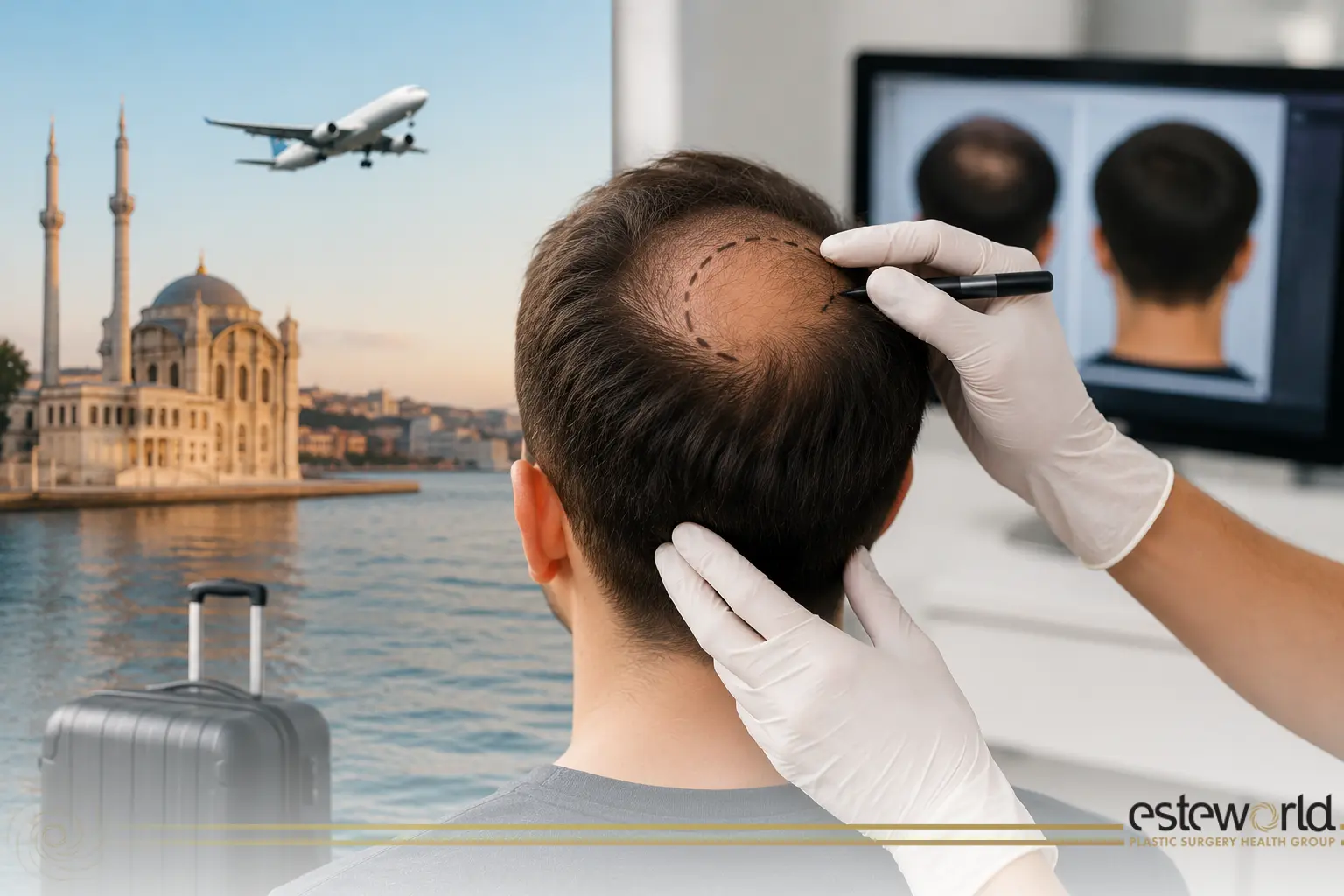
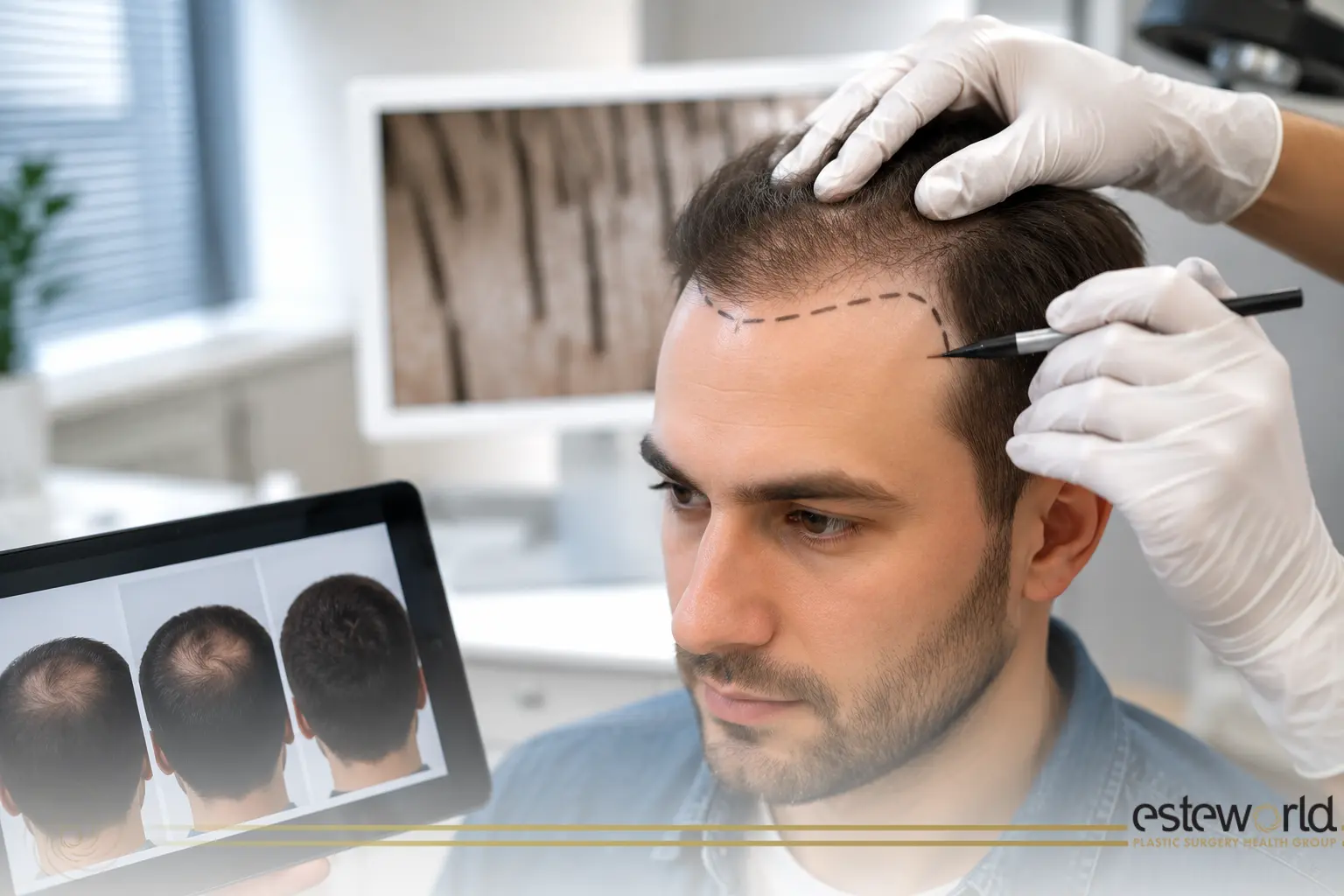
Esteworld expert hair physicians determine the hairline of our patients and calculate the number of grafts and start the personalized hair transplantation process. Then, we plan the operation and follow the entire operation result of our patient carefully to ensure that our patient achieves effective and permanent results in hair transplantation. You can contact us to get detailed information about hair transplantation and the hair transplantation process.