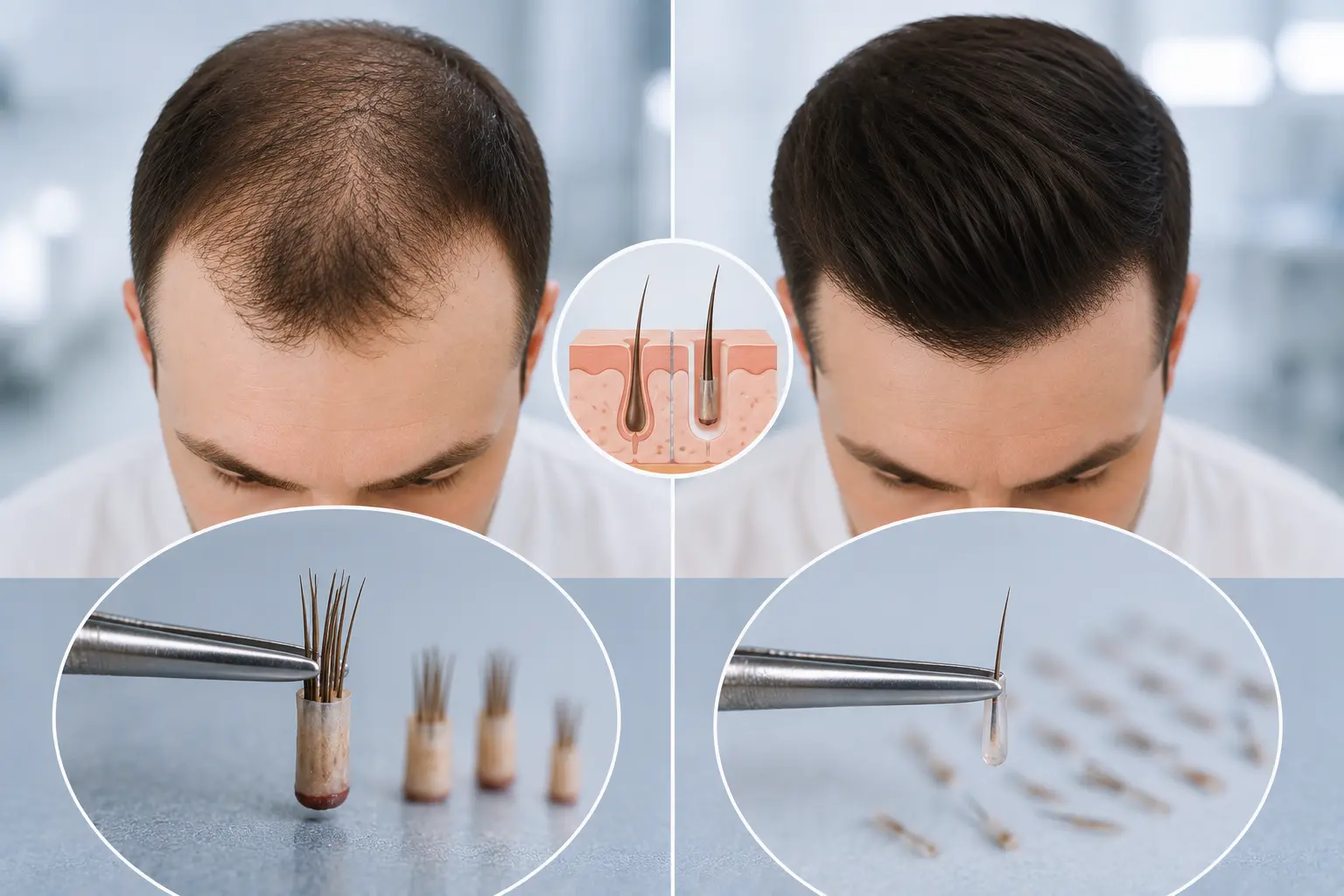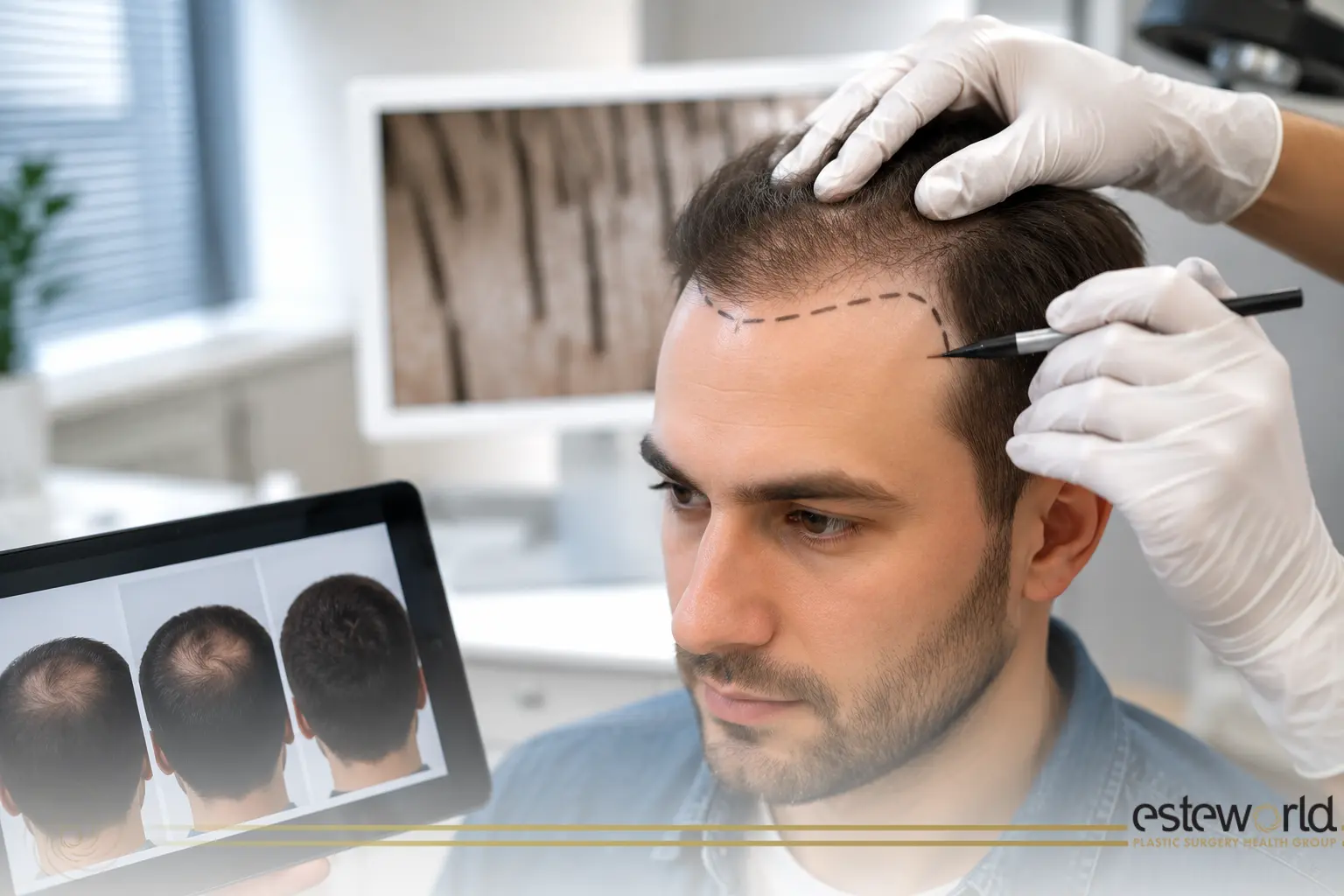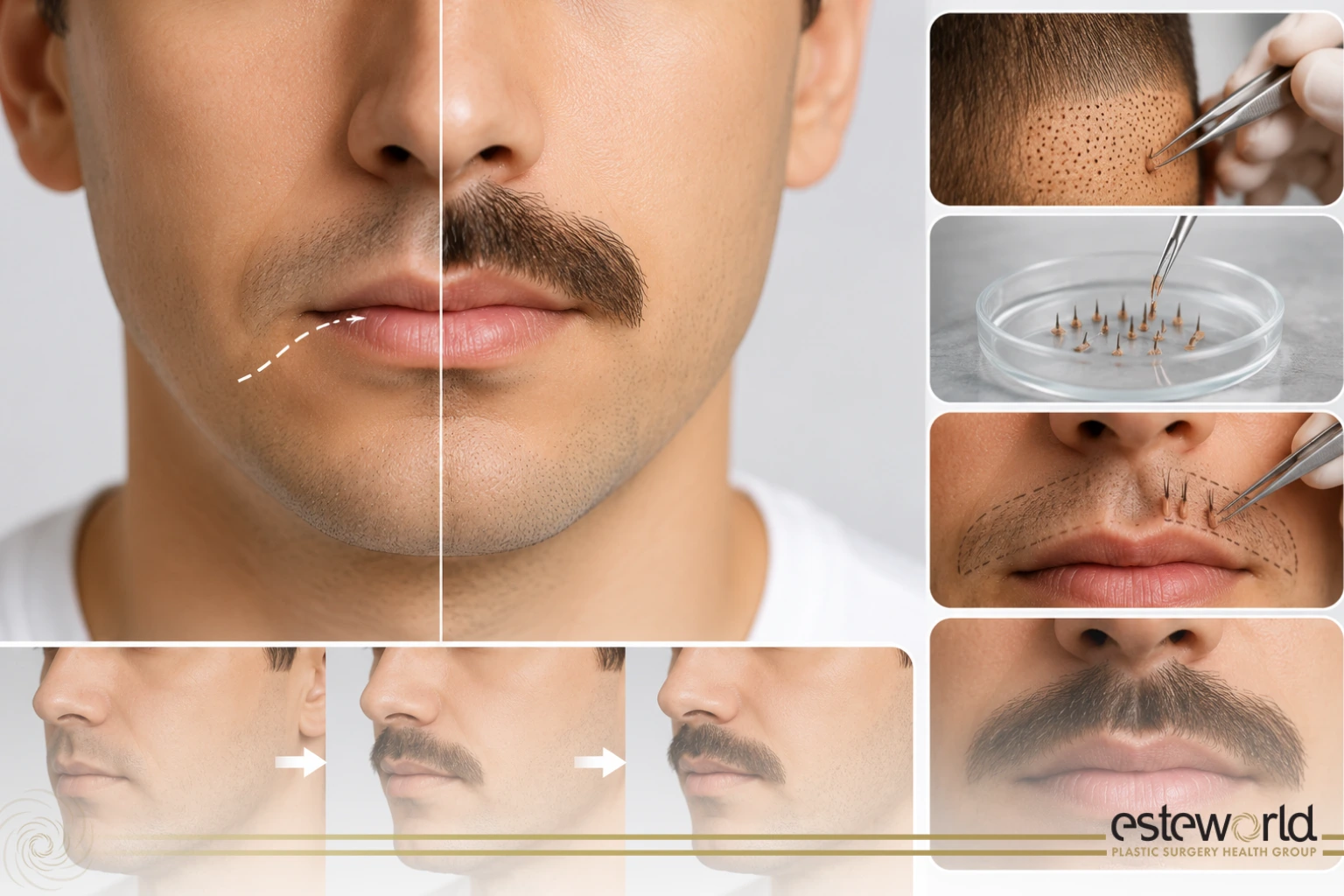

A transgender hair transplant is a personalised hair restoration procedure that can reshape the hairline, restore areas affected by hair loss or support facial-hair goals as part of gender-affirming care. The surgical principles are similar to other hair transplants, but the design should consider facial proportions, donor capacity, existing hair loss, hormone therapy and the individual’s own aesthetic goals.
Hair transplantation is not required as part of gender transition, and there is no single “correct” masculine or feminine hairline. For patients who choose the procedure, the aim is to develop an individual plan that fits their facial features, current hair pattern and long-term expectations.
What Is a Transgender Hair Transplant?
A transgender hair transplant transfers healthy hair follicles from a suitable donor area, usually at the back or sides of the scalp, to areas where additional hair or a different hairline shape is desired.
The procedure can be used for several gender-affirming goals, including:
- Reshaping a frontal hairline
- Filling receded temple areas
- Creating a softer or more rounded hairline
- Restoring scalp areas affected by androgenetic hair loss
- Increasing beard or moustache density in suitable patients
- Restoring sideburns or eyebrows
- Supporting an individual appearance that does not follow a strictly masculine or feminine template
Hair transplantation may form one part of broader gender-affirming care. Published medical literature describes hairline feminisation, eyebrow transplantation, beard transplantation and other hair restoration procedures as potential options for transgender patients depending on individual goals.
The procedure itself is based on the same fundamental principles used in other hair transplant patients. What changes most significantly is the design plan.
Before transplantation, the medical team should evaluate:
- Current hair-loss pattern
- Stability and density of the donor area
- Hair calibre and texture
- Existing frontal and temporal hairline
- Previous hair loss
- Current medications
- Hormone therapy where relevant
- Previous or planned facial procedures
- Desired hairline or facial-hair appearance
- Long-term risk of additional hair loss
This assessment is particularly important because the desired result cannot be planned only according to a predefined “male” or “female” template.

How Can Hair Transplantation Support Gender Transition?
Hair transplantation can support gender transition by changing hair distribution or hairline characteristics that influence how the upper face is framed. For some patients this may involve creating a softer frontal hairline, while others may seek beard, moustache or sideburn restoration.
The older Esteworld article about the role of hair transplantation in gender transition focused primarily on male-to-female and female-to-male transitions. This information is useful, but modern planning should remain individual because patients may have different gender identities, facial structures and aesthetic goals.
Hair Transplant for Trans Women
Some trans women seek hair transplantation because frontal or temporal recession developed before or during transition.
Androgenetic hair loss can produce:
- Recession at the temples
- An M-shaped frontal pattern
- Increased forehead exposure
- Reduced temporal density
- Progressive thinning behind the frontal hairline
Hair transplantation can be used in suitable patients to fill the temporal recessions and redesign the frontal hairline.
A typically feminised hairline may be designed with:
- Softer curves
- Reduced temporal recession
- A more rounded frontal contour
- Fine single-hair grafts near the leading edge
- Careful transition between the frontal and temporal areas
However, the ideal position should still be based on the patient’s forehead height, facial proportions, donor availability and personal preferences rather than a fixed measurement.
Medical literature describes frontal hairline feminisation as one of the main gender-affirming hair procedures used in transgender women. Hairline advancement surgery and eyebrow transplantation may also be considered in selected patients.
Hair Transplant for Trans Men
Hair-related goals in trans men may be different.
Testosterone therapy can increase facial and body hair, but the degree and distribution of growth vary between individuals. Some patients may therefore consider transplantation to increase:
- Beard density
- Moustache density
- Sideburn definition
- Specific facial-hair areas
At the same time, testosterone may contribute to androgenetic scalp hair loss in genetically susceptible individuals. This means scalp hair and facial-hair goals may need to be considered together when planning donor use.
A literature review on facial hair transplantation in transgender patients notes that facial-hair transplantation can be used to support a more masculine appearance when desired. The authors also recommend considering the effects of testosterone therapy and other planned facial procedures when determining timing.
Hair transplantation should therefore not be planned solely around the area a patient wants to fill. The available donor supply and possible future scalp hair loss also matter.
Hair Restoration for Non-Binary and Gender-Diverse Patients
Not every patient wants a traditionally masculine or feminine hairline.
For non-binary and gender-diverse individuals, the most appropriate design may combine different characteristics or simply focus on restoring lost density without intentionally feminising or masculinising the hairline.
The consultation should therefore begin with the question:
What hairline or hair distribution does the patient want?
rather than assuming the desired result from gender identity alone.
How Do Hormones Affect Transgender Hair Transplant Planning?
Hormone therapy can influence scalp and facial-hair patterns, so it should be considered during hair transplant assessment. It does not automatically prevent a person from having a transplant, but the type, duration and effects of hormone therapy may influence the long-term plan.
A systematic review of hair care in transgender patients notes that masculinising and feminising hormone therapies can produce different changes in scalp, facial and body hair.
Feminising Hormone Therapy and Scalp Hair
Feminising hormone therapy may reduce androgen exposure and may help limit progression of androgen-related hair loss in some patients.
However, previously lost follicles do not necessarily recover completely.
A patient may therefore still have:
- Receded temples
- A high frontal hairline
- Areas of established thinning
- Hairline characteristics they would like to change
Hair transplantation may be considered for these persistent areas following an individual medical assessment.
Testosterone Therapy and Hair
Testosterone can promote facial and body hair development in trans men, but results vary considerably between patients.
It can also contribute to androgenetic scalp hair loss in people who are genetically susceptible.
For this reason, the medical team should consider both:
- Desired facial-hair development
- Potential future scalp hair loss
before allocating large numbers of grafts.
Patients should provide their hair transplant physician with information about their hormone therapy and other medications.
Hormone therapy should never be stopped, started or changed solely on the basis of general online hair transplant advice. Any medication adjustment should be discussed with the clinician responsible for the patient’s hormone treatment.
How Is a Transgender Hair Transplant Performed?
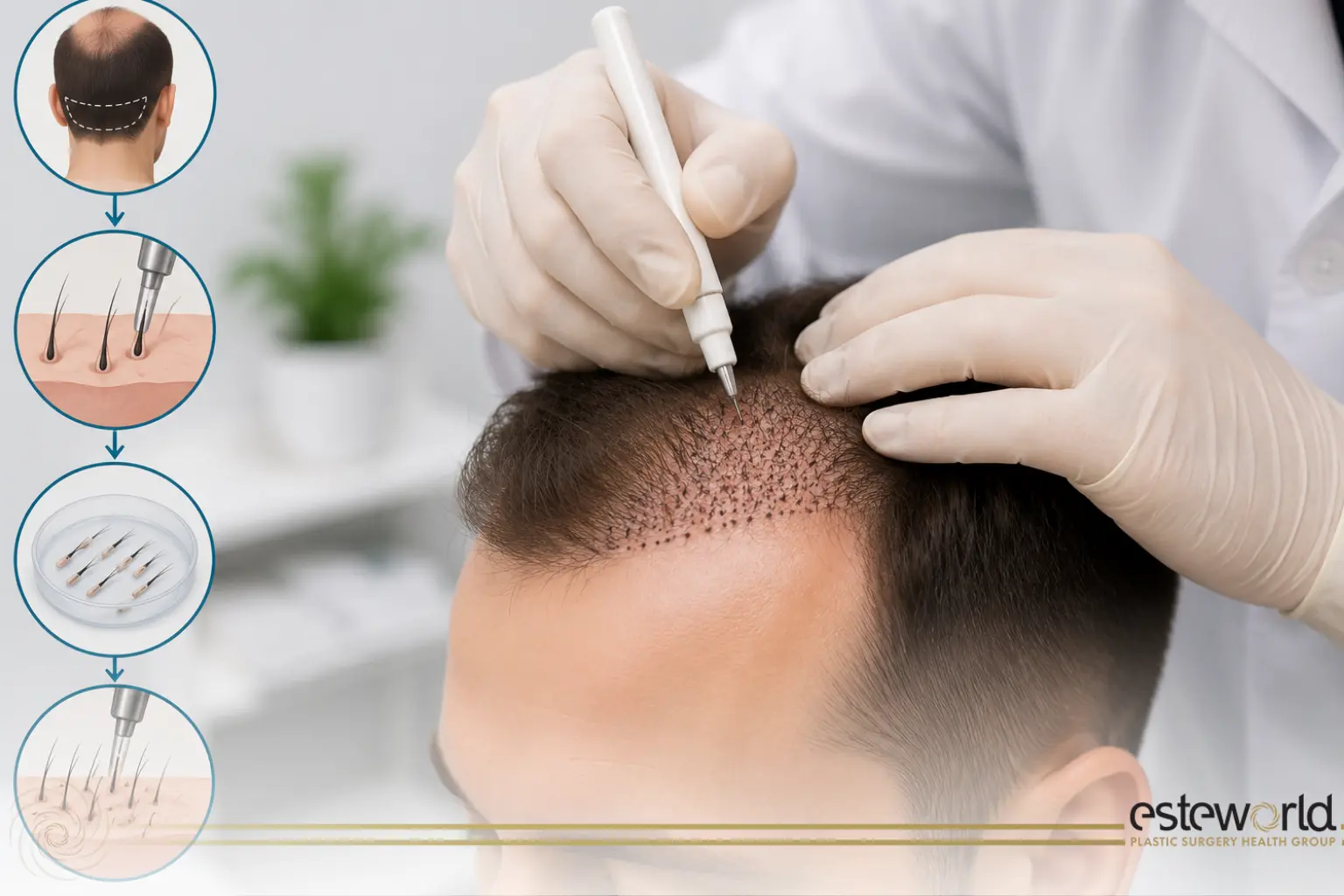
The procedure generally follows the same basic surgical stages as other modern hair transplants: consultation, donor-area assessment, hairline or recipient-area planning, graft extraction, graft placement and post-operative follow-up.
The technique should be selected according to the treatment plan rather than gender identity alone.
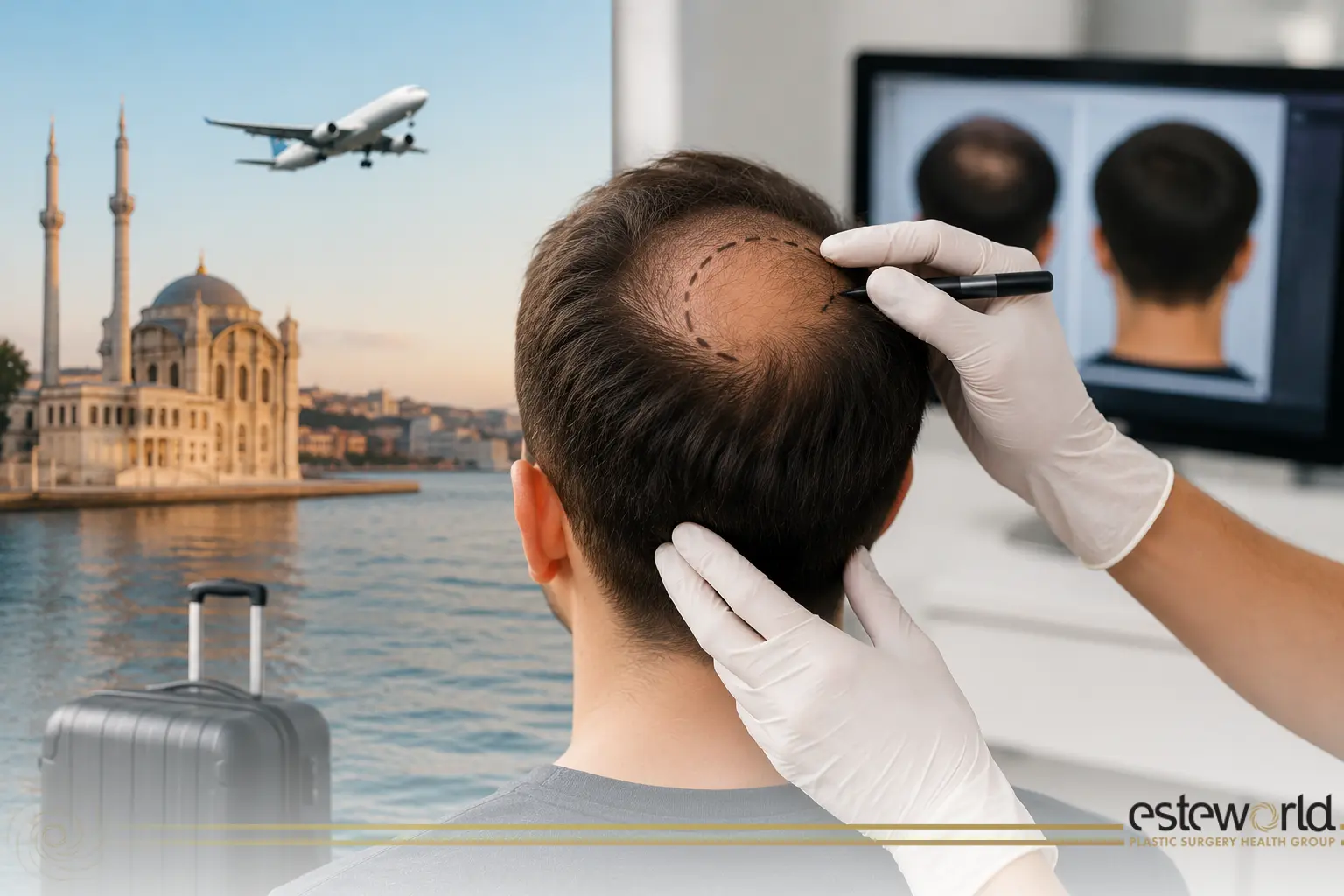
Consultation and Hairline Design
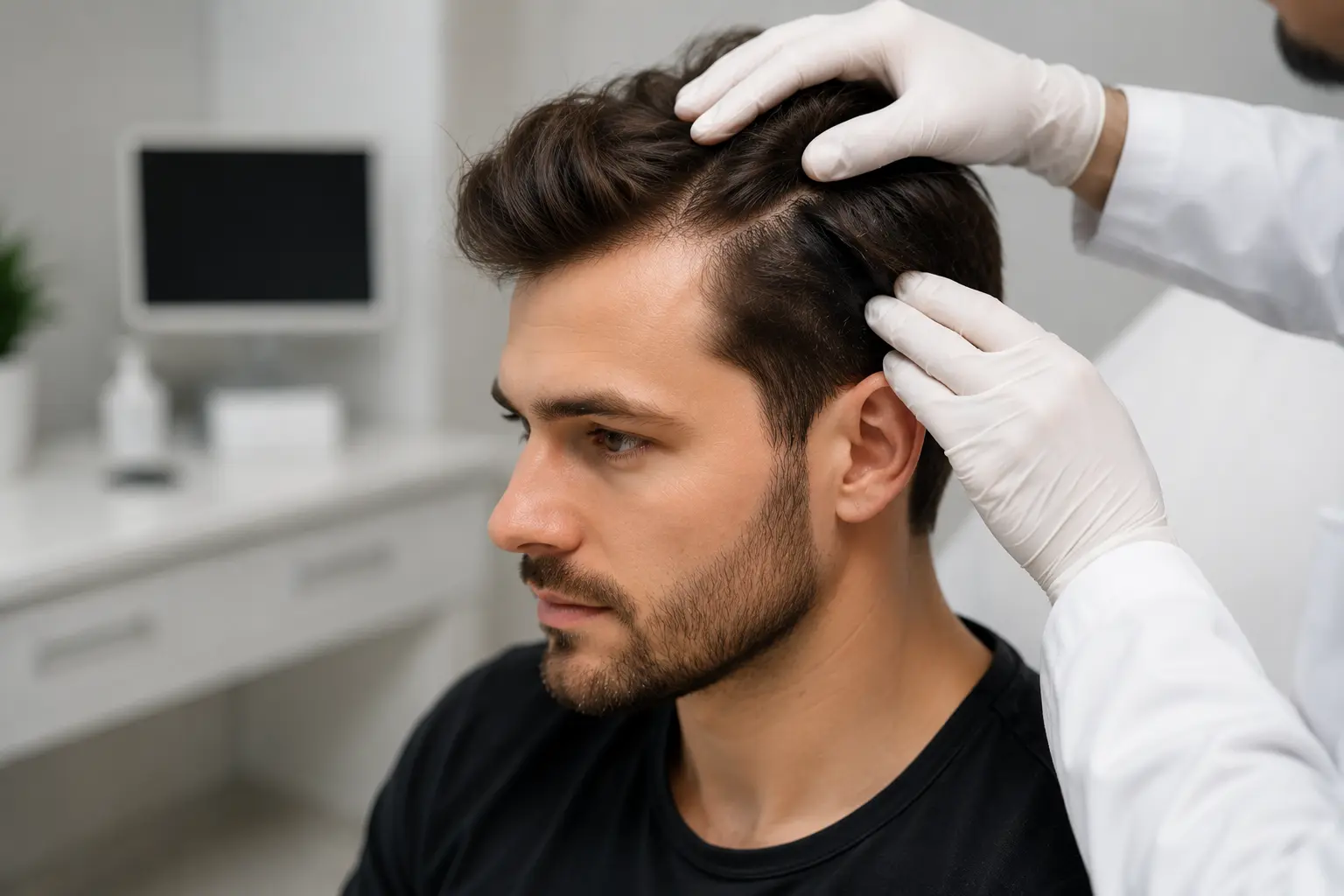
The consultation is particularly important in gender-affirming hair transplantation because the visual objective may differ considerably between patients.
The physician evaluates:
- Donor density
- Existing hair-loss pattern
- Facial proportions
- Hair calibre
- Curl or wave pattern
- Direction of existing hairs
- Number of grafts required
- Potential future hair loss
The proposed hairline should be discussed with the patient before surgery.
This is also the stage to disclose:
- Hormone medications
- Hair-loss medication
- Vitamins and supplements
- Previous surgery
- Relevant health conditions
FUE Hair Transplant
With FUE hair transplantation, follicular units are individually extracted from the donor area.
FUE can provide flexibility in selecting and distributing grafts for:
- Frontal hairlines
- Temporal areas
- Beard
- Moustache
- Sideburns
- Other selected recipient areas
Individual follicular units can also be selected according to the number of hairs they contain. Single-hair grafts are particularly useful at the front of a hairline where a softer transition is required.
DHI Hair Transplant
DHI hair transplantation uses an implantation device to place prepared grafts into the recipient area.
DHI may be considered when controlled placement around existing hair or detailed angle and direction management is useful.
Neither FUE nor DHI should automatically be presented as the “best” transgender hair transplant technique. The choice depends on donor characteristics, recipient area, graft requirements and the individual treatment plan.
For more detailed information about the techniques, patients can review Esteworld’s FUE Hair Transplant and DHI Hair Transplant treatment pages.
How Is a Feminine or Masculine Hairline Designed?
Gender-affirming hairline design is based on proportion, shape, temple structure, density, graft direction and the patient’s personal aesthetic goal. No single measurement or shape is appropriate for every transgender patient.
Some general hairline characteristics are commonly described in clinical literature and surgical planning.
| Feature | Typically Feminised Design | Typically Masculinised Design |
|---|---|---|
| Frontal contour | Softer and more rounded | Straighter or more angular |
| Temporal recession | Usually reduced | May retain stronger temporal angles |
| Frontal corners | Softer transition | More defined |
| Leading edge | Fine, irregular transition | Can be more structured |
| Overall goal | Softer facial framing | Stronger or more angular framing |
These are planning principles, not rules.
Facial dimensions, forehead height, hair texture, ethnicity, age and personal preferences all influence the appropriate design.
A natural-looking result also depends on graft direction and angle, not only the outline drawn on the forehead.
Single-hair follicular units are usually more suitable for the frontal edge, while multi-hair grafts can be placed behind them where greater density is required.
What Should Be Considered Before a Transgender Hair Transplant?
The most important factors are donor capacity, the stability of existing hair loss, realistic design goals and coordination with any medical or surgical treatments that may affect the treatment area.
Donor Area
Hair transplantation redistributes existing follicles. It does not create an unlimited new supply of hair.
The medical team therefore needs to evaluate:
- Donor density
- Hair calibre
- Expected number of usable grafts
- Potential future scalp hair loss
- Whether grafts may be required for more than one area
This is especially important when a patient is considering both scalp and facial-hair transplantation.
Future Hair Loss
The transplant should be designed with long-term hair loss in mind.
For example, placing a dense new frontal hairline without considering progressive thinning behind it may create an unnatural pattern later.
Long-term planning is therefore more important than simply maximising the number of grafts in one session.
Other Gender-Affirming Procedures
Patients considering facial feminisation or masculinisation procedures should inform their hair transplant physician.
Changes to the forehead, brows, scalp or facial proportions may affect where transplanted hairs should be positioned.
The hair restoration and surgical plans may therefore need to be coordinated.
Privacy and Communication
Gender-affirming healthcare should include respectful communication and protection of patient confidentiality.
A consultation should allow patients to clearly communicate:
- Their preferred name
- Their personal aesthetic goals
- Which areas they want treated
- Their concerns about shaving or visible recovery
- Relevant medical history
- Any privacy considerations
Treatment planning should remain centred on the individual rather than assumptions about their identity.
What Is Recovery Like After a Transgender Hair Transplant?
Recovery follows the same biological principles as other hair transplantation procedures.
During the early period, patients may experience:
- Mild redness
- Small crusts around transplanted grafts
- Temporary tenderness
- Mild swelling
- Temporary shedding of transplanted hairs
The clinic should provide personalised instructions for washing, sleeping, exercise and protecting the recipient area.
Temporary shedding of transplanted hair can occur during the first weeks. New growth usually develops gradually over the following months rather than immediately after surgery.
The final appearance should not be judged during the early shedding phase.
Recovery instructions may differ according to the technique, graft number, recipient area and individual healing response.
Transgender Hair Transplant Cost
The cost of a transgender hair transplant can vary depending on the number of grafts required, the treatment area, donor capacity, the technique used and the complexity of the hairline or facial-hair design.
For example, a patient seeking only temporal filling may require a different number of grafts than someone undergoing broader frontal hairline reconstruction. Beard, moustache or eyebrow transplantation may also have different graft requirements.
Factors that can influence the overall cost include:
- Number of grafts required
- Size of the recipient area
- FUE or DHI technique
- Scalp, beard, moustache or eyebrow treatment
- Complexity of the hairline design
- Donor-area characteristics
- Whether more than one treatment area is planned
- Individual surgical plan
The final price should therefore be determined after a personalised consultation rather than estimated solely from gender identity or a standard graft package.