What Is the Difference Between Septoplasty and Septorhinoplasty?
Nasal congestion, snoring, breathing through the mouth, frequent sinus infections, or the complaint of “I cannot breathe at all from one side”… In many of these cases, deviation of the cartilage and bone partition inside the nose (the septum) plays an important role. When searching for a solution, people often encounter two similar terms: septoplasty and septorhinoplasty. Because the names sound similar, the question “Are they the same surgery?” naturally arises.
Short answer: No, they are not the same. Septoplasty mainly focuses on improving breathing function, while septorhinoplasty is a more comprehensive approach that addresses both function and nasal appearance in the same operation. In this article, you will find clear explanations about the differences between these procedures, when each is preferred, what to expect during recovery, and frequently asked questions.
What Is the Nasal Septum and What Does Deviation Mean?
The structure that divides the nasal cavity into right and left sides is called the septum. The front part is mainly cartilage, while the back part consists mostly of bone. A curved septum (deviation) may occur from birth, after trauma, or during growth.
Deviation can increase complaints such as:
- Nasal congestion
- Nighttime breathing difficulties
- Recurrent sinus infections
- Nosebleeds
- Crusting inside the nose
However, not every deviation requires surgery. The key factor is whether the symptoms match the clinical findings.
What Is Septoplasty?
Septoplasty is a surgical procedure performed to correct septal deviation inside the nose. The main goal is to open the nasal passage, improve breathing comfort, and reduce symptoms caused by blockage.
This procedure is usually performed through incisions inside the nostrils, meaning there is typically no visible external scar. During septoplasty, curved cartilage and bone structures are reshaped, and supportive adjustments may be made if necessary.
When performed alone, septoplasty does not primarily aim to change the shape of the nose. Some patients ask, “Will my nose shape change as well?” Septoplasty does not target visible changes in nasal appearance; however, in rare cases, internal structural changes may create minor external differences. The primary focus remains function, meaning improved breathing comfort.
What Is Septorhinoplasty?
Septorhinoplasty combines two procedures in a single session:
- Septoplasty (breathing/function correction)
- Rhinoplasty (aesthetic nasal reshaping)
In other words, both septal deviation and nasal shape are corrected at the same time.
Aesthetic concerns such as:
- Nasal hump
- Drooping nasal tip
- Asymmetry
- Crooked nasal bridge
can be addressed together with breathing problems. This approach is especially preferred by individuals who want both better breathing and an improved nasal appearance.
The technique used in septorhinoplasty varies depending on the patient’s needs. In some cases, an open rhinoplasty approach is preferred, while in others, a closed technique may be suitable. Surgical planning depends on several factors, including skin thickness, cartilage structure, trauma history, the source of breathing problems, and facial proportions.
Key Differences Between Septoplasty and Septorhinoplasty
The simplest way to understand the difference is:
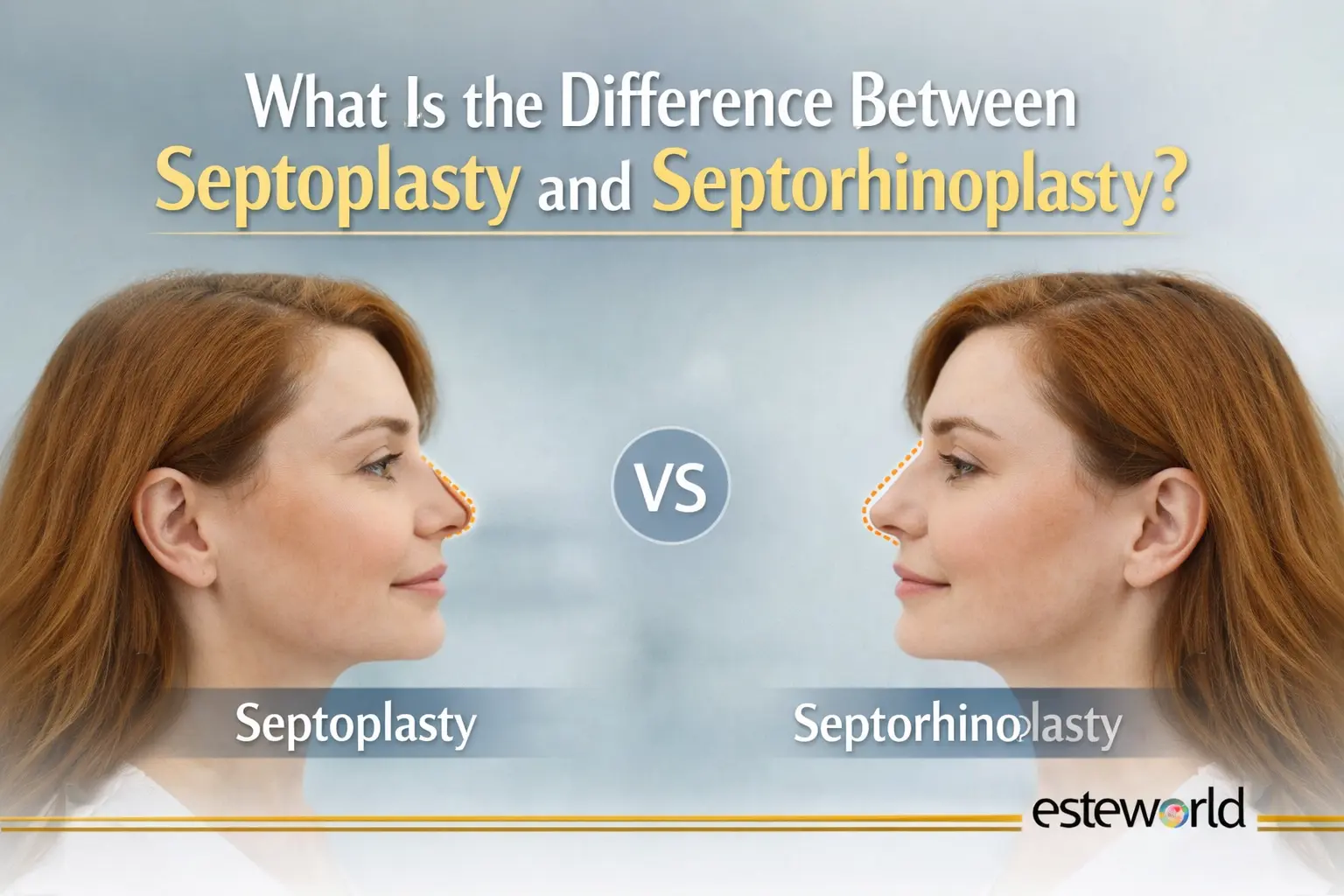
Septoplasty focuses on the inside, while septorhinoplasty focuses on both inside and outside.
- Septoplasty: Corrects internal septal deviation. The main goal is improving breathing quality.
- Septorhinoplasty: Corrects both septal deviation and nasal shape. Both functional and aesthetic outcomes are targeted.
Although this distinction may seem simple, patient expectations play a major role in choosing the appropriate procedure. Two individuals with similar symptoms may have different priorities. One may only care about breathing relief, while another may also want aesthetic improvement.
When Is Each Procedure Preferred?
Septoplasty is commonly preferred when:
- Nasal congestion is significant
- Septal deviation affects airflow
- No aesthetic change is desired
- External nasal shape is acceptable
Septorhinoplasty is commonly preferred when:
- Nasal blockage is accompanied by visible deformities
- There is a nasal hump or crooked appearance
- Nasal tip shape problems exist
- Trauma has caused both functional and external deformities
- Both functional and aesthetic expectations are present
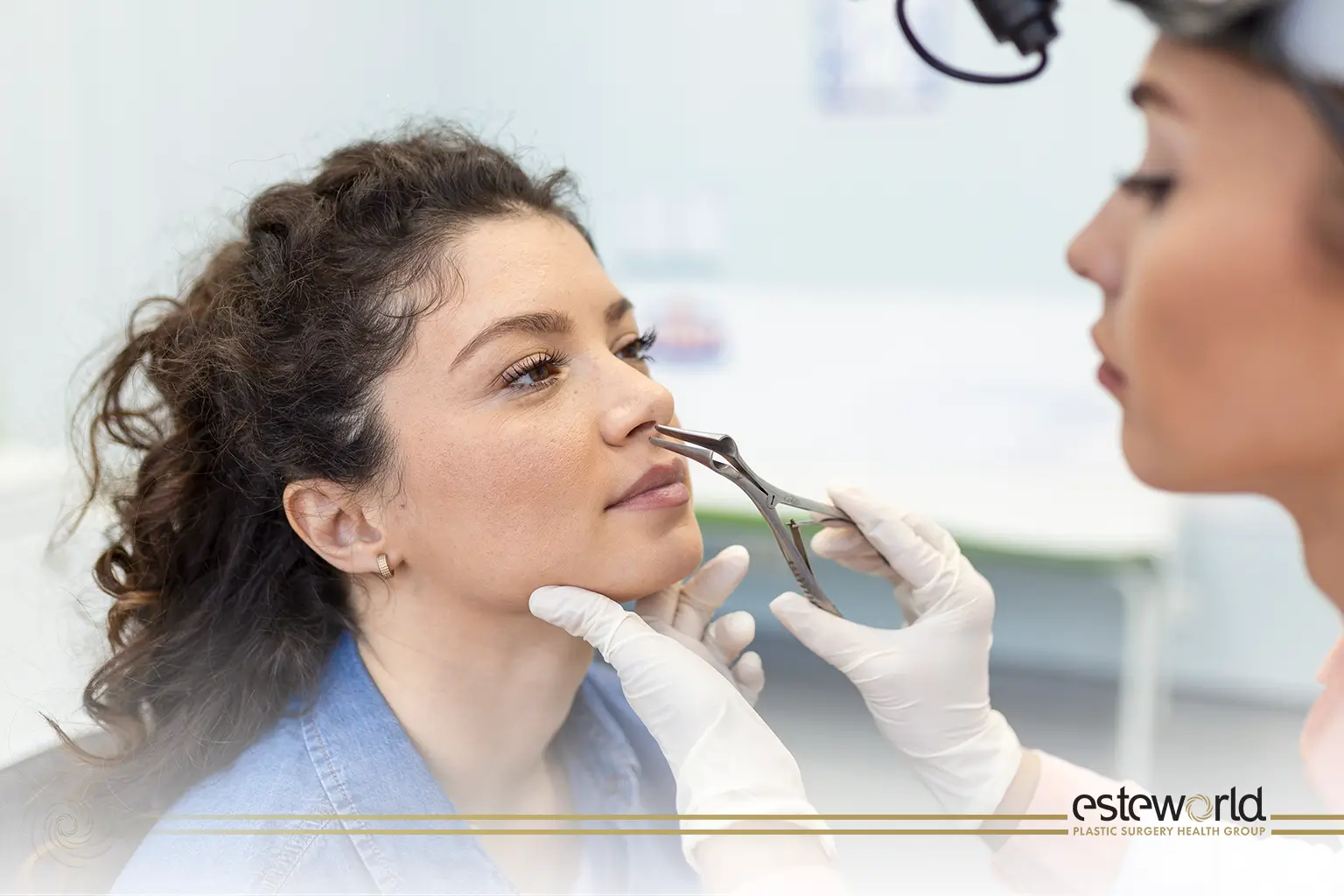
In some patients, the nose may appear normal externally but still cause breathing problems internally. In others, the nose may look crooked but breathing remains normal. Therefore, the correct decision should be made through physical examination, endoscopic evaluation, and discussion of expectations rather than relying only on photographs.
Operation Duration, Anesthesia, and Hospital Stay
Both procedures are usually performed under general anesthesia.
- Septoplasty typically takes less time.
- Septorhinoplasty may take longer due to additional aesthetic steps.
Hospital stay depends on the medical centre and the patient’s condition, but many patients are discharged on the same day or the following day.
What Is the Recovery Process Like?
Recovery varies from person to person, but general expectations include:
- Nasal congestion
- Swelling
- Sensitivity in the first days
After septoplasty, external bruising and swelling are usually minimal.
After septorhinoplasty, especially if bone reshaping is performed, bruising and swelling around the eyes may be more noticeable.
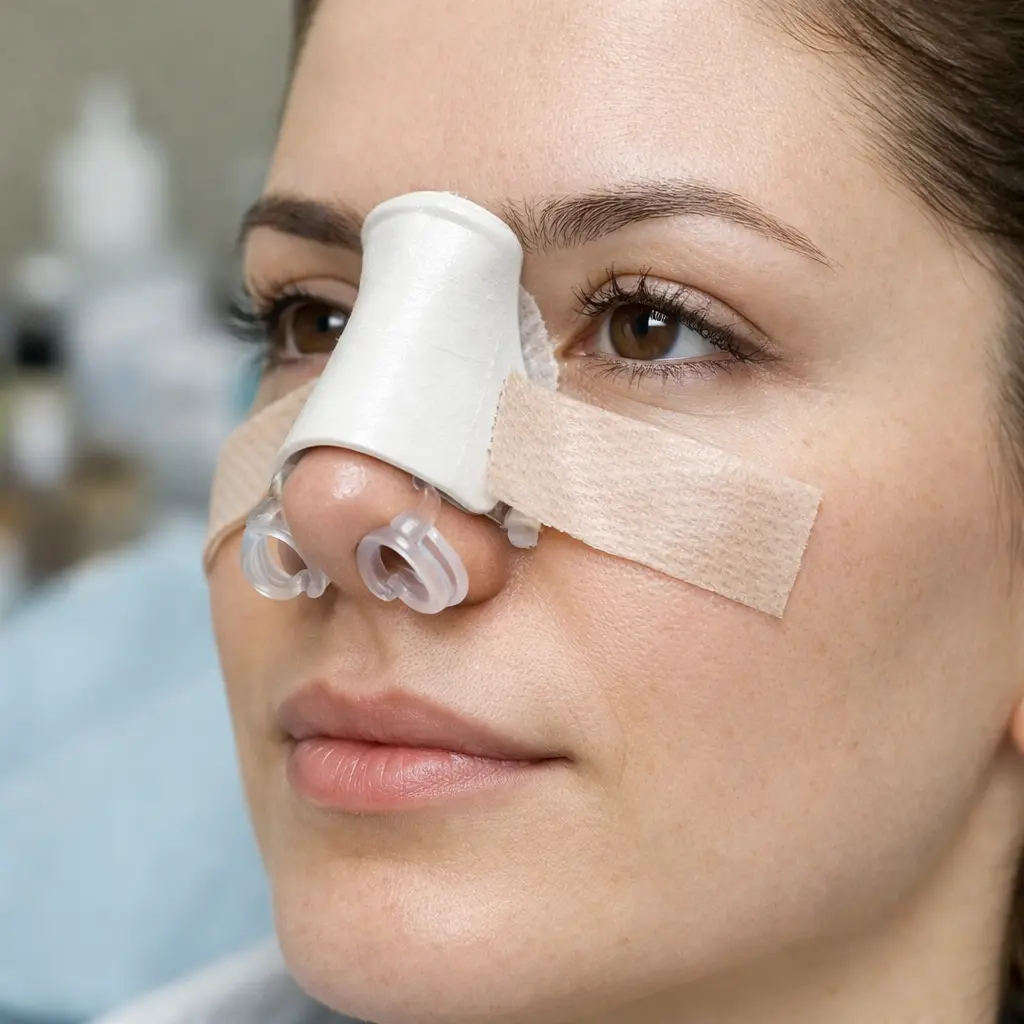
Silicone splints or nasal packs placed inside the nose (depending on the surgeon’s preference) may temporarily reduce airflow sensation. Once removed, patients typically feel noticeable relief. However, complete resolution of swelling inside the nose takes time.
In septorhinoplasty, the final nasal shape settles gradually over several months.
Risks and Important Considerations
As with any surgery, septoplasty and septorhinoplasty involve certain risks, including:
- Bleeding
- Infection
- Anesthesia-related risks
- Prolonged swelling
- Internal adhesions
- Rare need for revision surgery related to shape or breathing
Risk levels depend on factors such as anatomy, additional procedures, smoking habits, surgical technique, and postoperative care.
Following your doctor’s instructions regarding nasal washing, sprays, protection from trauma, and follow-up appointments directly affects the outcome.
Which One Is Right: Septoplasty or Septorhinoplasty?
The answer to “Septoplasty or septorhinoplasty?” cannot be summarized in one sentence because the correct choice depends on your symptoms and expectations.
If the main issue is nasal blockage and there is no aesthetic concern, septoplasty is often sufficient.
If you experience breathing problems and also want noticeable improvement in nasal shape, septorhinoplasty may be the more suitable option.
The most reliable step is a detailed examination to evaluate septal deviation and other internal nasal structures, followed by clear discussion of expectations.
With proper planning, it is possible to achieve both improved breathing comfort and a nasal appearance that harmonises with your facial features.
For detailed information about nasal surgery or to schedule an appointment, you may contact us.