
Hair loss is often associated with men, but many women also experience thinning hair, widening part lines, or even visible bald patches over time. This can affect confidence and daily life in ways that are not always openly discussed. The good news is that hair transplant procedures have evolved significantly, and female hair transplant success is now a realistic and achievable outcome for suitable candidates. However, success depends on correct diagnosis, proper planning, and choosing the right technique tailored to female hair loss patterns.
Yes, hair transplant can be successful in females, especially when the cause of hair loss is well identified and the donor area is strong. Women with localized hair loss, stable thinning patterns, or traction-related hair loss tend to see more predictable and natural results. However, unlike male pattern baldness, female hair loss is often diffuse, which makes proper evaluation essential before considering a transplant.
Understanding Female Hair Loss Before Considering a Transplant
Female hair loss does not follow the same pattern as in men. Instead of a receding hairline, women usually experience diffuse thinning across the crown while maintaining the frontal hairline. This difference directly affects how and when a hair transplant can be effective.
One of the most common causes is female pattern hair loss (FPHL), which is influenced by genetics and hormonal changes. Other causes include stress, nutritional deficiencies, postpartum changes, or medical conditions such as thyroid disorders.
Because of this variety, a hair transplant is not always the first line of treatment. In many cases, underlying conditions should be addressed before surgical options are considered. A detailed scalp analysis and medical evaluation are essential to determine whether the hair loss is stable enough for transplantation.
Is Hair Transplant Really Effective for Women?
Hair transplant procedures can deliver natural-looking and long-lasting results in women, but success is highly dependent on individual factors. Unlike men, where hairline restoration is often the main goal, female hair transplant focuses more on increasing density and improving overall hair volume.
Women who benefit most from hair transplant procedures are those with clearly defined thinning areas and sufficient donor hair at the back of the scalp. When performed correctly, transplanted hair grows naturally, blends seamlessly, and can be styled just like existing hair.
That said, expectations must be realistic. A transplant improves density but may not fully restore original thickness, especially in cases of widespread thinning.
Who Is a Good Candidate for Female Hair Transplant?
Not every woman experiencing hair loss is an ideal candidate. The decision should always be based on medical evaluation rather than visual assessment alone.
Ideal candidates typically include:
- Women with localized hair loss (not widespread thinning)
- Individuals with strong and healthy donor areas
- Those experiencing traction alopecia (tight hairstyles)
- Women with hair loss due to scars or injuries
- Patients with stable hair loss (not rapidly progressing)
For these individuals, the procedure can provide noticeable improvement and long-term satisfaction.
When Hair Transplant May Not Be Suitable
There are also situations where a hair transplant may not produce the desired outcome. This is particularly true in cases where hair loss is diffuse and affects both the donor and recipient areas.
Hair transplant may not be ideal if:
- Hair loss is widespread and unstable
- The donor area is weak or thinning
- There is an ongoing medical condition causing hair loss
- The patient has unrealistic expectations
- Hormonal imbalances are not under control
In such cases, non-surgical treatments like PRP, medications, or supportive therapies may be recommended before considering a transplant.
Which Techniques Are Used in Female Hair Transplant?
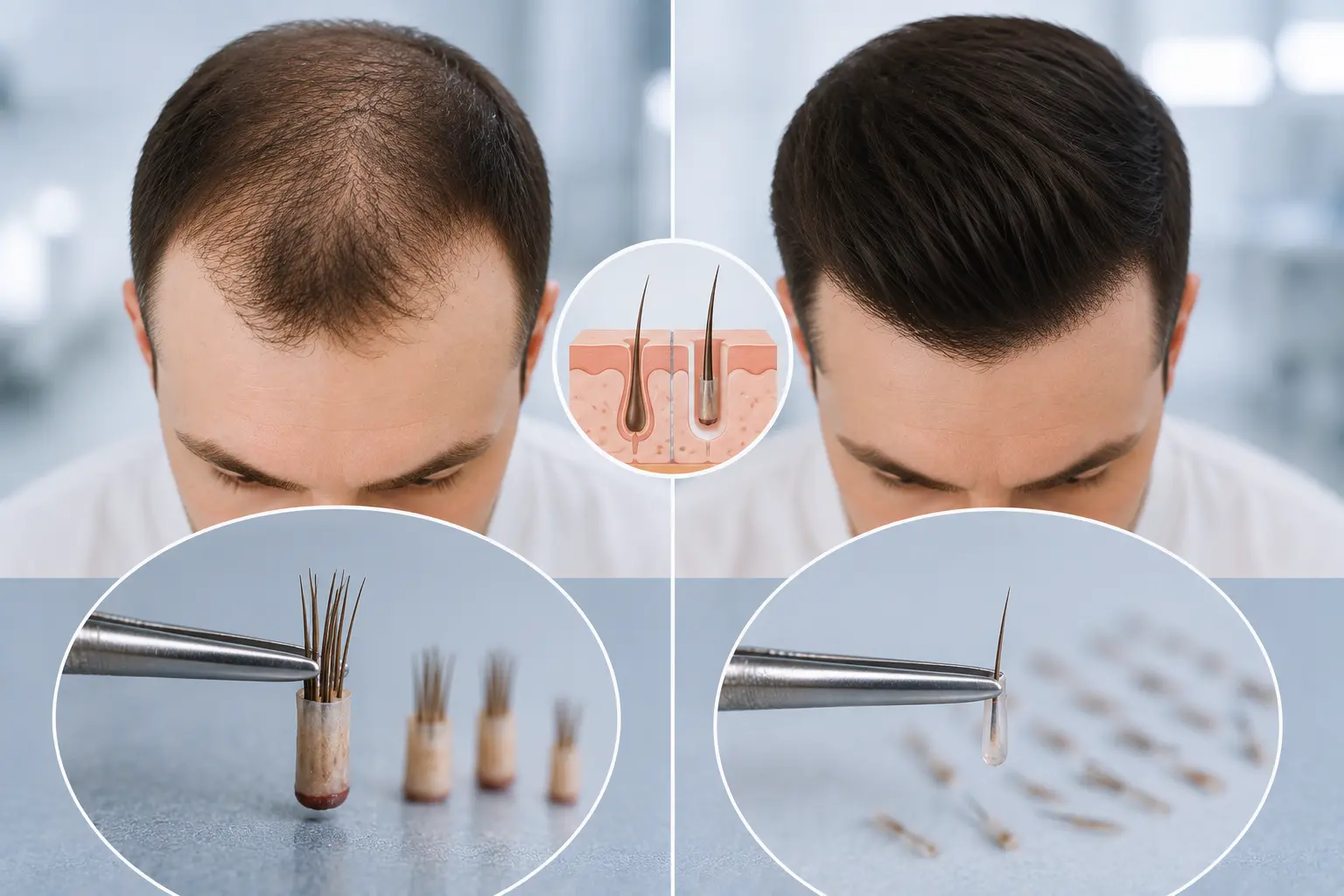
The most commonly used techniques for women are FUE (Follicular Unit Extraction) and DHI (Direct Hair Implantation). Both methods involve extracting healthy hair follicles from the donor area and implanting them into thinning regions.
FUE is widely preferred because it allows for precise extraction without leaving linear scars. DHI, on the other hand, provides more control during implantation, which can be especially advantageous when working between existing hair strands, as is often the case in women.
In addition to these methods, unshaven hair transplant (no-shave technique) is also frequently preferred by female patients. In this approach, the donor area is either partially shaved or not shaved at all, allowing the patient to maintain their current hairstyle during and after the procedure. This makes the process more discreet and socially comfortable, especially for women who do not want visible signs of the procedure.
The choice of technique depends on hair structure, density, lifestyle expectations, and the specific needs of the patient.
What Results Can Women Expect?
Hair transplant results in women typically start to become visible after three to four months, with significant improvement around six months. Final results are usually achieved within 9 to 12 months.
The transplanted hair behaves like natural hair. It can be washed, styled, and cut without restrictions. Over time, it integrates with existing hair, creating a fuller and more balanced appearance.
However, patience is important. Hair growth is a gradual process, and temporary shedding after the procedure is a normal part of the cycle.
Is Female Hair Transplant Permanent?
One of the most common questions is whether the results are permanent. In most cases, transplanted hair follicles are resistant to hair loss because they are taken from genetically stable areas.
This means that once the hair grows, it tends to remain for many years. However, existing non-transplanted hair may continue to thin over time, which is why long-term care and follow-up treatments can play an important role.
Risks and Considerations
Like any medical procedure, hair transplant carries certain risks, although they are generally minimal when performed by experienced professionals. Temporary redness, mild swelling, and sensitivity in the treated area are common but usually resolve within a few days.
Proper aftercare significantly influences the final outcome. Following medical advice, avoiding trauma to the scalp, and attending follow-up appointments all contribute to better results.
Hair transplant in women can be a highly effective solution when approached correctly. The key lies in understanding the type of hair loss, selecting the right candidates, and applying a personalized treatment plan.
Rather than viewing it as a quick fix, it should be considered part of a broader hair restoration strategy. When combined with proper care and realistic expectations, it can significantly improve both appearance and confidence.
For detailed information about hair transplantation in women and to receive a personalised treatment plan tailored to your needs, consulting with a qualified specialist is the most appropriate first step.