
Rhinoplasty is often described as a permanent nose surgery, but the question “How long does a rhinoplasty last?” needs a careful answer. If you mean how long the surgical result remains visible, the changes made to the bone and cartilage are usually long-lasting. If you mean how long it takes to see the final result, the answer is different: swelling can take months to settle, and many patients see the final nasal shape around one year after surgery. Mayo Clinic notes that the nose continues to change throughout life, whether a person has surgery or not, and that most swelling after rhinoplasty is gone within a year.
Quick Summary
- Rhinoplasty results are generally long-lasting because the nasal bone and cartilage are surgically reshaped.
- Final results usually take up to one year to become clear as swelling slowly resolves.
- Natural ageing, skin thickness, trauma, scar tissue and healing response can affect the nose over time.
- Revision rhinoplasty may be needed if breathing issues, structural changes or aesthetic concerns develop.
- Long-term results depend on surgical planning, aftercare, nasal structure and realistic expectations.
Rhinoplasty results usually last for many years and are often considered permanent, but the nose continues to age naturally after surgery. The final result is not immediate; swelling gradually improves and the refined nasal shape may take up to one year to appear. Long-term rhinoplasty results depend on anatomy, surgical technique, skin thickness, aftercare and lifestyle factors.
Does Rhinoplasty Last Forever?
Rhinoplasty creates long-term changes by reshaping the nasal bones, cartilage and soft tissue support. For many patients, the result remains stable for years and may last a lifetime. However, “forever” is a word that medicine treats with suspicion, and rightly so. The nose is living tissue, not a fixed object. Ageing, skin quality, gravity, injury and healing patterns can slowly affect nasal appearance over time.
A well-planned rhinoplasty aims to create a stable structure that looks natural and supports breathing. If too much cartilage is removed or the nose is over-reduced, the result may become less stable in later years. This is why modern rhinoplasty focuses not only on making the nose smaller, but also on preserving or rebuilding support. A nose that looks delicate but cannot breathe properly is not a success; it is just bad engineering placed in the middle of a face.
Permanent Change Does Not Mean Frozen Appearance
After rhinoplasty, the surgical changes do not simply disappear. A reduced hump does not usually grow back, and a reshaped nasal bridge generally remains changed. Still, the nose may continue to refine, soften or subtly shift as the skin contracts and the tissues settle. Mayo Clinic explains that the nose changes throughout life, which makes it difficult to define one exact moment when the result is completely final.
This is especially important for patients with thick skin, major tip work or revision surgery. In these cases, swelling may linger longer and the nasal tip may take more time to define. Patients should avoid judging their result too early because the nose seen at one month is not the same nose seen at twelve months.
How Long Until You See the Final Rhinoplasty Result?
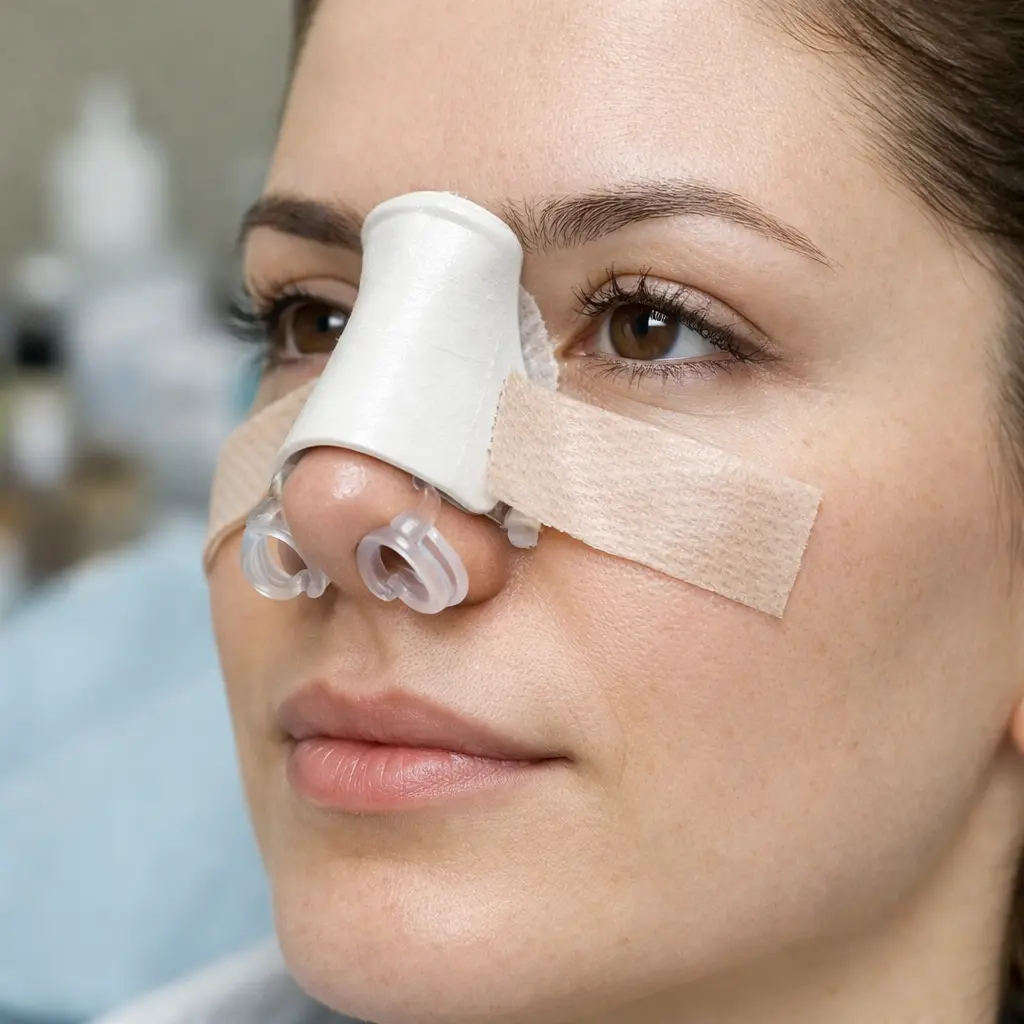
The first visible improvement appears when the splint is removed, usually around the first week. However, this early appearance is not the final result. The nose may look swollen, stiff, high, wide or slightly uneven at first. This is usually part of the healing process. The American Society of Plastic Surgeons states that while initial swelling subsides within a few weeks, it may take up to a year for the new nasal contour to fully refine.
Cleveland Clinic gives a similar timeline, explaining that swelling may last about four to six weeks, gradually decrease after three months and that full results are usually seen after the nose completely heals, often around one year. This does not mean the nose looks “unfinished” for a full year. Most patients look socially presentable much earlier. The final refinement, especially in the nasal tip, simply takes longer.
Why Swelling Takes So Long
Rhinoplasty affects a small but complex area. The skin must adapt to the reshaped framework underneath. The nasal tip, in particular, has thicker soft tissue and less direct drainage than many other facial areas. This is why tip swelling can be stubborn. The bridge may look refined earlier, while the tip may continue to change slowly for months.
Healing is also personal. Thin skin, thick skin, open rhinoplasty, closed rhinoplasty, cartilage grafting, revision surgery and individual scar response all affect the timeline. Two patients can have the same operation and heal at different speeds, because biology apparently refuses to behave like a spreadsheet.
| Time After Rhinoplasty | What Usually Happens | What It Means for Results |
| First week | Splint, congestion, bruising and swelling are common | The nose is still in early healing |
| 2–3 weeks | Bruising often improves and daily life becomes easier | Shape begins to appear but remains swollen |
| 1–3 months | Swelling reduces gradually | Bridge and profile look more defined |
| 3–6 months | Subtle refinement continues | Tip swelling may still be present |
| 6–12 months | Final contour becomes clearer | Most patients approach final results |
| After 1 year | Long-term result can be assessed | Revision, if needed, is usually discussed after this stage |
What Can Affect How Long Rhinoplasty Results Last?
The durability of rhinoplasty depends on more than surgical technique. The surgeon’s planning matters, but the patient’s anatomy and healing response matter too. Strong cartilage support, balanced proportions and careful preservation of nasal function help the result remain stable. Overly aggressive reshaping can increase the risk of long-term weakness, collapse or breathing difficulty.
Skin thickness is one of the most important factors. Thick skin can hide fine definition and may take longer to shrink around the new nasal structure. Thin skin can show small irregularities more easily. Bone structure, cartilage strength and the original nasal shape also influence how predictable the final result will be.
Lifestyle and aftercare also matter. Trauma to the nose, smoking, poor wound healing, uncontrolled medical conditions and ignoring post-operative instructions can affect recovery. NHS guidance notes that after nose reshaping, patients can experience breathing difficulty through the nose, stiffness, numbness, soreness, swelling, bruising and light nosebleeds in the early period. These early effects are usually temporary, but they show why proper recovery care is not decorative paperwork; it is part of the result.
Ageing After Rhinoplasty
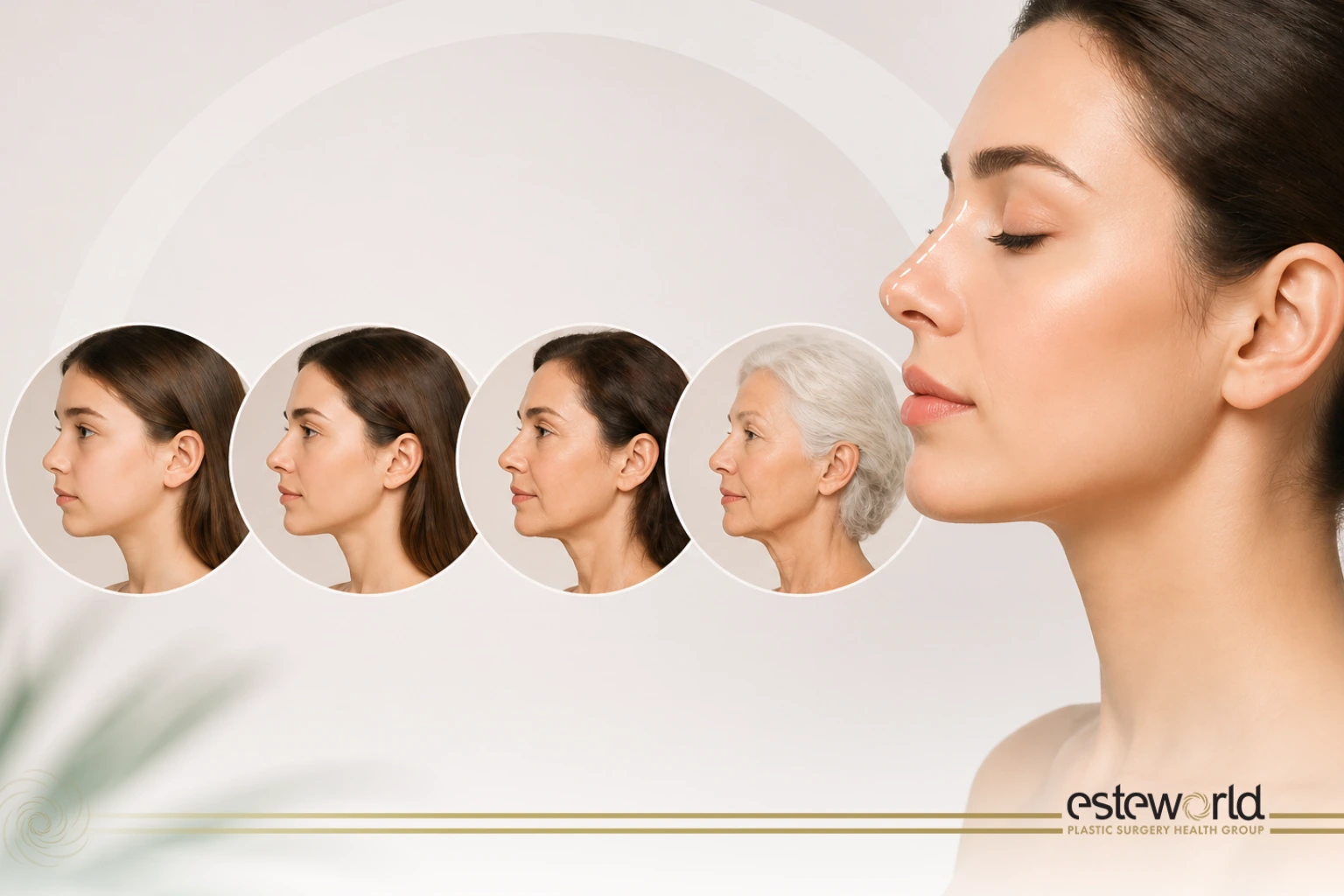
Rhinoplasty does not stop ageing. Over time, facial tissues lose elasticity, skin changes and cartilage may weaken. These changes can affect the nasal tip, nostril shape or overall facial balance. However, this does not mean the surgery has “worn off.” It means the nose continues to exist in a living face, which is inconvenient for anyone hoping surgery could pause time.
A natural rhinoplasty result often ages better than an overdone one. When the nose is reshaped in harmony with the face and supported structurally, it is more likely to remain balanced as the years pass. This is why choosing a surgeon based only on dramatic before-and-after photos can be misleading. The best long-term result is often the one that looks natural, breathes well and does not announce itself.
Can Rhinoplasty Results Change Over Time?
Yes, rhinoplasty results can change gradually. Small changes may happen as swelling resolves, scar tissue matures and the skin settles. In the first year, these changes are expected. After the first year, changes are usually slower and related to ageing, injury or structural factors.
Some patients may notice that the nasal tip drops slightly as swelling decreases. Others may feel that the nose becomes more refined with time. In revision cases, healing can be less predictable because scar tissue and previous structural changes affect the tissue response. Mayo Clinic notes that if a second surgery is needed for further changes, patients often need to wait at least a year because the nose can continue changing during that time.
When Revision Rhinoplasty May Be Considered
Revision rhinoplasty may be considered when the patient has persistent breathing problems, visible asymmetry, structural collapse, irregularities or dissatisfaction with the aesthetic result. It may also be needed after trauma. However, revision surgery should not be rushed. The nose must heal enough for the surgeon to understand the true result.
Revision rhinoplasty is usually more complex than primary rhinoplasty. Scar tissue, reduced cartilage, altered anatomy and previous surgical choices all make planning more difficult. This is why it is better to invest time in the first consultation, surgical planning and realistic goal setting than to treat revision as a casual backup plan.
How to Maintain Rhinoplasty Results
Long-term rhinoplasty results depend partly on what happens after surgery. Patients should follow their surgeon’s instructions about sleeping position, physical activity, glasses, nasal cleaning, medications and follow-up appointments. Mayo Clinic advises avoiding eyeglasses or sunglasses resting on the nose for at least four weeks unless another support method is used, because pressure can affect the healing nasal bridge.
The nose should be protected from trauma, especially during the early recovery phase. Contact sports, heavy impact exercise and accidental pressure should be avoided until the surgeon gives approval. Sun protection may also be recommended because healing skin can be more sensitive to pigmentation changes.
Follow-up visits are important even when the nose looks fine. The surgeon can evaluate swelling, breathing, scar maturation and structural stability. If small issues are detected early, they may be managed more easily. Ignoring follow-ups because the mirror seems acceptable is a very human strategy, and not one medicine tends to admire.
Realistic Expectations Protect Satisfaction
A long-lasting rhinoplasty is not only about structural durability. It is also about satisfaction. Patients who expect a natural improvement usually adapt better to their result than those looking for a completely different face. Rhinoplasty can change the nose, refine proportions and improve breathing in selected cases, but it cannot guarantee perfect symmetry or emotional transformation.
The best results are usually subtle enough to look natural and clear enough to improve balance. A good rhinoplasty should fit the person’s face, not erase it. That is the difference between surgery that ages well and surgery that looks like it was negotiated with a filter.
Rhinoplasty results are usually long-lasting, and the structural changes made during surgery often remain visible for many years. However, the nose continues to heal, refine and age. Most patients need up to one year to see the final result, while long-term appearance depends on anatomy, surgical technique, skin quality, aftercare and lifestyle factors. A successful rhinoplasty is not only about how the nose looks after the splint comes off, but how naturally and comfortably it fits the face over time.
At Esteworld, rhinoplasty procedures are planned according to each patient’s nasal anatomy, facial proportions, breathing needs and aesthetic expectations. To learn more about how long rhinoplasty lasts and the most suitable nose surgery options for your needs, you can contact us.