A beard transplant can be combined with a scalp hair transplant, minoxidil, PRP or grafts to the moustache, goatee and sideburns. The main limit is donor hair, and the evidence for most add-ons in the beard is thin. What to combine, and in what order, is worked out with your surgeon after an assessment.
This article is for general information only. It does not replace a consultation, diagnosis or treatment by a doctor.
What Can Be Combined With a Beard Transplant?
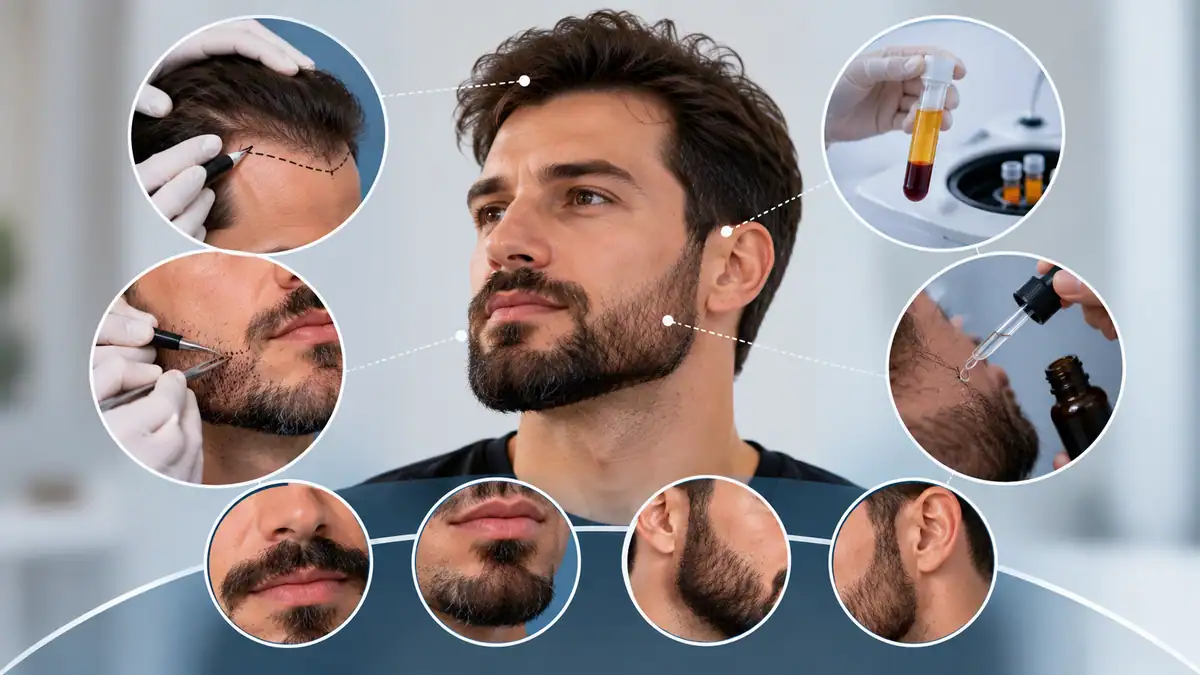
Combining usually means one of four things:
- Other facial hair zones. The International Society of Hair Restoration Surgery (ISHRS) divides the beard into four zones. These are the moustache, the chin, the cheek beard and the sideburns. When the moustache joins the chin, the result is commonly called a goatee. The design and the number of grafts for every chosen zone are worked out at the assessment. Eyebrows are a separate area with their own design; see our page on eyebrow transplants.
- Supportive treatments, such as topical minoxidil or platelet-rich plasma (PRP). They do not move hair follicles; they aim to support existing or transplanted hair.
- A scalp hair transplant, covered in the next section.
- Other facial surgery, such as nose or chin surgery, either on the same day or staged weeks or months apart (see the FAQ below).
One planning point is easy to overlook. ISHRS reminds patients that beard styles change over time, but the design chosen now is permanent. That matters if you think you might want to shave your beard off in future.
Beard and Hair Transplant in One Session: The Donor Question
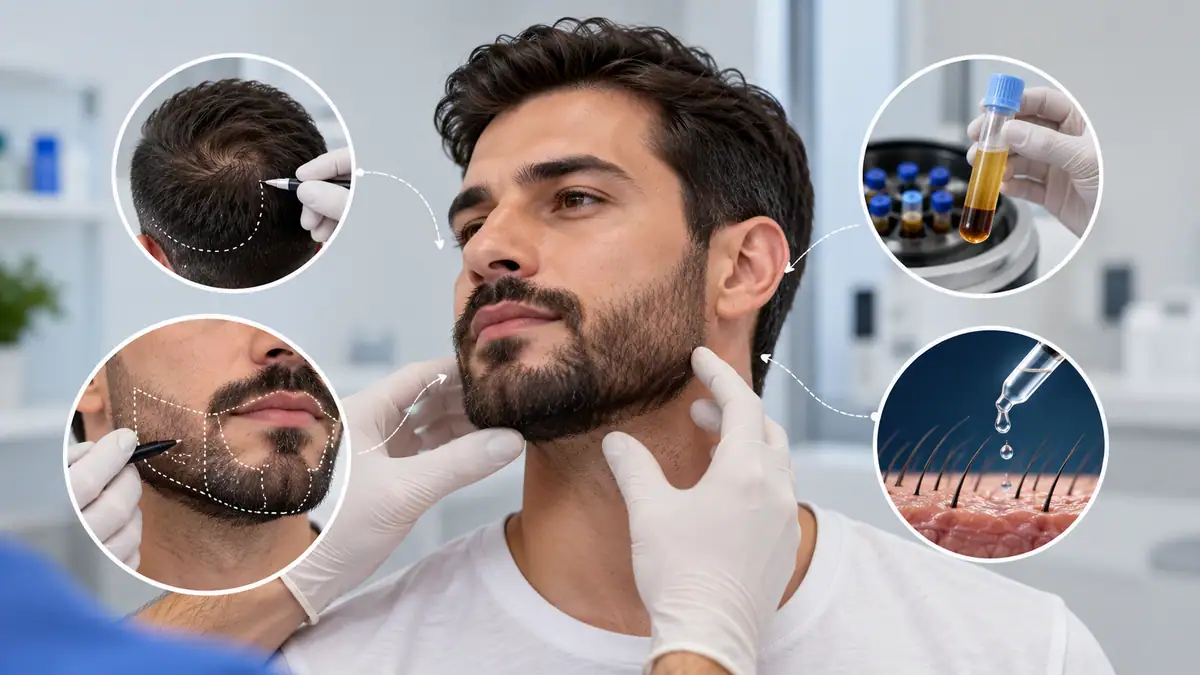
The key issue is donor hair. The main donor area for both is the back and sides of the scalp. ISHRS calls donor hair used in the face a non-renewable resource that could otherwise treat scalp balding. That matters most when many grafts are needed.
Hair can also move the other way: the beard itself, usually the area under the jawline, can serve as a second donor area. It is used when fewer grafts are needed or the scalp supply is not enough. A 2024 article describes the beard as probably the most suitable donor source outside the scalp, for example in advanced hair loss.
We found no published studies comparing both areas in one session with doing them in stages. Three questions will shape the decision at your consultation:
- How many grafts would each area need, and how many can your donor area give?
- Would one longer session or two shorter ones suit your health and the size of the work?
- If your scalp hair loss progresses, how much donor hair would remain for it later?
What the Evidence Says About Each Add-On
| Add-on | What it is for | Evidence in the beard | Main cautions |
|---|---|---|---|
| Scalp hair transplant | Treating scalp hair loss in the same plan | No published comparison of one session with staged surgery found | Shares the same finite donor supply |
| Topical minoxidil | Encouraging hair growth | One small randomised, placebo-controlled trial in 48 men without a transplant: more beard growth than placebo over 16 weeks | ISHRS advises stopping it in the recipient area before surgery |
| PRP injections | Supporting growth | No good beard data found; a 40-patient scalp study linked PRP during FUE with faster early density | Scalp results may not apply to the face |
| Moustache, goatee and sideburn grafts | Filling other gaps in one design | Listed by ISHRS among the zones of a beard transplant | Uses more donor hair from a finite supply |
| Other facial surgery | Changing facial shape (nose, chin) | No safety data found for same-day combination with beard grafts | Combine or stage: a decision for your surgical team |
| Hormone treatment | Treating a diagnosed hormone deficiency | Not a beard treatment; the guideline limits diagnosis to men with symptoms and confirmed low levels | Only after proper testing |
Minoxidil Around a Beard Transplant
Minoxidil is the add-on people ask about most, and two points matter.
The evidence is thin. Beard use rests mainly on one small randomised, placebo-controlled study of 48 men who had not had a transplant. Over 16 weeks, minoxidil 3% lotion led to more beard growth than placebo. That does not show that minoxidil improves graft survival after a beard transplant.
Timing matters. ISHRS advises stopping topical minoxidil in the recipient area before surgery. When, or whether, to start again depends on how your skin heals, so follow your surgeon’s advice rather than a fixed online schedule.
Finasteride is, with minoxidil, one of the main medicines for male pattern baldness. If you take it, or plan to, mention it when your beard transplant is planned.
Still deciding between medicines and surgery? Our article on beard transplant versus medical treatments compares the two in more detail.
PRP and a Beard Transplant
PRP is made from a small sample of your own blood, concentrated and injected into the skin. In a study of 40 scalp FUE patients, those given PRP during surgery had faster early density and less early shedding. That was one small scalp study, so it cannot be assumed to apply to beard grafts.
At Esteworld, PRP for the beard is offered during the aftercare period, not during the transplant itself. It is an optional extra to discuss, not a necessary step. Read more about how PRP treatment works.
Is Hormone Treatment Ever Part of the Plan?
A sparse beard on its own is not a reason for hormone treatment.
A doctor may suspect a hormonal problem when there are other symptoms, such as low energy or reduced sex drive. The next step is then testing, not treatment. The Endocrine Society guideline says low testosterone (hypogonadism) should be diagnosed only with symptoms and repeated morning blood tests showing consistently low levels. Any treatment is then decided by a doctor, usually a specialist in hormone disorders.
Timeline: What to Expect Month by Month
| Time after surgery | What usually happens |
|---|---|
| First days | Mild swelling or bruising can occur. Avoid pressing on the grafts and strong sun. |
| First month | Transplanted beard hairs usually fall out within 30 days. This is expected, and new hairs grow back later. |
| Months 3 to 4 | New hairs start to come through. |
| 10 to 14 months | ISHRS says the overall result is usually seen in this window. |
If you combine a beard transplant with other facial surgery, your recovery plan may look different. For daily care in this period, see caring for your beard after a transplant.
Risks and Trade-Offs
Hair restoration carries a risk of minor and, rarely, more serious complications. Smoking and diabetes are among the recognised risk factors. For beard transplants, ISHRS lists:
- Darkening of the skin after inflammation, mainly in darker skin
- Grafts placed at the wrong angle, which can look unnatural and may need removal
- Folliculitis (inflamed follicles), most often under the lip or on the chin
- Small bumps around grafts under the lip and on the chin
- Lighter spots at the donor site, especially in darker skin
The other trade-off is the donor supply discussed above. Ask your surgeon how your plan affects any future scalp treatment.
If your beard hair is falling out in patches, rather than never having grown, read beard transplant and alopecia first: the cause needs checking before surgery.
When to See a Doctor
See a doctor before planning any procedure if:
- Your beard hair loss started suddenly or appears as round, smooth patches.
- You have other symptoms, such as low energy or reduced sex drive, which may need proper hormone testing.
- You have diabetes, smoke or take blood thinners and want to combine procedures.
- You notice side effects while using minoxidil or any other product on your face.
After surgery, contact your clinic promptly if redness, swelling, pain or pus gets worse instead of better.
most add-ons have little evidence in the beard. The order of questions matters: first the cause of the sparse beard, then your donor supply and health, and only then the extras. Our team can examine your beard and donor area and explain which combinations would make sense in your case. Arrange an assessment.
Related reading: Beard Transplant in Turkey · Moustache Transplant