Septorhinoplasty
Complaints related to the nose are often divided into two main concerns: “I cannot breathe properly” and “I am not happy with the appearance of my nose.” Interestingly, these two issues are not always separate from each other. A deviated septum, enlarged turbinates, the nasal valve area and the external nasal structure can all affect both airflow and the overall shape of the nose. For this reason, septoplasty alone, which is a surgery performed to correct septal deviation, may not provide sufficient relief for every patient, because the source of nasal obstruction may not be limited to the septum.
In particular, overlooked nasal valve problems are often mentioned among the reasons why some patients say, “I had surgery, but my nose still feels blocked.”
Septorhinoplasty stands exactly at this intersection. It is a combined surgical procedure that aims to address functional problems inside the nose while also making planned changes to the external appearance of the nose in the same session. It can be a logical option for suitable patients, but it is not an automatic choice for every nasal complaint. The quality of the result depends on the right indication, the right surgical plan and realistic expectations.
What Is Septorhinoplasty?
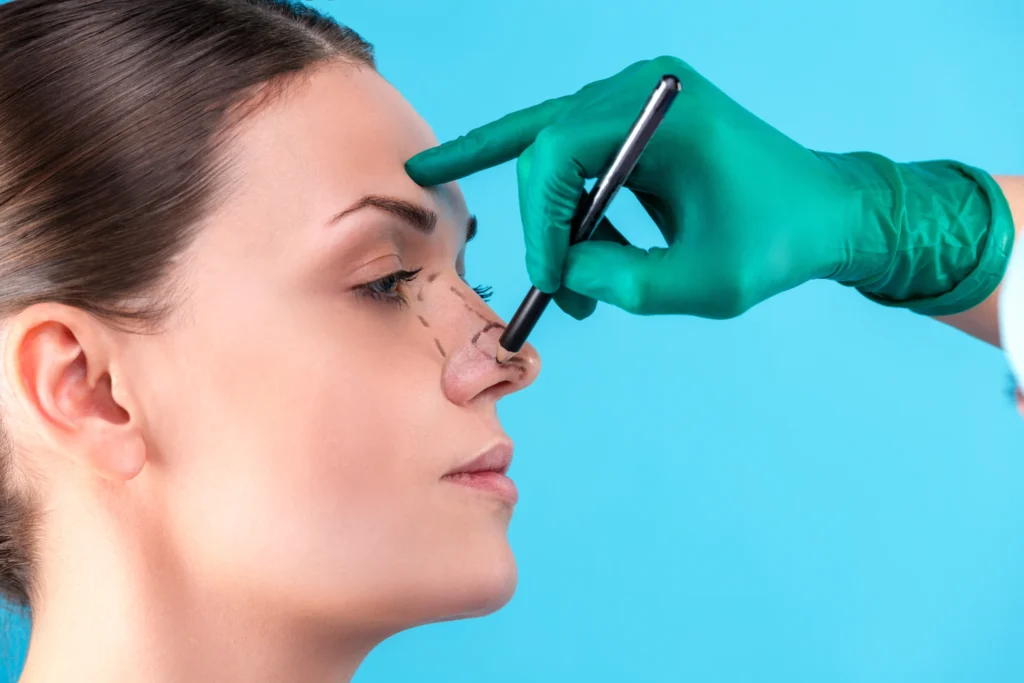
Septorhinoplasty is a surgical procedure that combines septoplasty, which corrects septal deviation, with rhinoplasty, which reshapes the nose, in the same operation. It aims to improve both nasal function, meaning breathing, and nasal form together.
Clinical guidelines state that the primary reason for nasal surgery may be aesthetic, functional or both, and that structures such as the septum and nasal valve can also be addressed at the same time.
What Does Septorhinoplasty Do?
Septorhinoplasty can target internal structural problems, such as septal deviation that causes nasal obstruction, while also addressing planned aesthetic changes in the external nasal form, such as the nasal bridge, nasal hump, nasal tip and overall facial proportions.
In suitable cases, managing both breathing and appearance concerns within a single recovery period can be practical in terms of planning. However, the benefit varies depending on the individual and the specific problem.
Who Is Septorhinoplasty Suitable For?
Septorhinoplasty is generally considered for people who have significant nasal obstruction, septal deviation or another structural problem inside the nose, while also being bothered by the appearance of their nose for a long time. The key point here is whether the complaint is truly related to a structural issue. During an ENT examination, the inside of the nose is evaluated, and if necessary, endoscopy can be used to identify the areas narrowing the airway.
Clinical indicators emphasize that the main indication for septoplasty is functional complaints such as nasal obstruction that does not respond to medical treatment.
There is another important point: in some patients, the main cause of obstruction is not the septum, but the nasal valve area. If this area is overlooked, correcting only the septum may not provide the expected improvement in breathing. Medical literature also draws attention to the role of accompanying nasal valve problems in unsuccessful septoplasty outcomes.
For this reason, the answer to the question “septorhinoplasty or septoplasty alone?” usually becomes clear after a comprehensive examination that includes the nasal valve area.
Preoperative Planning
Planning for septorhinoplasty does not begin and end with a single reference photo and the sentence “I want this nose.” The surgeon evaluates the proportions of the nose in relation to the face, skin thickness, cartilage support and functional obstructions inside the nose together. If the nasal skin is thick, swelling at the nasal tip may take longer to resolve. If cartilage support is weak, additional supportive surgical maneuvers may be required. At this stage, the goal is not to create a nose that looks good from only one angle, but to achieve a form that appears balanced from the front, from the side and during facial expressions.
What Do Open and Closed Techniques Mean?
Septorhinoplasty can be performed with either an open or closed technique. In the open technique, a small incision is made in the area between the nostrils, giving the surgeon a wider field of view. In the closed technique, the incisions are made inside the nose, so there is no visible external incision scar. The choice of technique is not based on which method is “better,” but on your nasal anatomy and the scope of the procedures to be performed.
In combined procedures, especially when cartilage support, asymmetry correction and nasal valve adjustments are planned, the surgeon’s preferred approach can influence the outcome.
The Day of Surgery
Septorhinoplasty is usually performed under general anesthesia. The duration of the operation varies depending on the scope of the planned procedures. After surgery, silicone splints or tampon-like support materials may be placed inside the nose; in some patients, the process may continue with more minimal support. One of the most common questions patients ask is, “Will I be unable to breathe because of the tampons?” In the first days, the nose may indeed feel noticeably blocked. Nasal tissues naturally swell after surgery, and when support materials are added, the feeling of congestion may increase.
In most patients, this is temporary.
Swelling, Bruising and What Is Considered Normal
After septorhinoplasty, swelling and sometimes bruising around the eyes can be expected. Some NHS patient information resources clearly state that swelling is normal and that it may take 6 to 12 months for the nose to reach its final shape.
The septorhinoplasty aftercare document published by Royal Berkshire NHS also states that a blocked sensation in the nose can continue for weeks, bloody discharge or congestion may last for around 2 to 4 weeks, and patients may begin to feel the full benefit more clearly around the second month.
This detail is important because many people start to worry around day 10 and ask, “Why is my nose still blocked?” In reality, the process is often slower than expected but still progresses normally.
For detailed information about swelling, bruising and edema after rhinoplasty, you can read our related blog content.
Recovery Process
The nose, especially the nasal tip, is one of the areas where swelling resolves most slowly. In the first weeks, the shape may look more swollen or less refined. From the second month onward, a more “normal” appearance usually begins to develop, while subtle changes continue over the following months. For this reason, patience is essential when evaluating septorhinoplasty results. Instead of expecting an immediate “finished” result, it is more realistic to think of the nose as gradually settling over time. NHS sources stating that the final form may become more apparent within 6 to 12 months provide a useful framework for managing expectations.
Risks and Realistic Expectations
As with every surgical procedure, septorhinoplasty carries certain risks. Bleeding, infection, not achieving the desired result completely, the need for revision surgery and, rarely, septal perforation are among the possible complications discussed with patients. Patient information materials prepared for septoplasty also include risks such as bleeding and infection within the general framework.
The healthiest approach is this: your surgeon should explain possible scenarios to you, not promise “perfection.” You should also clarify exactly what will and will not change. In some cases, even if the external appearance of the nose changes significantly, breathing complaints may continue due to an allergic background. In other cases, breathing may improve considerably, but the patient may have set aesthetic expectations too high.
Septorhinoplasty or Separate Surgeries?
Some patients think, “First breathing, then aesthetics,” while others prefer to complete everything in a single operation. Theoretically, both options may be possible. In practice, however, since the internal and external structures of the nose share the same framework, combined planning may be more rational in many cases. Guideline texts that address nasal form and function together state that nasal surgery can be performed for aesthetic and functional purposes, and that additional structures such as the septum and nasal valve can also be evaluated.
Still, “everything in one session” is not the right choice for every patient. Expectations and anatomical limitations must be discussed clearly.
Septorhinoplasty Prices 2026
Septorhinoplasty prices in 2026 may vary depending on the patient’s nasal structure, the degree of septal deviation, aesthetic expectations, the surgical technique to be used and the overall scope of the operation. When functional corrections and aesthetic adjustments are planned together, the duration of the surgery and the technical details involved become important factors in pricing.
In addition, the technical equipment of the hospital where the surgery is performed, the surgeon’s experience, anesthesia services and postoperative follow-up process can also affect the cost. Therefore, to get the most accurate information about septorhinoplasty prices, a personalized examination and detailed evaluation are recommended. It is important to consult a specialist physician for detailed information and a treatment plan tailored to you.
Frequently Asked Questions About Septorhinoplasty

What is septorhinoplasty?
Septorhinoplasty is a surgical procedure that corrects the deviated cartilage and bone structure inside the nose, known as septal deviation, while also making aesthetic adjustments to the shape of the nose. This operation may help improve breathing problems and make the nasal appearance more harmonious with the face. The combined planning of functional and aesthetic goals is one of the main features that distinguishes septorhinoplasty from standard rhinoplasty.
Who is suitable for septorhinoplasty surgery?
Septorhinoplasty may be a suitable option for people who have difficulty breathing due to a deviation inside the nose and also want changes in the appearance of their nose. It can be performed in people who have developed nasal deformity after trauma, those with congenital septal deviation or those who want to address breathing problems together with nasal aesthetics. However, suitability must be evaluated by a specialist physician after a detailed examination and, when necessary, imaging methods.
How long does septorhinoplasty surgery take?
The duration of septorhinoplasty surgery may vary depending on the scope of the procedure and the condition of the nasal structure. In general, the operation is planned to last approximately 2 to 4 hours. The extent of functional correction, the details of the aesthetic intervention and any previous surgical history can affect the duration.
What is the recovery process like after septorhinoplasty?
After septorhinoplasty, mild swelling, bruising and tenderness around the nose during the first few days are considered normal. The nasal splint is usually removed within the first week, and the patient can gradually return to daily life. Most swelling decreases within the first few weeks, while it may take several months for the nasal shape to fully settle. Following the care instructions recommended by the doctor is important for a healthy recovery process.
Does breathing improve immediately after septorhinoplasty?
An improvement in breathing function is generally expected after the operation. However, due to swelling inside the nose and the natural healing process, a feeling of nasal congestion may continue during the first days. As the swelling decreases, a noticeable improvement in breathing can be observed. The full recovery process may vary from person to person.
Is septorhinoplasty surgery painful?
After septorhinoplasty surgery, mild to moderate discomfort may occur. However, most patients state that pain can be controlled with painkillers recommended by the doctor. The discomfort felt during the postoperative period is usually at a tolerable level.
Will there be a scar after septorhinoplasty?
When septorhinoplasty is performed with the closed technique, the incisions are made inside the nose and are not visible from the outside. In cases where the open technique is used, there may be a small incision scar at the base of the nose. However, this scar usually becomes less noticeable over time and does not create a prominent appearance.
Is septorhinoplasty a permanent solution?
The functional and aesthetic adjustments made with septorhinoplasty can generally provide long-lasting results. However, the healing process of the nasal structure, the person’s tissue characteristics and compliance with postoperative care can affect the permanence of the results. External factors such as trauma may also cause changes in the nasal structure in later periods.
As Esteworld Health Group, Turkey’s leading provider of plastic and aesthetic surgery services, we have been offering aesthetic services at the highest medical standards since 1994 under the slogan “Healthy beauty!”