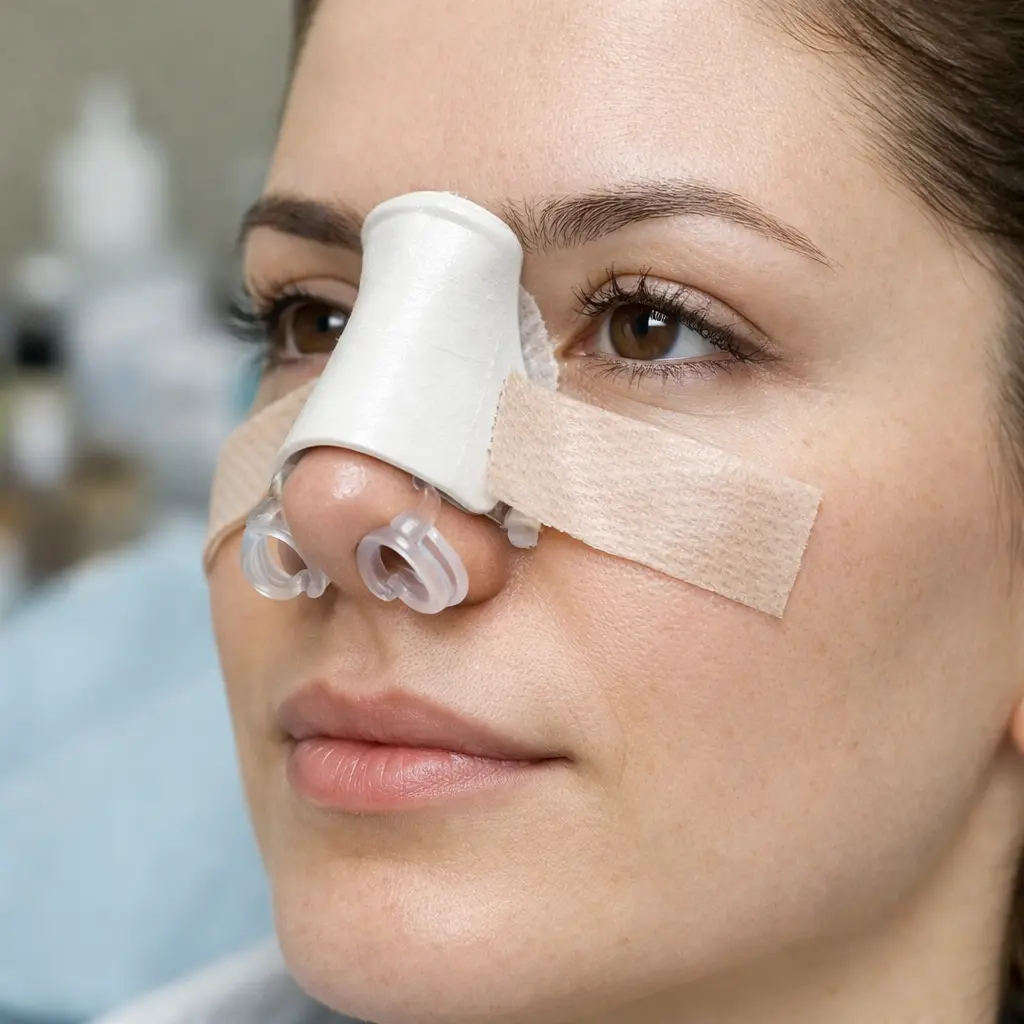
The fact that the result obtained after rhinoplasty does not meet expectations can be challenging for a person both aesthetically and functionally. Dissatisfaction with the shape of the nose, the persistence of breathing problems, or deformities that develop over time may bring the need for revision rhinoplasty to the forefront. At this point, one of the most frequently asked questions is: Is revision rhinoplasty difficult?
Revision rhinoplasty procedures require a more careful evaluation process compared to primary rhinoplasty because they are planned on tissues that have previously undergone surgical intervention. However, this does not mean that every revision surgery is necessarily difficult or risky. The level of difficulty of the operation varies depending on the current structural condition of the nose, previous surgeries, and the scope of the correction to be performed.
In this content, we address why revision rhinoplasty procedures are considered more difficult, the factors that affect the level of difficulty, and how the process is evaluated from both the patient’s and the surgeon’s perspective within a scientific and realistic framework.
Why Is Revision Rhinoplasty Considered More Difficult?
The main reason revision rhinoplasty is considered difficult is that it is performed on tissues that have previously undergone surgical procedures. The interventions made to the nasal bone and cartilage structure during the initial surgery can limit the surgeon’s range of movement during the revision process. This situation requires more precise technical planning of the operation.
Another common issue encountered in revision surgeries is scar tissue formation inside the nose. This tissue, which develops during the healing process, can reduce the flexibility of the nasal anatomy and make the shaping stage more delicate.
In addition, cartilage tissues that were used or removed during the initial rhinoplasty may make it difficult to find sufficient supporting material in revision surgeries. In some cases, the need for additional cartilage support makes surgical planning more comprehensive. The presence of functional problems such as breathing difficulties alongside aesthetic corrections turns revision surgeries into a multidimensional surgical process.
Differences in Difficulty Between Primary Rhinoplasty and Revision Rhinoplasty
- In the first surgery, nasal tissues largely retain their natural structure, whereas in revision surgeries, the tissues have already been intervened on.
- Scar tissue can make surgical procedures technically more delicate in revision surgeries.
- Cartilage tissues available in the first surgery may be limited in revision procedures.
- Revision surgeries require more detailed planning that takes previous surgical interventions into account.
- While results are more predictable in primary rhinoplasty, individual differences may be more pronounced in revision surgeries.
What Determines the Level of Difficulty of Revision Rhinoplasty?
The level of difficulty of revision rhinoplasty is not the same for every patient. The number of previous nasal surgeries, the degree of structural deterioration in the nose, and skin thickness directly affect this process. First revision surgeries are generally more predictable, whereas tissue structure can become more complex in patients who have undergone multiple surgical interventions.
There are significant differences between simple revisions aimed only at correcting minor shape irregularities and advanced revisions accompanied by nasal collapse, asymmetry, or breathing problems. For this reason, detailed examination and the establishment of realistic expectations are of great importance before revision rhinoplasty.
Is Revision Rhinoplasty Difficult for Every Patient?
Not every revision rhinoplasty is difficult or high risk. In some patients, the need for revision may arise solely from minor aesthetic corrections. In such limited interventions, the surgical process usually progresses in a more controlled manner.
On the other hand, in cases where both aesthetic and functional problems are present together, revision surgery may be more comprehensive. However, this does not mean that the operation cannot be performed or will result negatively. The level of difficulty becomes clear through accurate analysis of the patient’s existing nasal structure.
Is Revision Rhinoplasty More Difficult for the Doctor or the Patient?
Revision rhinoplasty involves different challenges for both the surgeon and the patient. For the surgeon, the process requires working on previously intervened anatomy, making technical sensitivity and experience essential. Scar tissue and limited cartilage structures necessitate a more cautious surgical approach.
From the patient’s perspective, revision surgery is often a psychologically more sensitive process. Having already experienced surgery may increase expectations. Therefore, communication between the patient and the surgeon and clear explanation of the process are of great importance.
Is the Recovery Process After Revision Rhinoplasty More Difficult?
The recovery process after revision rhinoplasty does not progress in the same way for every patient. In tissues that have previously undergone surgery, the reduction of swelling and the settling of the nasal shape may take longer in some patients. However, in revisions involving only minor corrections, the recovery process often progresses similarly to that of primary rhinoplasty.
During this period, following the doctor’s recommendations and not missing follow-up appointments are important for healthy healing.
Revision rhinoplasty procedures may require more attention and experience compared to primary rhinoplasty. However, this does not mean that every revision surgery is difficult or risky. The level of difficulty varies depending on the patient’s nasal structure, previous surgical interventions, and the scope of the correction to be performed.
Revision surgeries planned by an experienced surgeon can provide satisfying results both aesthetically and functionally. The most appropriate approach is to plan the process with a detailed examination and realistic expectations.