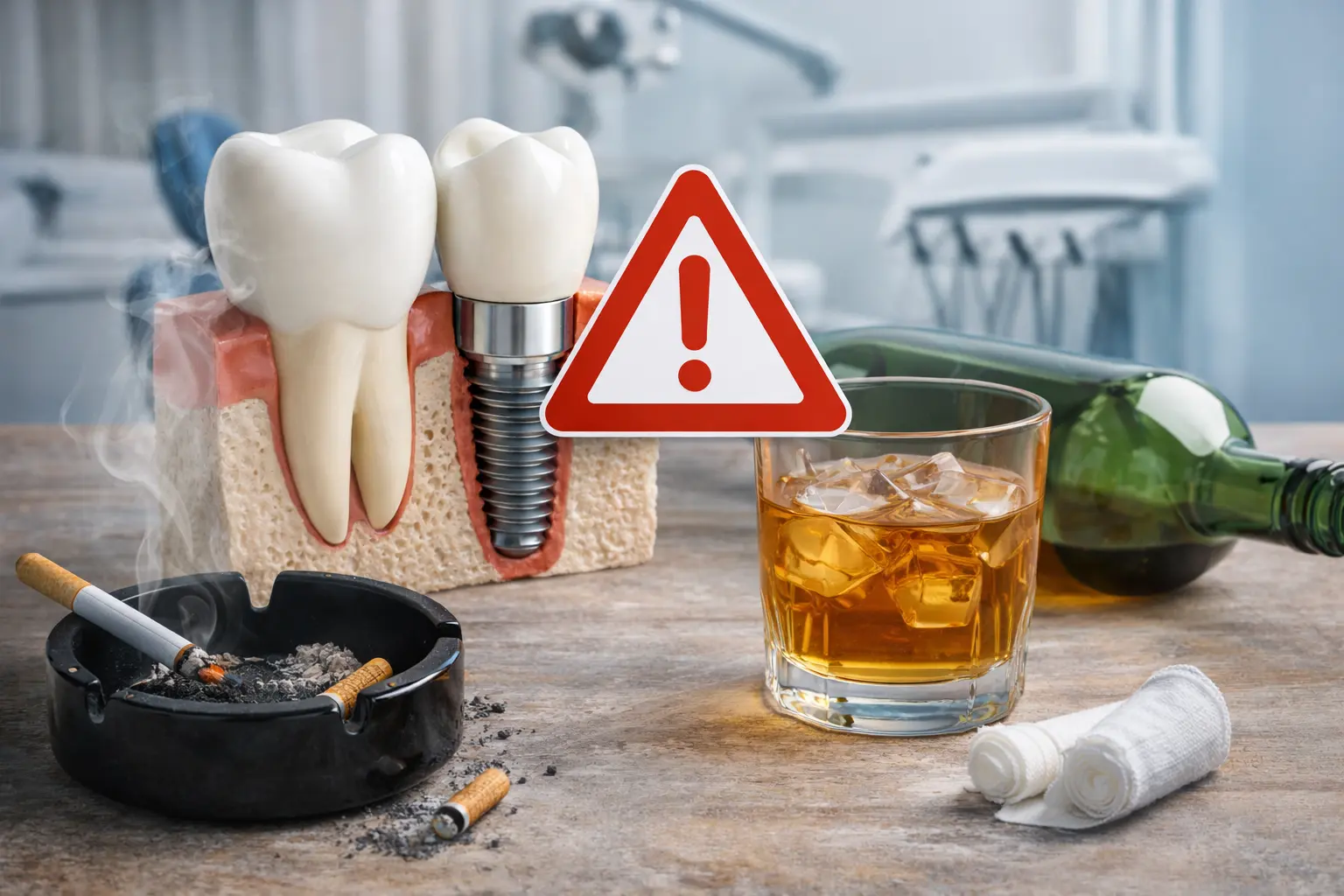
Dental implant treatment is an effective method that provides a permanent solution for replacing missing teeth. The success of the treatment largely depends on the healing period. For the implant to integrate with the jawbone, there are many factors that need attention during this process. One of the most frequently asked questions after dental implant treatment is how risky alcohol and cigarette consumption can be.
Cigarette and alcohol consumption may negatively affect the healing process and put the success of the implant at risk. The reason for this is the increased likelihood of infection during the fusion process of the artificial tooth roots with the bone. Therefore, cigarette and alcohol consumption should begin only after the period recommended by the doctor (generally 2–3 months) during the healing phase. Since each individual’s bone structure and root fusion time vary, it is extremely important to follow the period specified by the physician. Otherwise, unexpected problems may occur with the implants. In this article, we will examine why cigarette and alcohol consumption can cause problems after dental implant treatment and explain what you should pay attention to during this period.
Why Should Cigarettes and Alcohol Not Be Consumed After a Dental Implant Procedure?
Cigarette and alcohol consumption after an implant are important factors that negatively affect the healing process. Smoking disrupts oral and dental health and weakens the integration process of the implant with the jawbone. This may increase the risk of infection and prolong the healing period. In addition, smoking negatively affects blood circulation and may prevent adequate blood flow to the implant area.
Similarly, alcohol consumption weakens the body’s immune system and reduces resistance against infections. After the implant is placed, these risks increase further during the fusion phase with the bone. Therefore, both smoking and alcohol use pose a major danger to successful implant treatment. Avoiding these habits during the healing process ensures the longevity of the implant and supports a healthy integration process.
Smoking After an Implant
After dental implant surgery, it is crucial for the oral tissues to heal properly. However, smoking seriously jeopardises this process. The implant must fuse with the bone in the treated area (osseointegration), and blood circulation plays a vital role during this stage. Nicotine contained in cigarettes narrows blood vessels and reduces blood flow. This slows down healing and increases the risk of infection.
Additionally, cigarette smoke irritates the oral mucosa and delays wound healing. Therefore, smoking after an implant may negatively affect not only the healing process but also the long-term success of the implant.
Is Smoking Harmful After an Implant?
Yes, smoking after an implant is highly harmful. The implant failure rate in smokers is up to 20% higher compared to non-smokers. Nicotine and other harmful substances weaken the defence mechanisms in the mouth and prevent healthy regeneration of gum tissues.
In addition, smoking:
- Increases the risk of infection around the implant
- Makes it difficult for the implant to attach to the bone tissue
- May cause gum recession and the development of peri-implantitis (inflammation around the implant)
Experts recommend quitting smoking before implant treatment if possible, or at least completely avoiding it during the healing period after treatment.
How Many Days After an Implant Can You Smoke?
The ideal scenario is not smoking at all during implant treatment. However, if quitting completely is not possible, smoking should absolutely be avoided for at least the first 72 hours. This period is critical for initial wound closure and clot formation.
Since the fusion process between the implant and bone takes approximately 2–3 months, it is very important for long-term success to avoid smoking for at least 2 months.
It should not be forgotten that smoking before the implant has fully fused may lead to serious complications, including implant loss.
What Happens If You Smoke? Will the Implant Fail?
Yes, smoking may cause the implant to fail. This is because smoking:
- Disrupts oral microcirculation
- Suppresses the immune system
- Prevents the establishment of a healthy connection between the bone tissue and the implant
Implant failures are more frequently observed in patients who smoke and often require surgical revision. In addition, since smoking increases infection risk, the tissues around the implant may be damaged, which can compromise implant stability.
Therefore, if you want your implant to be successful, avoiding smoking during the healing process is the right decision.
Effects of Smoking on the Implant
Smoking is a significant factor that negatively affects the success of dental implant treatment. By reducing blood flow in the mouth, smoking weakens the integration process of the implant with the jawbone. This increases the risk of implant failure and raises the likelihood of infection. In addition, smoking may cause inflammation in the gums, threatening the health of the tissues around the implant. In the long term, smoking may lead to a condition called peri-implantitis around the implant, which can result in implant loss. After dental implant placement, smoking should absolutely be avoided during the first week. During this period, the body needs to produce a sufficient amount of blood clot. This protects the implanted area against external bacteria and accelerates healing. Smoking may lead to serious complications such as inflammation. Since the implanted area is sensitive, the use of substances such as cigarettes and alcohol may damage tissues and create irritating effects. Therefore, such products should absolutely be avoided. Consequently, it is recommended to avoid smoking for at least 2–3 months after implant treatment.
How Does Smoking Affect the Tooth After an Implant?
1. Prevents Bone Fusion (Osseointegration Problem)
The implant must firmly integrate with the jawbone. Nicotine in cigarettes narrows blood vessels and slows this process. As a result, implant attachment becomes difficult, and implant loss may occur.
2. Prolongs the Healing Period
Smoking delays the healing of oral tissues. This leads to more frequent complications such as infection, bleeding, and pain.
3. Increases the Risk of Infection
Smoking disrupts the oral flora and suppresses the immune system. This increases the likelihood of infection around the implant. This infection, called peri-implantitis, may result in implant failure.
4. Causes Gum Recession
In individuals who smoke, gum tissues weaken and tend to recede. This may negatively affect both the aesthetic appearance and function of the implant.
5. Causes Bad Breath and Discolouration
Smoking may cause aesthetic and hygiene problems in the implant area. Bad breath and colour changes are common issues.
Alcohol Use After an Implant
One of the most frequently asked questions after dental implant treatment is whether alcohol consumption is safe. Since alcohol directly affects wound healing and the immune system, it is a factor that requires caution, especially in the first days. Alcohol consumption after surgical procedures in the mouth may negatively affect treatment success.
Does Alcohol Harm Implant Treatment?
Yes, alcohol may harm implant treatment because:
- Alcohol suppresses the immune system, increasing the risk of infection.
- Due to its blood-thinning effect, it may cause bleeding, especially if consumed within the first 48 hours.
- Alcohol may interact with prescribed painkillers or antibiotics, causing unexpected side effects.
- It facilitates inflammation, which may damage tissues around the implant.
In short, alcohol may make it difficult for the implant to successfully integrate with the bone tissue (osseointegration) and may cause treatment failure.
How Many Days After an Implant Can Alcohol Be Consumed?
According to experts, alcohol should absolutely not be consumed during the first 72 hours after implant treatment. This period is the most critical stage of wound healing. However, considering the ideal healing process:
- A minimum of 1 week,
- Preferably 2–4 weeks of avoiding alcohol is recommended.
Since the fusion process between the bone and implant takes approximately 2–3 months, keeping alcohol consumption to a minimum during this period is important for treatment success.
What Are the Risks of Alcohol Use After an Implant?
Some serious risks of alcohol consumption after an implant include:
- Alcohol may cause prolonged oozing-type bleeding at the surgical site due to vessel dilation.
- Since alcohol weakens the body’s defence mechanism, it creates an environment where bacteria in the mouth can multiply more easily.
- Alcohol reduces saliva production. Saliva is important for maintaining oral hygiene. Dryness increases plaque formation around the implant.
- Taking alcohol together with prescribed post-operative medications may cause stomach problems, dizziness, and even serious liver strain.
Alcohol consumption after an implant is a habit that may directly harm the treatment process. To avoid permanent damage, alcohol should absolutely not be consumed, especially during the first weeks, and the period recommended by the doctor should be followed carefully. Remember, being patient for a few weeks is the key to having a healthy smile for many years.
The Effect of Alcohol Consumption on Implant Treatment
Alcohol consumption is another factor that reduces the success rate of dental implant treatment. Alcohol weakens the immune system and reduces the body’s ability to fight infections. After the implant is placed, the risk of infection increases during this period, and alcohol use further elevates this risk. In addition, alcohol may negatively affect the fusion process between the implant and jawbone and delay healing. Avoiding alcohol for at least 2–3 months after implant treatment is of great importance for the health of the treatment process. After treatment, it is important to avoid alcohol consumption in accordance with the programme recommended by the doctor (generally 2–3 months). During this time, alcohol consumption should be limited to ensure the healing process continues in a healthy manner. Afterwards, alcohol use may be restarted in a controlled and gradual manner. Following your doctor’s recommendations will help your implant integrate in a healthy way.
With over 25 years of experience in implant dental treatment, we provide services at international standards with up-to-date technology and our expert team. As Esteworld, we efficiently continue the implant treatment process with our specialist doctors and help you achieve the best results with our personalised treatment services. You can contact us to achieve a perfect smile and get detailed information about implant dental treatment