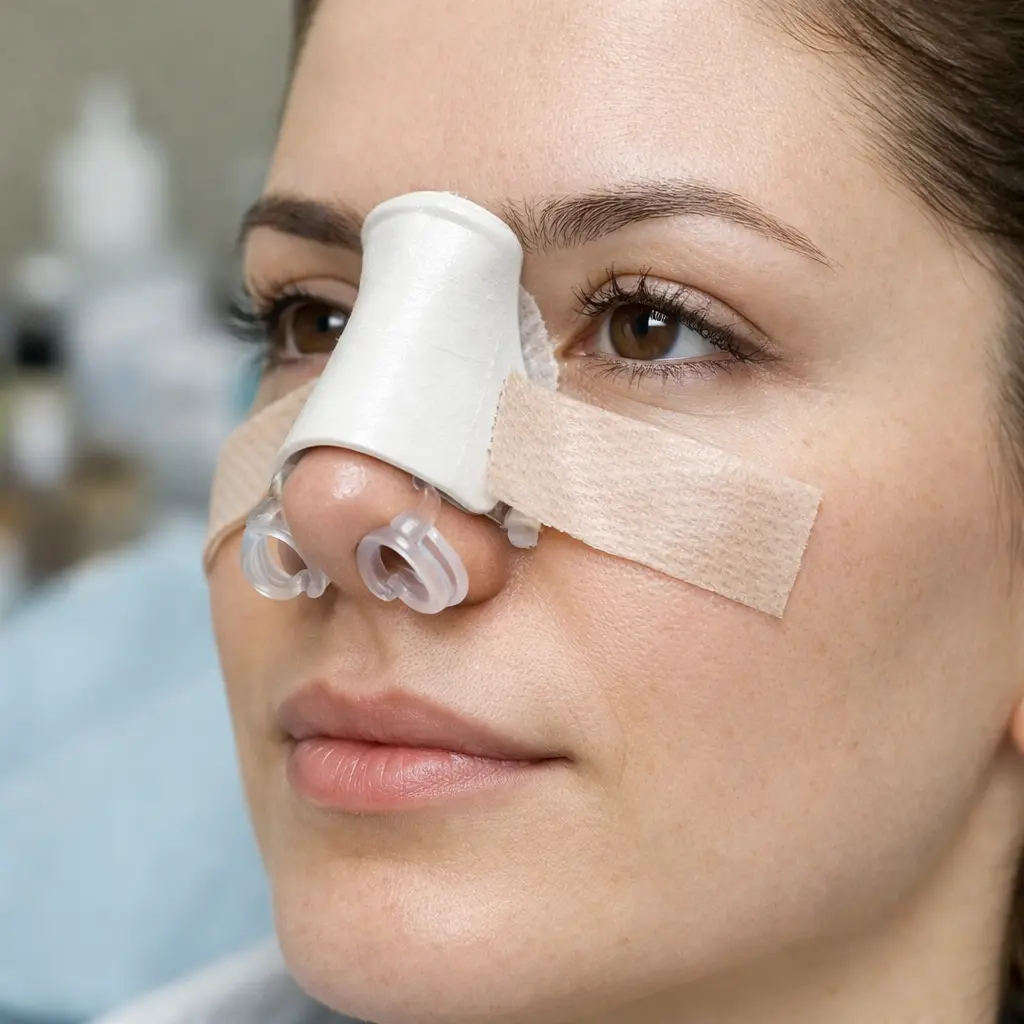

After rhinoplasty (nose surgery), certain supportive devices may be used to help maintain the new shape of the nose and support a healthy recovery process. Since the nasal bones, cartilage structures, and nasal tip are reshaped during the operation, it is important for the tissues to remain in the correct position during healing. For this reason, surgeons may use supportive devices placed inside the nose or around the nostril area in some patients.
One of the devices that can be placed on the nasal tip or inside the nostrils after nose surgery is called a nostril retainer. These small devices, usually made of silicone, help maintain the shape of the nostrils and support tissue stability during the healing process. Their use is not mandatory for every patient; the decision depends on the individual nasal structure and the surgical procedures performed.
What Is the Device Placed on the Tip of the Nose After Rhinoplasty?
The device placed on the tip of the nose or inside the nostrils after rhinoplasty is generally called a nostril retainer, also known among patients as a nostril shaper.
This device is a small support apparatus that helps preserve the new form of the nostrils.
During rhinoplasty surgery, the nasal tip and nostrils may be reshaped. During the recovery period, tissue swelling or minor changes that occur during healing may affect the appearance of the nostrils. A nostril retainer helps support the symmetry of the nostrils during this process.
Typically made from soft silicone material, the nostril retainer is placed inside the nose and is not easily noticeable from the outside. When used for the duration recommended by the surgeon, it may help keep the nostrils stable throughout the healing process.
What Is a Nostril Retainer?
A nostril retainer is a small medical device used after rhinoplasty to support the shape of the nostrils. It is usually made from silicone or similar flexible materials and is placed inside the nostrils.
The primary purpose of this device is to minimise possible shape changes in the nostrils after surgery and help keep the tissues in the correct position during the healing period. It may be recommended particularly for patients who undergo nasal tip reshaping or nostril reduction procedures.
Nostril retainers generally have a double-piece structure and are placed into both nostrils at the same time. The connecting section between the two parts provides balanced support between the nostrils.
In this way, the device may help maintain nostril symmetry and prevent minor shape changes during recovery.
Depending on the surgeon’s recommendation, a nostril retainer may be used for certain hours of the day or continuously. The duration and method of use may vary depending on the patient’s healing process.
What Does a Nostril Retainer Do After Rhinoplasty?
The main purpose of a nostril retainer used after rhinoplasty is to help maintain the nasal shape achieved through surgery. After a rhinoplasty procedure, nasal tissues may remain sensitive and prone to change for a certain period of time. Therefore, supporting the new shape of the nose during recovery is important.
Some potential benefits of using a nostril retainer include:
Helps Maintain the Shape of the Nostrils
During rhinoplasty, the size and form of the nostrils may be modified. Tissue movements or swelling during healing may affect their appearance. A nostril retainer may help maintain the new shape of the nostrils.
Supports Symmetry
The symmetrical appearance of the nostrils is aesthetically important after rhinoplasty. The nostril retainer provides equal support to both nostrils and may help preserve symmetry during recovery.
Provides Support During Healing
In the early post-operative period, nasal tissues are not yet fully stable. A nostril retainer may help maintain the correct position of the nostrils during healing.
May Help Keep the Airway Open
In some patients, a nostril retainer may help keep the nostrils open, which can make breathing easier. However, this may vary from patient to patient, and the decision to use the device should always be made by the surgeon.
Are There Different Types of Nostril Retainers?
Nostril retainers used after rhinoplasty may be produced in different designs and sizes. Since each patient’s nasal structure, surgical procedure, and recovery process are different, the type of device used may vary accordingly. Therefore, the selection of a nostril retainer is usually determined by the surgeon.
The most commonly used types include:
Silicone Nostril Retainer
The most widely used retainer models are made from silicone. Their flexible and soft structure can provide comfortable use inside the nose while supporting the tissues without causing damage.
Ventilated Nostril Retainer
Some nostril retainers have small air holes that allow airflow inside the nose. These holes may make breathing easier for users. Such models may be preferred for patients who need to use the device for longer periods.
Different Size Retainer Models
The width and shape of nostrils vary from person to person. For this reason, nostril retainers are produced in different sizes. Surgeons select the most appropriate size according to the patient’s nasal structure to support a healthier recovery process.
In some cases, customised retainers designed specifically for the patient may also be used. These are often preferred after procedures such as alar base reduction (nostril narrowing surgery).
Difference Between a Nostril Retainer and a Splint
After rhinoplasty, nostril retainers and nasal splints are sometimes confused. However, these devices serve different purposes and are placed in different areas.
| Feature | Nostril Retainer | Nasal Splint |
| Purpose | Maintain the shape of the nostrils | Support the nasal structure or bones |
| Placement | Inside the nostrils | Inside or outside the nose |
| Duration of use | Weeks or sometimes months | Usually the first week |
| Structure | Silicone or flexible material | Plastic or silicone support |
Nasal splints are usually placed immediately after surgery and removed by the doctor about a week later. Nostril retainers, on the other hand, may be used later in the recovery process and can remain in place for a longer period.
For this reason, these devices serve different functions and are not used interchangeably.
Important Points When Using a Nostril Retainer
Some important considerations should be taken into account when using a nostril retainer. Proper use may support the healing process and help reduce the risk of infection.
Follow the Recommended Duration
The recommended duration of nostril retainer use may vary for each patient. Therefore, the device should be used according to the surgeon’s instructions. Removing it too early or using it longer than recommended may affect the recovery process.
Maintain Proper Hygiene
The inside of the nose is a sensitive area, and there is a potential risk of infection after surgery. Therefore, the retainer should be cleaned regularly and hygiene rules should be followed carefully.
Contact Your Doctor if There Is Pain or Discomfort
Using a nostril retainer usually does not cause severe pain. However, if excessive discomfort, pain, or irritation occurs inside the nose, the surgeon should be consulted.
Ensure Correct Placement
Incorrect placement of the retainer may cause pressure or irritation inside the nostrils. Therefore, during the first use, it is important to follow the instructions provided by the doctor or healthcare professional.
Support devices used after rhinoplasty may play an important role in helping maintain the nasal shape achieved through surgery. Devices such as nostril retainers may help support the form of the nostrils during the healing process.
However, since every rhinoplasty procedure and every patient is different, the decision to use these devices, as well as their duration and method of use, should always be determined by the surgeon.
Paying attention to post-operative care, following the doctor’s instructions, and attending follow-up appointments regularly may help achieve healthier and more lasting aesthetic results.
If you would like to learn more about rhinoplasty and the post-operative recovery process, explore suitable treatment options, or get answers to your questions, you can contact us. Our expert team is ready to provide guidance about rhinoplasty procedures and post-operative care.