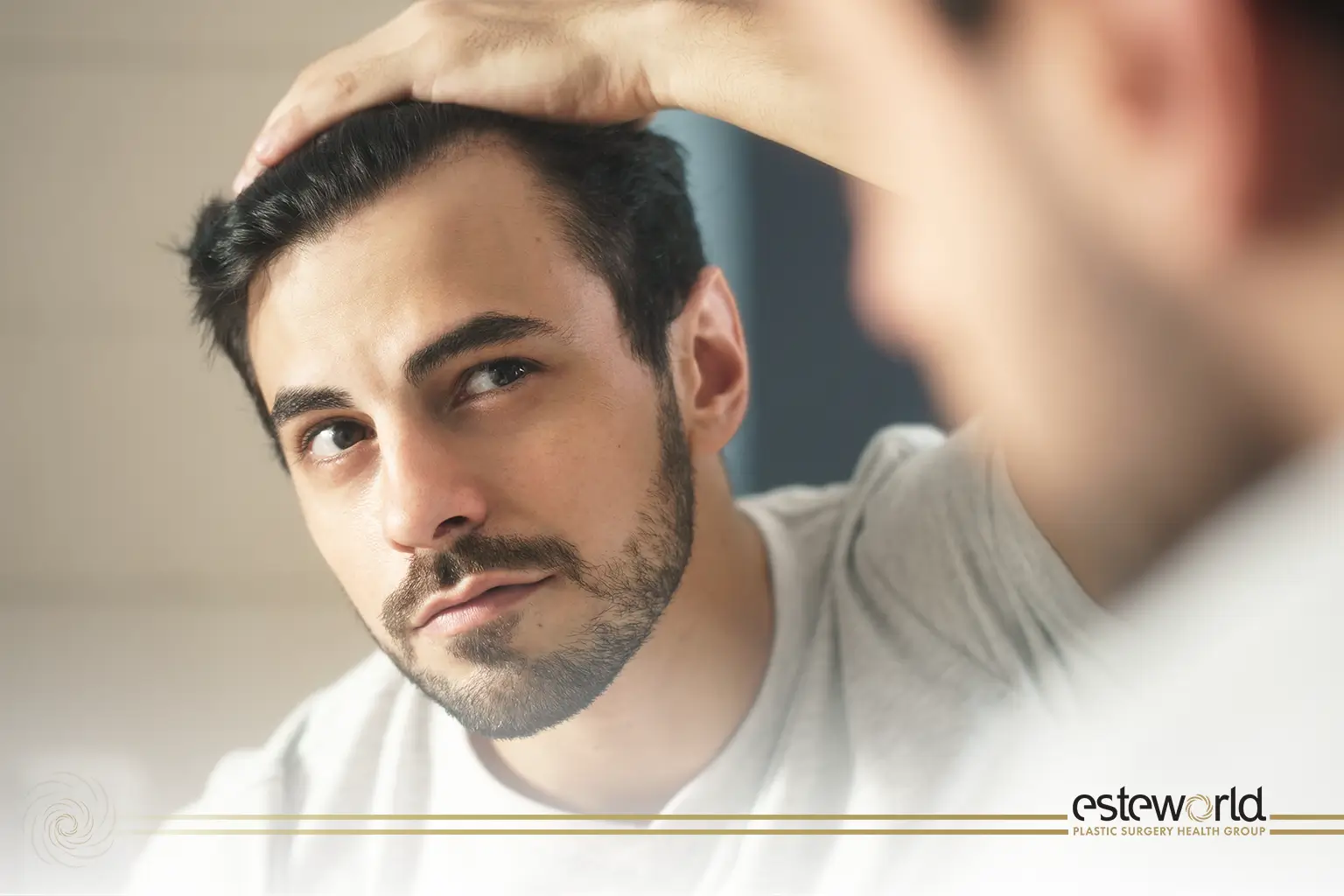

Telogen effluvium is a common type of hair loss that affects individuals after intense stress or changes in their body. Symptoms usually present as thinning hair on the top of the head. Various treatments are available to reverse hair loss, but hair usually regrows spontaneously within three to six months without treatment. In this article, we will examine in detail the causes, symptoms and effective treatment methods for telogen effluvium. This will give you information on how to deal with this condition.
What is Telogen Effluvium?
Telogen effluvium is a temporary type of hair loss that occurs due to stress factors or changes in your body. Your hair has a three-stage process of growth and hair loss:
Anagen (growth): This is the most active phase in the hair’s growth cycle. The cells at the bottom of the hair follicle divide rapidly and new hair formation pushes the existing hair out of the follicle, allowing it to grow. Hair follicles can produce hair for up to four years at this stage. At any given time, about 80% to 90% of your hair follicles are in the anagen stage.
Catagen (resting): This stage is the transitional period of the hair growth cycle. The lower part of the hair follicle shrinks and hair growth stops. About 5% of all hair is in the catagen phase at any one time.
Telogen (shedding): This is the resting phase of the hair growth cycle. The hair follicle is not active and has a white keratin bulb (club hair) at its root. This keratin bulb keeps the hair in the follicle until it falls out and then the hair growth cycle starts again. About 5% of all hair is in the telogen stage at any one time.
Telogen effluvium occurs when hair is affected during the telogen phase. As a result of stress or changes in your body, up to 70% of hair in the anagen phase enters the early telogen phase, resulting in widespread hair loss.
What are the Causes of Telogen Effluvium?
- Severe Stress
- Hormonal Changes
- Nutritional Deficiencies
- Medicines and Treatments
- Diseases and Infections
- Surgical Interventions
- Sudden Weight Loss
These causes can cause hair follicles to go into early telogen phase and lead to hair loss.
What are the Symptoms of Telogen Effluvium?
- Significant hair loss, especially on the top of the head and hairline.
- Thinning of hair strands and decrease in density.
- The hair looks sparser in general.
- Experiencing shedding of over 100 strands of hair daily
- More hair loss than usual during bathing and combing.
- Hair loss is widespread over the whole head instead of a specific area.
- Factors such as stress, illness, hormonal changes cause hair loss.
How is Telogen Effluvium Diagnosed?
Telogen Effluvium is usually diagnosed by a dermatologist through a physical examination and patient history. The doctor will inquire about the prevalence and pattern of hair loss and may order additional tests such as blood tests, a hair pull test or a scalp biopsy to determine the cause of the hair loss. Factors such as recent stress, illness, hormonal changes or medication will also be assessed. Based on this information, a diagnosis of Telogen Effluvium can be made.
What are Telogen Effluvium Treatment Methods?
Treating the Underlying Cause: Treatments such as stress management, correction of hormonal imbalances, correction of nutritional deficiencies or regulation of medication use are applied.
Hair Care and Gentle Treatments: It is recommended to wash and comb the hair gently and avoid heat and chemical treatments.
Nutrition Support: Vitamin and mineral supplements that support hair health, especially iron, zinc, biotin and vitamin D, are increased.
Medical Treatment: Topical or oral medications that support hair growth recommended by the doctor can be used.
Stress Management: Yoga, meditation, exercise and other stress-reducing techniques can be applied.
Professional Treatment Methods: Low-level laser therapy or other hair loss treatments recommended by the doctor can be applied.
Differences Between Telogen Effluvium and Androgenetic Alopecia
| Feature | Telogen Effluvium | Androgenetic Alopecia |
| Type of Hair Loss | Diffuse and sudden hair shedding | Patterned, gradual thinning and hair loss |
| Affected Areas | Diffuse shedding across the entire scalp | Typically affects the crown and hairline in men, widening part in women |
| Onset | Sudden onset, usually appears 2-3 months after a trigger | Gradual onset, progresses over years |
| Causes | Stress, illness, hormonal changes, medication | Genetic and hormonal factors (sensitivity to DHT) |
| Duration | Generally temporary, resolves once the cause is addressed | Permanent, can be slowed but not completely reversed |
| Hair Density | Reduced hair density, but follicles remain alive | Hair follicles miniaturize and eventually die |
| Treatment | Treating the underlying cause, supportive hair care | Minoxidil, finasteride, hair transplant, laser therapy |
| Age of Onset | Can occur at any age | Common after puberty and increases with age |
Telogen Effluvium and Androgenetic Alopecia are the two most common causes of hair loss and have different etiologies, symptoms and treatment approaches. Telogen Effluvium is usually a temporary condition characterized by sudden onset and widespread loss of hair over the entire scalp, and may improve with treatment of the underlying cause. Androgenetic Alopecia is a progressive condition that leads to permanent hair loss in certain areas due to genetic and hormonal factors. Both conditions can be managed with proper diagnosis and appropriate treatment approaches, so it is important to be aware of the symptoms and seek professional help.
As Esteworld expert hair transplant doctors, personalized hair treatment is applied according to the cause of hair loss. You can contact us for detailed information about hair transplantation and our treatments.